The smell lives in the insulation
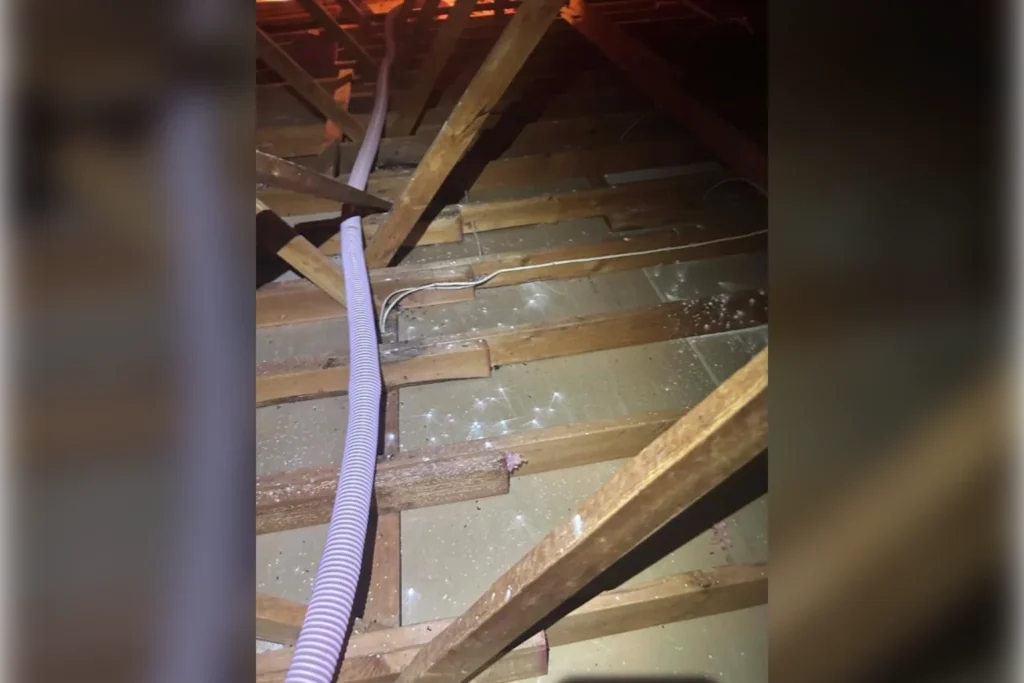
Guano and urine soak into insulation, which is why the odor lingers after bats leave.
Matted and stained.
Soiled insulation loses its loft and R-value.
Odor source.
Urine-soaked insulation keeps smelling.
Remove and replace.
The fix once bats are out.
Bat damage to insulation builds up slowly. A colony roosting in the same attic year after year drops guano and urine onto the insulation below, and over time it soaks in, mats down and starts to smell. In heavy cases, urine can stain the drywall ceiling below.
Getting the bats out stops new damage. Fixing what’s already there often means removing and replacing the soiled insulation.
What does bat damage to insulation look like?
- Piles or scattered layers of dark, crumbly droppings on top of the insulation
- Matted, compressed or discolored insulation under the roost
- A strong musty ammonia smell in the attic or rooms below
- Brown stains on ceilings or upper walls where urine soaked through
- Insects drawn to the guano
See more signs of bats.
Why does soiled insulation need to be replaced?
Insulation works by trapping air. Once it’s matted down and soaked with urine and guano, it insulates less well. It also holds the odor, so the attic and the rooms below can keep smelling even after the bats are gone. And built-up guano can grow the fungus that causes histoplasmosis, which makes disturbing it later, during a remodel or repair, a health risk.
For light damage, removing the guano and treating the odor may be enough. For heavy damage, replacing the soiled insulation is usually the only way to get rid of the smell for good. See bat smell in the house.
Can I remove the insulation myself?
We don’t recommend it for heavily soiled insulation. Tearing out guano-soaked insulation stirs up dust and spores. CDC and NIOSH guidance calls for a well-fitted respirator, at least an N95, plus disposable protective clothing and steps to keep dust down. Anyone with a weakened immune system should stay away from the area.
How does insulation removal and replacement work?
Timing matters. The bats come out first, with exclusion and sealing, so new guano doesn’t land on new insulation. Most guano cleanup happens on the first visit. On the final visit, once we’ve confirmed the bats are gone, any final cleanup, ectoparasite treatment for bat mites and sanitizing are done. Heavily soiled insulation can be removed and replaced as part of the cleanup. All of the work, including insulation replacement, is done in-house by our own crew, with no subcontractors, which keeps the job moving and the quality consistent.
See how bat guano cleanup and bat exclusion work together.
How much does it cost to replace insulation after bats?
It depends on how much of the attic is affected, how deep the guano and insulation are and how easy the attic is to work in. Cleanup and insulation replacement are quoted separately from the exclusion after the free inspection. You get a detailed report with photos and a written estimate. A typical bat removal and exclusion job averages around $950, not including cleanup. See our bat removal cost guide.
Does insurance pay for insulation damaged by bats?
In our experience, rarely. Guano and urine damage builds up over time, and pest damage is a common exclusion. Check with your agent. Read more about whether insurance covers bat removal.
Our wildlife team removes bats, seals the house and handles the cleanup, with a one-year guarantee on the exclusion. The first wildlife inspection is usually free.
Guano in your insulation? Call 913-735-5451, answered 24/7, or schedule online. Most services can be scheduled same day.
Frequently Asked Questions
It can. Guano and urine soak in, mat the insulation down and hold odor, so heavily soiled insulation usually needs to be replaced.
Yes. Heavily soiled insulation can be removed and replaced by our own crew as part of the cleanup, after the bats are out.
For light damage, guano removal and odor treatment may be enough. Heavily soiled insulation keeps smelling until it’s replaced.
It’s risky. Disturbing guano can release spores that cause histoplasmosis. Proper respirators and protective gear are needed.
After the bats are excluded and the attic is confirmed empty, so new guano doesn’t land on new insulation.
Rarely, in our experience. Check with your agent.