The clues are outside too
Many signs of bats show up on the outside of the house before you ever hear them.
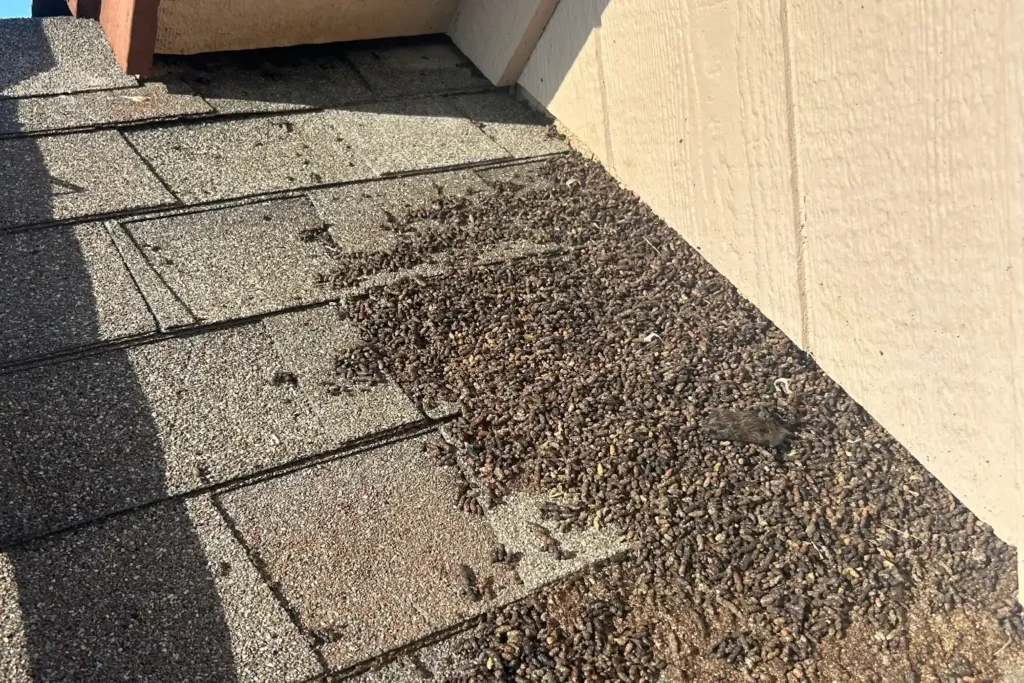
Droppings.
Crumbly pellets on siding, sills or attic insulation.
Stains.
Dark, greasy marks around small gaps near the roof.
Sunset check.
Watch the roofline at dusk to see bats come out.
Bats are quiet, they’re out at night and they can fit through a gap the size of your thumb. That’s why many homeowners have bats for months before they notice. The signs of bats are there, though, if you know where to look.
Here are seven signs of bats in your house, and a simple way to confirm what you’re seeing.
1. Droppings on the house or in the attic
Bat droppings, called guano, are the most common sign of bats. They look like small dark pellets, about the size of a grain of rice. Unlike mouse droppings, they crumble into powder when crushed and often sparkle from insect wings.
Look for guano stuck to siding or brick under a gap, piled on a porch or windowsill or scattered on attic insulation. See what bat guano looks like.
2. Dark stains around small gaps
Bats have oily fur, and they squeeze through the same openings night after night. Over time, that leaves dark, greasy rub marks around the gap. Check the roofline, soffits, gable vents, chimney flashing and the corners where siding meets trim.
Stains with guano right below them are a strong sign of an active entry point.
3. Sounds at dusk and dawn
Bats leave to feed around sunset and come back before sunrise. You may hear scratching, rustling or high-pitched squeaks in the attic or walls at those times. A colony with pups in summer can get noisier. Learn more about bat noises.
4. A strong ammonia smell
As guano and urine build up, they give off a musty ammonia odor. It’s often strongest in hot weather, near attic access points or in rooms right under the roost.
5. Bats flying out at sunset
The surest way to confirm bats is to watch for them. Stand outside where you can see the roofline, starting about 15 minutes before sunset and staying for 30 to 45 minutes. Bats leaving one by one from the same spot means you’ve found an exit. Note every spot you see them come out.
6. A bat inside the living space
A bat in the house is often the first sign homeowners notice, especially in late summer when young bats are learning to fly. Most come from a colony in the attic or walls. If it happens, follow our steps for a bat in the house, and take any possible contact seriously.
7. Stains on ceilings or walls inside
In a well-established colony, urine and guano can soak through insulation and drywall, leaving brown stains on ceilings or upper walls. This usually means bats have been there a long time.
Could it be something other than bats?
A few other animals leave similar clues. Mice leave droppings that look like bat guano, but theirs are hard and don’t crumble. Squirrels make noise in the attic too, but mostly in the morning and during the day, not right at dusk. Birds nesting in vents can make scratching and fluttering sounds, but you’ll usually see nest material.
The timing of the sounds, the way the droppings crumble and the stains around the gap usually point clearly to bats. If you’re not sure, an inspection will tell you. See bat droppings vs mouse droppings.
When are signs of bats easiest to spot?
Signs of bats are easiest to find from late spring through early fall, when colonies are active and guano builds up fastest. Late summer is when bats most often turn up inside. In winter, many colonies are gone, but stains and old guano stay behind, so you can still spot where bats were.
What should I do if I see signs of bats?
Don’t seal the gaps you find yet. If bats are still inside, sealing can trap them in the walls or push them into your living space. Bats are removed with exclusion, which uses one-way devices so they can leave but not come back, and timing has to account for bat maternity season.
Our wildlife team inspects the roofline and attic, confirms whether bats are present and shows you where they’re getting in. The first wildlife inspection is usually free.
Seeing signs of bats? Call 913-735-5451, answered 24/7, or schedule online. Most services can be scheduled same day.
Frequently Asked Questions
Look for crumbly droppings, dark stains around small gaps near the roof and sounds at dusk. Watching the roofline at sunset is the surest way to confirm.
Bats usually leave around sunset to feed and return before sunrise. Watch for 30 to 45 minutes starting just before sunset.
Yes. Bats are quiet and active at night, so many homeowners have a colony for months before finding droppings or seeing a bat inside.
Dark, greasy smudges around the edges of small gaps, caused by oils from bats’ fur rubbing on the same spot each night.
Yes. Bats can roost inside wall voids, especially near the top of exterior walls, chimneys and spots where walls meet the roof.
Not yet. Sealing while bats are inside can trap them. Bats should be excluded first, then the gaps sealed.