Timing gives it away
Bat noises peak right around sunset and again before sunrise.
Squeaks and chirps.
High-pitched sounds, often louder in summer.
Scratching.
Crawling and rustling as bats move to exits.
Dusk and dawn.
Mice and squirrels keep different hours.
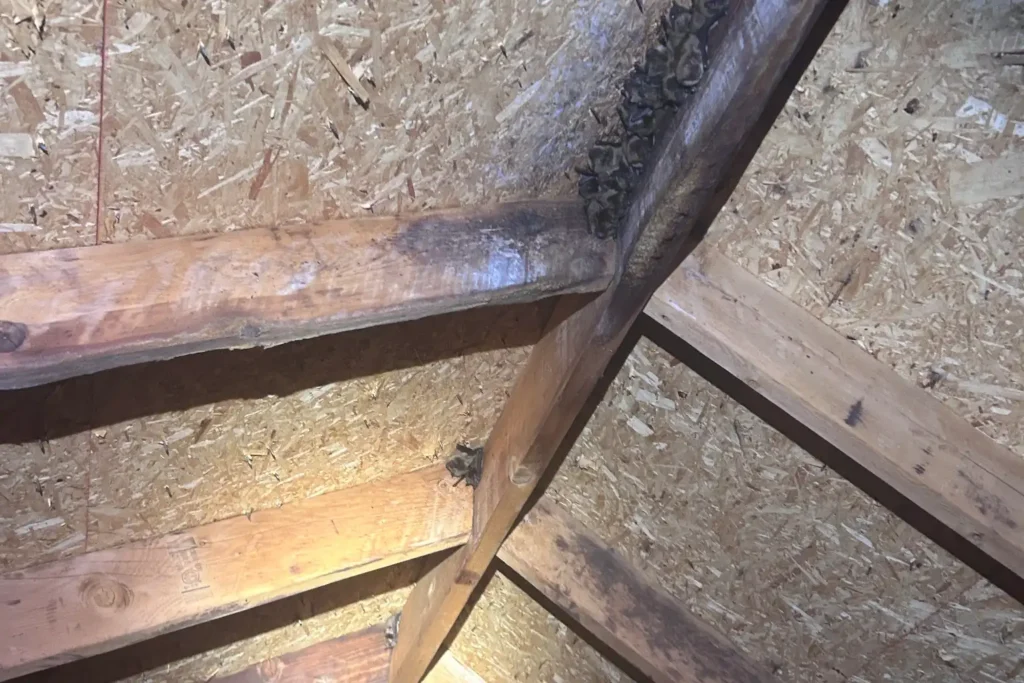
Bat noises are often the first clue that bats have moved into an attic or wall. Most of the sounds bats use to find insects are too high for people to hear, but bats in a roost still make plenty of noise you can hear, especially at certain times of day.
What do bat noises sound like?
The most common bat noises homeowners describe are:
- Squeaking or chirping. Short, high-pitched sounds, often from many bats at once.
- Scratching and crawling. Bats climbing along rafters, insulation or inside wall cavities.
- Rustling or fluttering. Wings and bodies moving as bats shift around the roost.
The sounds are usually soft and come from near the roofline, the top of exterior walls or around a chimney.
When do you hear bat noises?
Timing is the best clue. Bats leave the roost to feed right around sunset, so noise picks up in the half hour before and after dusk. They return before sunrise, so you may hear them again in the early morning.
Noise gets louder in summer when a maternity colony has pups. Young bats chirp, and the colony is more active during the day. In winter, you may hear little or nothing, though big brown bats hibernating in buildings can stir on warm days. Learn about bat maternity season.
Is it bats, mice or squirrels?
Each animal keeps different hours:
- Bats. Busiest at dusk and dawn, with squeaking and light scratching near the roofline.
- Mice. Active through the night, with scurrying and gnawing that moves around, often low in walls.
- Squirrels. Loud in the morning and during the day, with heavier thumping, running and chewing.
- Raccoons. Heavy thumps and movement at night, much louder than bats.
To confirm bats, watch the outside of the house at sunset for 30 to 45 minutes. If bats fly out, you’ve found your noise. See more signs of bats.
What should I do if I hear bat noises?
Don’t bang on the walls or try to seal gaps yet. Sealing with bats inside traps them, and they may find their way into your living space. Bats are removed with exclusion, which lets them leave but not come back, and the timing has to account for pups in summer.
Our wildlife team inspects the attic and roofline, confirms what’s making the noise and shows you where it’s getting in. The first wildlife inspection is usually free.
Hearing noises overhead? Call 913-735-5451, answered 24/7, or schedule online. Most services can be scheduled same day.
Frequently Asked Questions
Bats make high-pitched squeaks and chirps, plus soft scratching and rustling as they crawl toward their exits.
Bats are loudest around sunset when they leave to feed and again before sunrise when they return.
Sometimes, especially in summer when a colony has pups. Mothers and young chirp and shift around during the day.
Bat noise peaks at dusk and dawn near the roofline. Mice make scurrying and gnawing sounds through the night, often low in the walls.
Usually not much. Many bats leave for winter, but big brown bats can hibernate in buildings and stir on warm days.