Stay calm, close it off
A single bat in the house is usually lost and looking for a way back outside.
Close the room.
Shut interior doors and open a window or door to the outside.
Never bare hands.
If you have to catch it, wear thick leather gloves.
Think about contact.
A bat near someone who was asleep may need rabies testing.
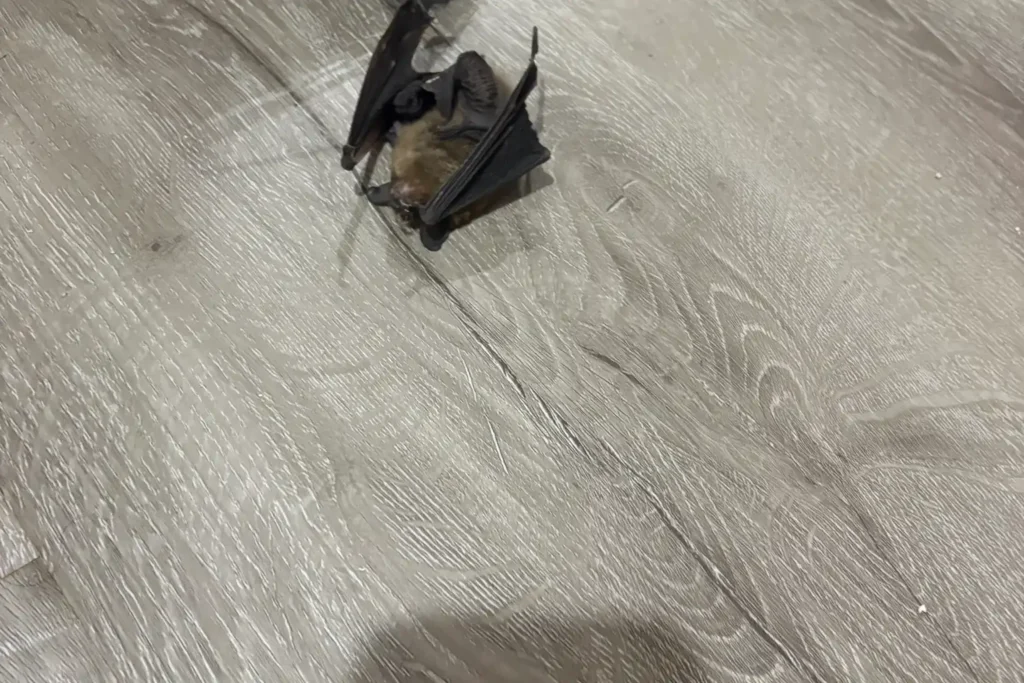
A bat in the house is scary, but it’s usually a lost bat looking for a way out. Stay calm, keep people and pets away from it and give it an open door or window to the outside. The bigger questions come after: did anyone have contact with it, and how did it get in?
Bats are the animal our wildlife team removes from Kansas City homes most often. Here’s what to do right now and what to do next.
What should I do if there’s a bat in the house?
Start by closing off the room the bat is in. Shut the interior doors, then open an outside door or window and turn off the lights in that room. Most bats will find the opening and fly out on their own, often within an hour.
Keep kids and pets out of the room while you wait. Don’t swat at the bat with a broom or tennis racket. An injured bat on the floor is harder to deal with and more likely to bite.
How do I catch a bat that won’t leave?
If the bat lands and won’t leave, wait for it to settle on a wall or curtain. Put on thick leather gloves, cover it with a small box or plastic container, then slide a piece of cardboard underneath to trap it. If you’d rather not handle it, call us. Our wildlife team can help get a bat out of your living space.
If no one had contact with the bat, you can carry it outside and release it from somewhere off the ground, like a deck rail or tree trunk. Bats need a little height to take off. If there’s any chance of contact, don’t release it. Keep it contained and call your health department, because it may need to be tested.
When does a bat in the house mean a rabies risk?
Very few bats carry rabies, but bats are one of the main carriers of rabies in Kansas and across most of the country. Their teeth are tiny, so a bite can go unnoticed.
Health officials treat these situations as possible exposures, even with no visible bite:
- A bat found in a room where someone was sleeping
- A bat found in a room with a young child who can’t say what happened
- A bat found near someone who was impaired or unable to tell if they were touched
- Any bite or scratch, or a bat that landed on bare skin
If any of these apply, keep the bat contained and contact your doctor or local health department right away. In Kansas, the KDHE epidemiology hotline is 877-427-7317. Rabies is preventable with prompt treatment, so it’s worth the call. If a pet may have touched the bat, call your vet. Our guide on whether bats carry rabies has more detail.
Why is there a bat in my house?
Most bats that end up in living spaces come from a colony already roosting in the attic or walls. A young bat learning to fly, or an adult that took a wrong turn, wanders through a gap around a chimney, attic door, recessed light or plumbing chase and ends up inside.
Less often, a bat flies in through an open door or window while hunting insects at night. If you’ve had more than one bat inside, or you find bats in late summer, there’s a good chance you have a colony. Our page on bats in the attic explains the signs.
What should I do after the bat is out?
Check the house for signs of more bats. Look for droppings below gaps in the siding, near the roofline or under attic vents. Listen for scratching or squeaking at dusk, and watch the outside of the house right around sunset to see if bats come out.
If you find signs, schedule an inspection. Our wildlife team checks the roofline, attic and common entry points, then lays out a plan to get the bats out and seal the house. The first wildlife inspection is usually free.
Should I seal the hole the bat came through?
Not until you know whether more bats are inside. Sealing a gap while bats are still roosting in the attic or walls can trap them. Trapped bats may die in the walls, causing odor problems, or find their way into your living space.
That’s why bat removal is done with exclusion. One-way devices let bats leave but not get back in, and the gaps are sealed after they’re gone. Timing matters too, since bats can’t be excluded safely while their babies are too young to fly.
Bat in the house? Call 913-735-5451, answered 24/7, or schedule online. Most services can be scheduled same day.
Frequently Asked Questions
Most single bats will fly out on their own if you close off the room and open a door or window to the outside. Turn off the lights in that room and give it some time.
A bat in the house isn’t usually aggressive, but bats can carry rabies, so never touch one with bare hands. If anyone may have had contact, call your doctor or health department.
Treat it as a possible rabies exposure, even if you don’t see a bite. Keep the bat contained if you can do it safely and contact your doctor or local health department right away.
Not always, but it often does. Many bats that end up inside come from a colony in the attic or walls, especially in late summer.
Not until you know no bats are still inside. Sealing a gap with bats roosting in the walls or attic can trap them in the house.
Call Rock Pest at 913-735-5451. Our wildlife team can help get a bat out of the living space, then inspect for a colony, find the entry points and handle exclusion and sealing.