The risk is in the dust
Histoplasmosis spores get into the air when dry bat droppings are disturbed.
Common in the Midwest.
The fungus is widespread in Missouri and Kansas soil.
Usually mild.
Most people have no symptoms, but some get very sick.
Don’t stir it up.
Skip the broom and shop vac on bat guano.
Histoplasmosis is a lung infection caused by a fungus called Histoplasma. The fungus grows in soil, especially soil mixed with bird or bat droppings. When droppings are disturbed, tiny spores float into the air and can be breathed in.
That makes histoplasmosis the main health concern with bat droppings in an attic, garage or barn. Here’s what Kansas City homeowners should know.
How do bat droppings cause histoplasmosis?
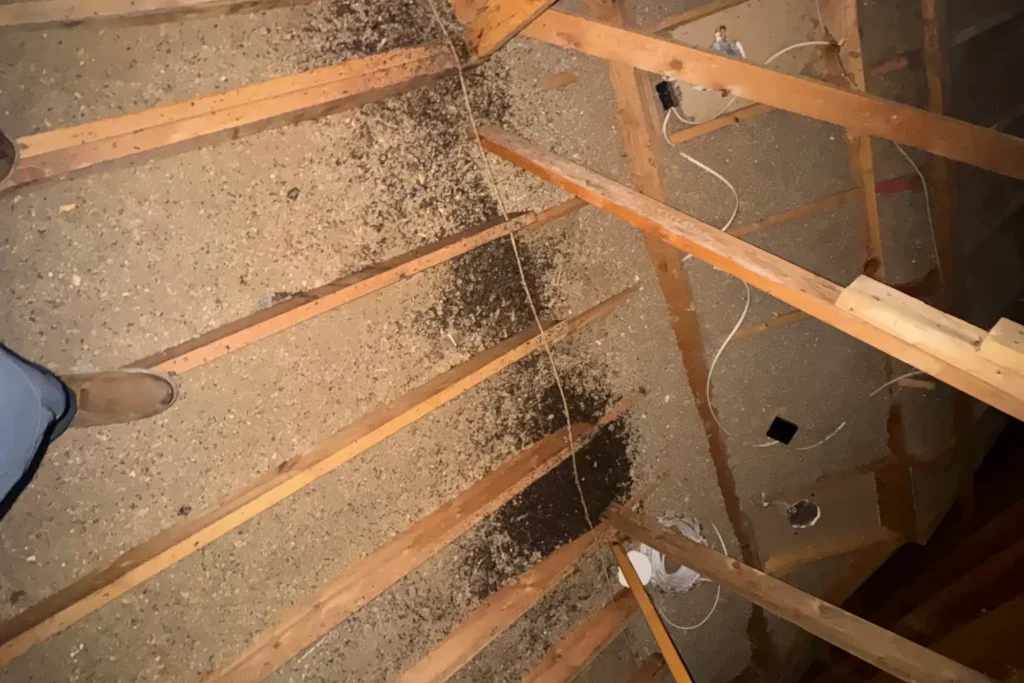
Bat droppings, called guano, can create the right conditions for the Histoplasma fungus to grow, especially where guano piles up for years in a warm, protected space. The fungus releases spores. Sweeping, vacuuming, tearing out insulation or even walking through dry guano can kick those spores into the air.
You don’t get histoplasmosis from touching droppings or from another person. It spreads by breathing in spores. It also isn’t the same as rabies, which spreads through a bite. Our page on whether bats carry rabies covers that risk.
Is histoplasmosis common in Kansas City?
Yes, the fungus is common here. According to the CDC, Histoplasma is found most often in the central and eastern United States, especially around the Ohio and Mississippi River valleys, which includes much of Missouri and parts of Kansas.
Many people in the region have breathed in small amounts of spores without knowing it. The bigger concern is a heavy exposure, like cleaning a large pile of guano without protection.
What are the symptoms of histoplasmosis?
Most people who breathe in the spores never get sick. When symptoms do show up, they usually start 3 to 17 days after exposure and can feel like the flu:
- Fever and chills
- Cough and chest pain
- Tiredness
- Headache and body aches
Most healthy people get better on their own. Histoplasmosis can be serious, though, for babies, older adults and people with weakened immune systems, and a large exposure can make anyone sicker. If you have symptoms after being around bat guano, tell your doctor about the exposure, since histoplasmosis is easy to mistake for other illnesses.
Who is most at risk from bat droppings?
People at higher risk include anyone with a weakened immune system, such as from cancer treatment, an organ transplant or certain medications, plus infants and adults over 55. People who do the cleanup work are also at higher risk because they get the heaviest exposure.
If someone in your home is high risk, they should stay away from areas with bat guano and should not help with cleanup.
How do you clean up bat droppings safely?
For a small amount of guano outdoors, like a few droppings on a porch or sill, CDC and NIOSH guidance comes down to keeping dust down and protecting your lungs:
- Lightly mist the droppings with water so they don’t become dust
- Wear disposable gloves and a well-fitted respirator, at least an N95
- Scoop or wipe up the damp droppings and bag them
- Wash your hands and clothes afterward
Don’t use a broom, leaf blower or regular shop vacuum. For large amounts, like guano built up in attic insulation, professional cleanup with proper protective equipment is the safer choice.
Can pets get histoplasmosis?
Yes, dogs and cats can get histoplasmosis too, though it’s not common. Pets that dig or sniff around guano are most exposed. If your pet has a cough, weight loss or low energy after being around bat droppings, mention the exposure to your vet.
Is guano inside the walls a risk?
Guano sealed inside a wall cavity is less likely to get into the air than guano on open attic insulation. The risk goes up when walls or ceilings are opened during a remodel or repair. If you know bats lived in a wall, tell your contractor before they start so they can take precautions.
What should I do about bat droppings in my attic?
First, deal with the bats. Cleaning up guano while the colony is still using the attic just leaves room for more. Our wildlife team removes bats with exclusion and seals the entry points.
After the bats are out, guano cleanup, sanitizing and odor treatment are available as an add-on, quoted after we see how much is in the attic. Heavily soiled insulation can be removed and replaced. The first wildlife inspection is usually free, and we’ll tell you how much guano is up there. Learn more about bat guano.
Bat droppings in the attic? Call 913-735-5451, answered 24/7, or schedule online. Most services can be scheduled same day.
Frequently Asked Questions
Yes. Bat droppings can grow the fungus that causes histoplasmosis, a lung infection people can get by breathing in spores from disturbed guano.
No. Histoplasmosis doesn’t spread from person to person or from pets to people. It comes from breathing in spores from the environment.
When symptoms happen, they usually start 3 to 17 days after breathing in the spores and often feel like the flu.
A loose paper dust mask isn’t enough. CDC and NIOSH guidance calls for a well-fitted respirator, at least an N95, for small cleanups.
Don’t use a regular vacuum or shop vac. It can blow spores into the air. Mist the droppings first or have them professionally removed.
Yes. Guano cleanup, sanitizing and odor treatment are available as an add-on after the bats are removed, quoted by how much is in the attic. Soiled insulation can be removed and replaced.