Usually not covered
In our experience, homeowners insurance rarely pays for bat removal or cleanup.
Maintenance issue.
Insurers often treat bat gaps as deferred maintenance.
Deductibles.
Your deductible may be higher than the job itself.
Roofing exception.
A recent roof job that left gaps can be a different story.
Does homeowners insurance cover bat removal? In our experience, almost never. We haven’t seen customers get typical bat jobs covered by homeowners insurance. Insurers usually see bats getting in through small gaps as a maintenance issue rather than sudden damage, and even when part of a claim might qualify, the deductible is often higher than the cost of the job.
Every policy is different, so check with your insurance company. Here’s what we’ve seen and how to keep the cost down. This is general information, not insurance advice.
Why don’t insurance companies cover bats?
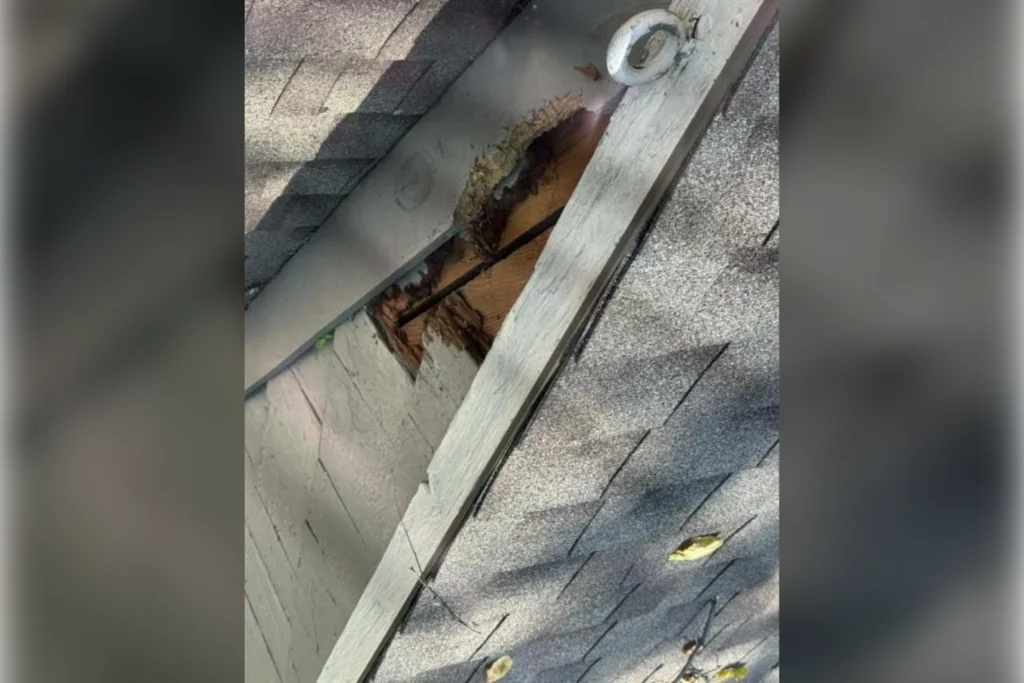
Most homeowners policies cover sudden, accidental damage, like a storm or a fire. They usually exclude damage from pests, vermin and wear and tear. Because bats get in through gaps that open up over time at the roofline, soffits and siding, insurers often call it deferred maintenance and decline the claim.
Bat guano and urine damage builds up slowly too, which makes it harder to claim as sudden damage.
Are there any cases where bat damage gets paid?
Rarely. The exception we’ve seen is when a roof was recently replaced and the roofing company missed a few pieces of siding or flashing, leaving a gap that let bats in. In those cases, the roofing company has paid to fix it. If you’ve had roof, siding or gutter work done recently and bats showed up afterward, it’s worth asking the contractor.
Raccoon damage can sometimes be a different story, since raccoons can tear open a roof or vent. Even then, the deductible may be higher than the job.
Does insurance cover bat guano cleanup or insulation?
Usually not, for the same reasons. Guano and urine build up over time, and pest damage is a common exclusion. If you’re unsure, call your agent before the work is done and ask what documentation they’d want. Our inspection includes a detailed report with photos, which you’re welcome to share. See bat damage to insulation.
What does bat removal cost without insurance?
A typical bat removal and exclusion job averages around $950, not including cleanup. The price goes up based on how much exclusion work the house needs. Guano cleanup, odor treatment, ectoparasite treatment and sanitizing are quoted separately after the inspection. See our bat removal cost guide.
How can I keep the cost down?
- Act early. A colony that just moved in leaves less guano than one that’s been there for years, so cleanup costs less.
- Seal the living space. Close gaps around attic hatches and lights so bats don’t get inside.
- Don’t seal the outside yourself. Trapping bats inside can lead to dead bats in the walls, odor and a bigger bill.
- Watch for new gaps. Check the roofline after storms or roof work.
The inspection is free, and you get a written estimate before any work starts.
Is it worth filing a claim?
That’s up to you and your agent. Keep in mind that a denied claim may still show up on your claims history, and your deductible may be more than the job. Asking your agent how bat damage is handled before filing can save time.
Our wildlife team completes bat exclusion with a one-year guarantee. If bats get back in during that year, we remove them again at no charge.
Questions about bats and cost? Call 913-735-5451, answered 24/7, or schedule online. Most services can be scheduled same day.
Frequently Asked Questions
Usually not. In our experience insurers rarely cover bat jobs, often calling the gaps deferred maintenance. Check your own policy to be sure.
Usually not. Guano and urine damage builds up over time, and pest damage is a common exclusion.
Rarely. The exception we’ve seen is a recent roof job that left siding or flashing gaps, where the roofing company paid to fix it.
Often, yes. A typical bat removal and exclusion job averages around $950, which may be less than your deductible.
Every inspection includes a detailed report with photos and a written estimate, which you can share with your agent.
Act early, seal gaps into your living space and don’t seal the outside yourself while bats are inside.