Raccoons aren’t subtle
Most signs of raccoons are big, messy and easy to spot once you know them.
Heavy sounds.
Thumping and walking overhead at night.
Torn openings.
Soffits, shingles and vents pulled apart.
Latrines.
Piles of droppings in the same spot.
Raccoons are nocturnal, so you may not see one. But they’re big, strong and messy, and they leave plenty of clues. Here are eight signs of raccoons around your home and what each one means.
1. Heavy noises at night
Raccoons are much bigger than squirrels or mice. In an attic or wall, they sound like heavy walking, thumping, rolling or something being dragged. Most of the noise happens at night, especially around dusk when they leave and before dawn when they come back. See raccoon noises at night.
2. Chirping or crying in spring
High-pitched chirping, crying or chattering in spring and early summer usually means baby raccoons. According to K-State Research and Extension, young are born in April and May. Read about baby raccoons in the attic.
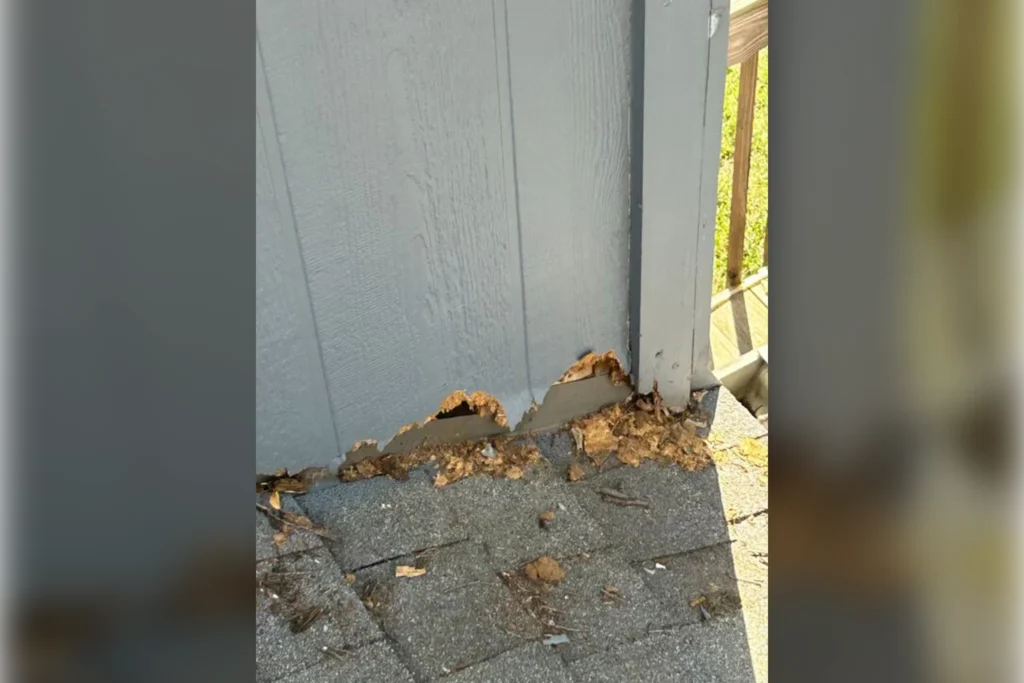
3. Torn soffits, shingles or vents
Raccoons tear their own way in. K-State lists torn roofing as a common sign. Look for pulled-down soffit panels, lifted shingles, bent roof vents and pried-open fascia, especially near corners and where rooflines meet. See raccoon damage to roofs and soffits.
4. Latrines
Raccoons use the same spot over and over as a bathroom. Latrines show up on roofs, decks, attics and garages. The CDC describes raccoon droppings as dark and tubular, often with seeds or food bits in them. Treat them with care, since they can carry roundworm eggs. See what raccoon droppings look like.
5. Tracks and smudges
Raccoon prints look like small human hands, with five long fingers. Look for muddy prints on siding, gutters, downspouts, decks, car hoods and trash can lids. Dark smudges where raccoons climb the same spot are another clue.
6. Tipped trash and raided feeders
Trash cans knocked over and bags torn open night after night is a classic sign of raccoons. So is an empty bird feeder or pet food bowl in the morning.
7. Damaged insulation or ductwork
In the attic, raccoons pack down insulation into paths, pull it into nests and tear into ductwork. K-State notes that waste and damage can eventually bring down a ceiling. Stains on a ceiling below the attic can be a late sign.
8. Smell
A strong musky or ammonia smell in the attic, garage or near a chimney usually means an active latrine or nest.
Raccoon or squirrel?
The biggest differences are timing and size. Squirrels are active during the day, especially early morning, and sound light and fast. Raccoons are mostly active at night and sound heavy. Squirrel holes are small and chewed. Raccoon holes are big and torn. Read raccoon or squirrel in the attic.
What to do if you see signs of raccoons
Don’t seal any openings yet. If a raccoon or her young are inside, sealing traps them and leads to more damage. Keep trash and pet food secured, keep kids and pets away from droppings and get an inspection.
Our wildlife team inspects the roof, attic and grounds, confirms what animal you have and shows you how it’s getting in. The first wildlife inspection is usually free, and you get a detailed report with photos and a written estimate.
Seeing signs of raccoons? Call 913-735-5451, answered 24/7, or schedule online. Most services can be scheduled same day.
Frequently Asked Questions
Heavy noises at night, torn soffits or shingles, latrines, handlike muddy prints and tipped trash are the most common signs of raccoons.
Like small human hands, with five long fingers on each foot. Look for them in mud on siding, gutters, decks and trash can lids.
Mostly from dusk through the night. You’ll often hear them leave around sunset and come back before sunrise.
Usually not, unless babies are crying or the raccoon is disturbed. Daytime noise is more often squirrels.
A strong musky smell, often with ammonia from urine and droppings, especially near a latrine or nest.
Not yet. Sealing a raccoon or her babies inside leads to more damage. Get the raccoons out first.