Look, don’t touch
Raccoon droppings can carry roundworm eggs, so identify them from a distance.
Shape.
Dark, tubular, with blunt ends.
Contents.
Often full of seeds, berries or food bits.
Location.
Piled in the same spot, called a latrine.
Finding droppings on your roof, deck or in the attic is often the first real clue that raccoons are around. Raccoon droppings are fairly easy to identify, and knowing what you’re looking at matters, because they can carry a parasite that’s harmful to people.
What do raccoon droppings look like?
The CDC describes raccoon feces as dark and tubular, with a strong odor, often containing undigested seeds or other food. In general, raccoon droppings are:
- About the size of a small dog’s droppings
- Tubular, with blunt or broken ends
- Dark brown or black, lightening as they dry
- Often full of berries, seeds, corn, insect parts or hair
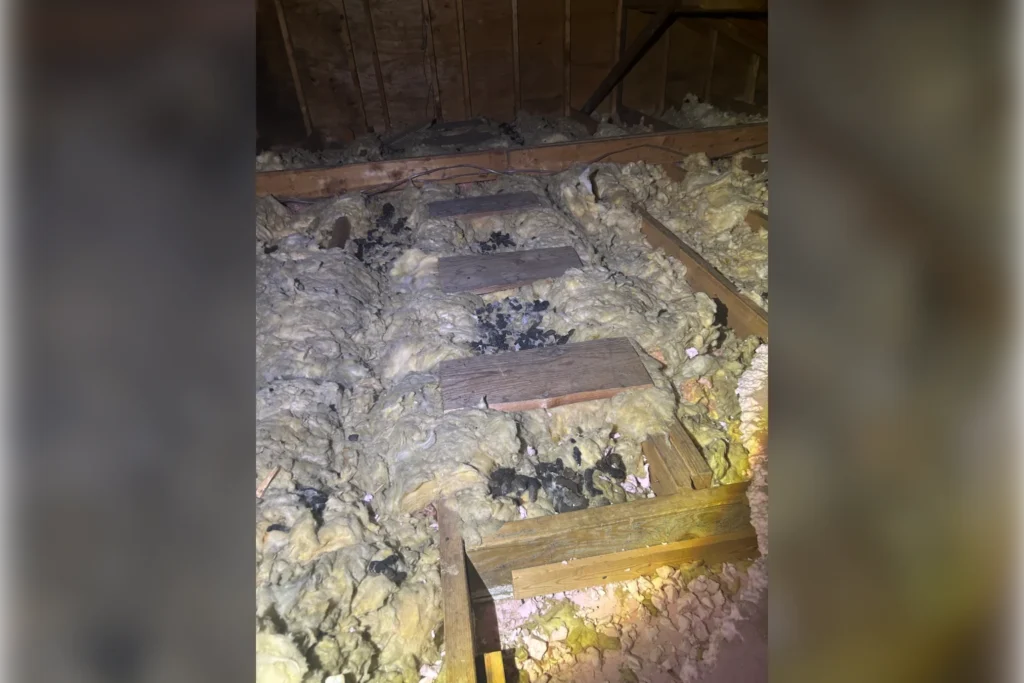
The biggest clue is where you find them. Raccoons use the same spot over and over, so droppings pile up in a latrine.
Where do raccoon droppings show up?
According to the CDC, raccoon latrines are often found on rooftops, in attics, on decks and patios, in garages, on woodpiles and at the base of trees. In attics, they’re often in one or two corners or near the entry point. See raccoon latrines and roundworm.
Raccoon droppings vs other animals
- Dog: Similar size, but usually found scattered in a yard, not piled on a roof or deck.
- Opossum: Similar shape, often smoother, and not usually in latrines.
- Squirrel: Much smaller, about the size of a pill or bean.
- Rat or mouse: Small pellets, scattered along walls and paths.
- Bat: Small pellets that crumble to powder. See bat guano.
Are raccoon droppings dangerous?
They can be. Raccoon droppings can carry raccoon roundworm eggs. K-State Research and Extension notes the parasite was found in over 65% of raccoons tested in Iowa. People are infected by swallowing the eggs, usually from unwashed hands. The eggs are too small to see.
Don’t touch, sweep or vacuum raccoon droppings without protection. If you must clean a small amount outdoors, the CDC recommends gloves, an N95 respirator in tight spaces, misting the droppings with water and bagging them for the landfill.
For latrines in attics, our wildlife team can remove the droppings and soiled insulation, sanitize the area and replace insulation. The raccoons have to go first, or the latrine just starts again. The first wildlife inspection is usually free. See raccoon attic cleanup.
Found raccoon droppings? Call 913-735-5451, answered 24/7, or schedule online. Most services can be scheduled same day.
Frequently Asked Questions
Dark, tubular droppings about the size of a small dog’s, with blunt ends, often full of seeds or berries, and piled in one spot.
Raccoons pick a spot and use it as a latrine. A roof latrine often means raccoons are using your roof or attic regularly.
No. They can carry roundworm eggs that are harmful if swallowed. Wear gloves and a respirator, or have a professional clean it.
Raccoon droppings are usually piled in a latrine on roofs, decks or attics and often contain seeds. Dog droppings are scattered in the yard.
No. Vacuuming or sweeping dry droppings stirs up dust and eggs. Attic latrines are best left to professionals.