Out first, then clean
Cleanup only sticks once the raccoons are gone and the house is sealed.
Latrine removal.
Droppings and soiled material bagged out.
Sanitizing.
The area treated after the mess is gone.
New insulation.
Soiled insulation removed and replaced.
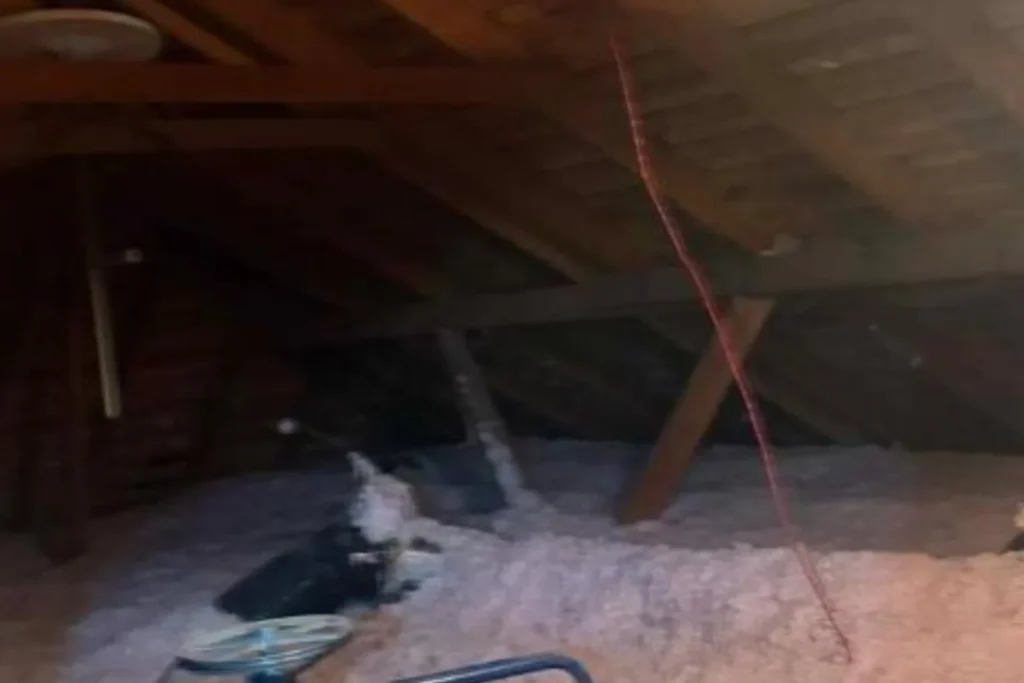
Getting raccoons out of the attic is step one. What they leave behind is step two. Raccoons pick one or two spots as latrines, flatten insulation into trails and nests and soak it with urine. That mess holds odor, can carry raccoon roundworm eggs and won’t go away on its own. Raccoons are much bigger than bats and leave far more droppings, so raccoon attics need insulation replaced more often.
Here’s what raccoon attic cleanup involves.
Why does a raccoon attic need cleanup?
- Roundworm risk. Raccoon droppings can carry raccoon roundworm eggs. The CDC notes most chemicals don’t kill the eggs, and they stay in the attic until removed. See raccoon latrines and roundworm.
- Odor. Urine and droppings soak into insulation and wood, and the smell can reach the living space.
- Lost insulation value. Flattened, torn and soiled insulation doesn’t insulate well.
- Attracting the next animal. The scent of an old den can draw other animals.
- Damage. K-State Research and Extension notes raccoon waste and damage can eventually bring down a ceiling.
What does raccoon attic cleanup include?
Every attic is different, but cleanup usually includes:
- Inspection. Mapping latrines, nests, soiled insulation and damaged ducts.
- Latrine removal. Droppings and heavily soiled material removed carefully to limit dust, bagged and taken out.
- Insulation removal. Soiled insulation removed from the affected area, or the whole attic when needed.
- Sanitizing. The attic treated after the mess is gone.
- New insulation. Fresh blown-in insulation once the attic is clean.
Can I clean a raccoon attic myself?
We don’t recommend it. Attic cleanup means working in tight, hot spaces full of dust that can carry roundworm eggs. The CDC recommends an N95 respirator, gloves and scrubbable boots or disposable booties when cleaning latrines in confined spaces, and a torch isn’t safe indoors. Sweeping or shop-vacuuming dry droppings spreads dust.
Why the raccoons have to go first
Cleaning an attic while raccoons are still using it is wasted money. They’ll start a new latrine within days. The house needs to be sealed and guarded before cleanup. See raccoons in the attic.
How we handle raccoon attic cleanup
Our wildlife team does all of it in house, with no subcontractors: raccoon removal, sealing, latrine removal, sanitizing and insulation removal and replacement. Cleanup is quoted per attic after the inspection, since every attic is different. The first wildlife inspection is usually free, and you get a detailed report with photos and a written estimate.
Need an attic cleaned up after raccoons? Call 913-735-5451, answered 24/7, or schedule online. Most services can be scheduled same day.
Frequently Asked Questions
Yes. Raccoon latrines can carry roundworm eggs, and soiled insulation holds odor and loses its insulating value.
Often, at least in the areas with latrines and nests. Heavily soiled attics may need all insulation removed and replaced.
It depends on the size of the attic and how much is soiled. We quote cleanup per attic after a free inspection.
It’s not recommended. Vacuuming dry droppings stirs up dust and eggs. Cleanup needs proper protection and equipment.
No. Get the raccoons out and seal the house first, or they’ll start a new latrine.