Loud and late
Raccoon noises are heavier and later than squirrels or mice.
Thumping.
Heavy walking or rolling, like a person crawling.
Chattering.
Growls, hisses and churring between adults.
Chirping.
Babies crying in spring and early summer.
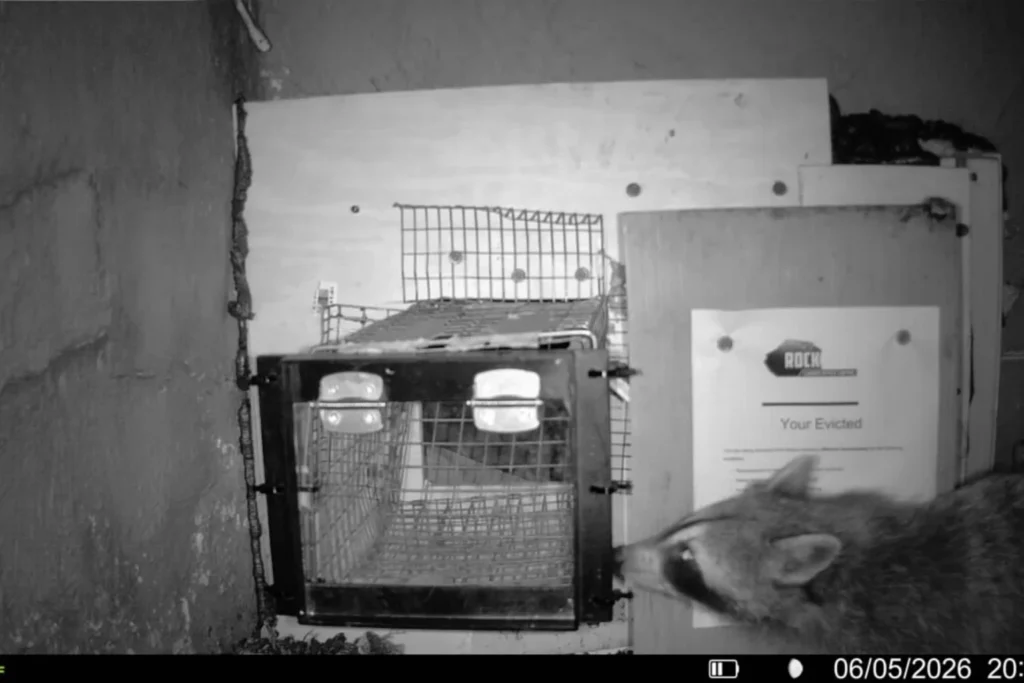
If you hear something heavy moving around the attic or walls at night, raccoons are a likely suspect. Raccoons are nocturnal and much larger than squirrels, so their noises are easy to tell apart once you know what to listen for.
What do raccoon noises sound like?
Common raccoon noises include:
- Heavy walking or thumping. Many homeowners say it sounds like a person or large dog moving around.
- Dragging or rolling. Raccoons drag nesting material and roll around insulation.
- Scratching and tearing. Raccoons tearing at wood, ductwork or insulation.
- Chattering, churring and purring. Communication between a mother and her young.
- Growling, hissing or screeching. Usually a raccoon that feels threatened or two raccoons fighting.
- Chirping, mewing or crying. Baby raccoons, often when the mother leaves or comes back.
When do you hear raccoon noises?
Raccoons are most active at night. The most noise usually comes around dusk, when they leave to feed, and in the early morning hours before sunrise, when they come back.
In spring and summer, you may also hear babies during the day, since they’re in the den all the time. According to K-State Research and Extension, raccoon young are born in April and May and stay in the den until about 8 to 10 weeks old.
In winter, raccoons don’t hibernate, but they may sleep for several days at a time. It can go quiet for days, then start up again on a warmer night. See baby raccoons in the attic.
Raccoon noises vs squirrel noises
- Raccoons: active at night, especially dusk and before dawn. Heavy, slow thumping, with chattering, growling and chirping babies.
- Squirrels: active during the day, especially early morning and late afternoon. Light, fast scurrying and occasional chatter.
Mice and rats are quieter and make light scratching, usually in walls. Read raccoon or squirrel in the attic.
What should I do if I hear raccoon noises?
Look outside for torn soffits, lifted shingles or bent roof vents, and for muddy prints on the siding or gutters. Don’t seal any openings until you know the animals are out. See more signs of raccoons.
Our wildlife team can confirm what’s making the noise, find how it’s getting in and get it out. The first wildlife inspection is usually free.
Hearing noises at night? Call 913-735-5451, answered 24/7, or schedule online. Most services can be scheduled same day.
Frequently Asked Questions
Heavy walking or thumping, dragging and rolling sounds, often with chattering or growling. Many people say it sounds like a person crawling.
Mostly at night, with the most activity around dusk and in the early morning hours before sunrise.
In spring and early summer, chirping or crying usually means baby raccoons. Birds and bats can also chirp, so an inspection confirms it.
Raccoons are loud and heavy at night. Squirrels are light and fast during the day, especially early morning.
Raccoons may sleep for days in cold weather, or they may be using another den nearby. The noise often comes back.