Listen to the clock
When you hear the noise says more than anything else.
Night and heavy.
Most likely a raccoon.
Morning and quick.
Most likely a squirrel.
The hole.
Big and torn, or small and chewed.
Raccoons and squirrels are the two most common larger animals in Kansas City attics. Both cause damage and both need to be removed, but they behave differently, and the way they’re handled is different too. Here’s how to tell a raccoon or squirrel in the attic.
When do you hear it?
- Raccoons are nocturnal. You’ll hear them most at night, especially around dusk when they leave and before dawn when they come back.
- Squirrels are active during the day. The most noise is usually early morning, when they head out, and late afternoon, when they come back. Flying squirrels are the exception, since they’re active at night.
What does it sound like?
- Raccoons are heavy. They sound like thumping, heavy walking or something being dragged. You may hear chattering, growling or chirping babies.
- Squirrels are much lighter. They sound like quick scurrying, running and rolling, sometimes like nuts being rolled across the floor.
What does the entry point look like?
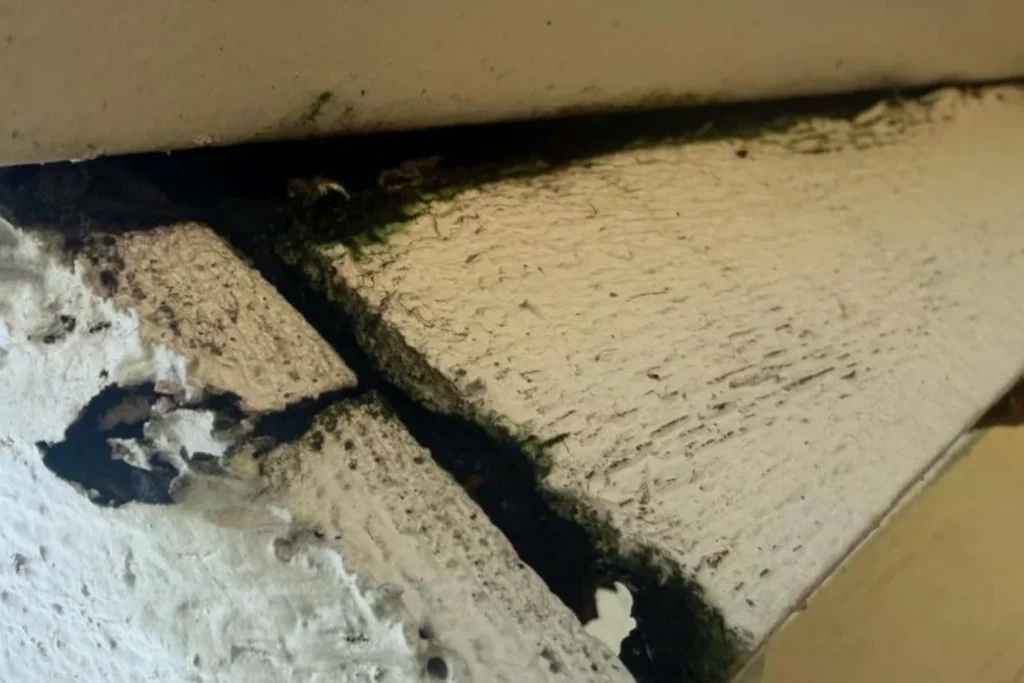
- Raccoons tear their way in. Look for pulled-down soffits, lifted shingles, bent roof vents or pried fascia, with a big opening and torn edges.
- Squirrels chew. Look for a smaller, round, chewed hole, often at a roof return, soffit edge or gable vent, with chew marks around it.
See raccoon damage to roofs and soffits.
What do the droppings look like?
- Raccoons leave dark, tubular droppings about the size of a small dog’s, piled in one or two latrine spots. They can carry roundworm eggs. See what raccoon droppings look like.
- Squirrels leave small, oblong droppings, about the size of a bean, scattered around the attic.
Other clues
- Muddy, handlike prints on siding and downspouts point to raccoons.
- Chewed wires or wood inside the attic point more to squirrels.
- Torn insulation and flattened trails can be either, but raccoon damage is usually heavier.
Why it matters which one it is
Raccoons and squirrels need different approaches. Raccoons need heavy-duty sealing and guards they can’t tear. Squirrels need sealing they can’t chew. Both may have babies in spring, which changes the plan. If you’re not sure, an inspection will tell you.
Our wildlife team identifies the animal, finds every way in and gets it out. The first wildlife inspection is usually free, and you get a detailed report with photos and a written estimate.
Not sure what’s in your attic? Call 913-735-5451, answered 24/7, or schedule online. Most services can be scheduled same day.
Frequently Asked Questions
Raccoons are heavy and active at night. Squirrels are light, quick and active during the day, especially early morning.
Squirrel holes are smaller, round and chewed. Raccoon openings are bigger and torn, with pulled soffits or bent vents.
Yes. Raccoon droppings are about the size of a small dog’s and piled in latrines. Squirrel droppings are bean-sized and scattered.
Yes. A hole made by one animal can let the other in, so an inspection should check for both.
Light, quick noises at night are often mice, rats or flying squirrels. An inspection can confirm it.