Spring means babies
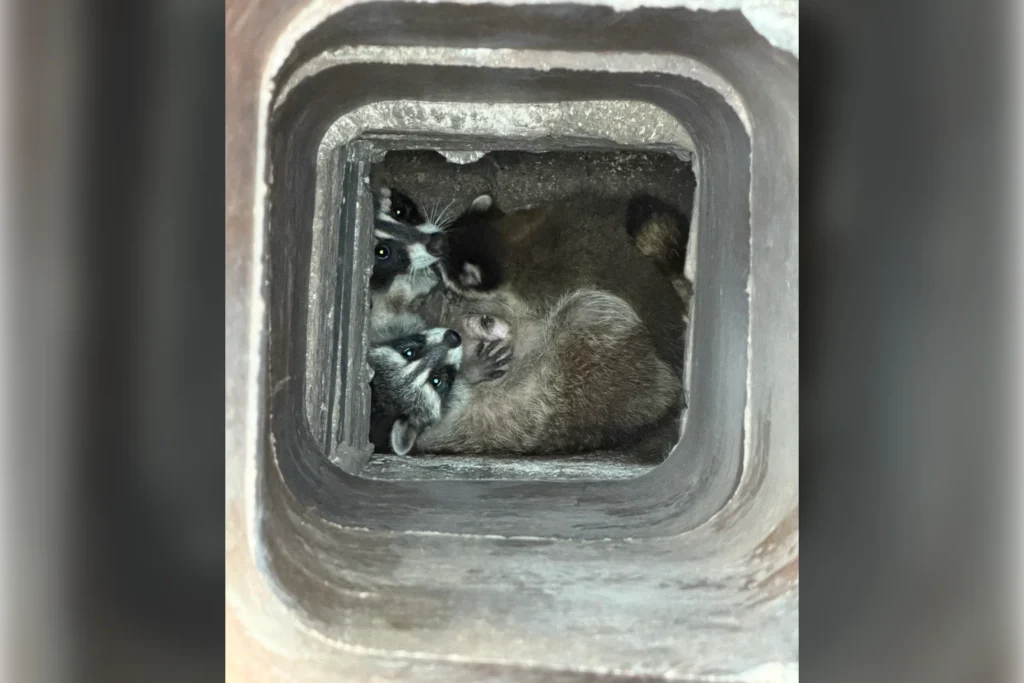
Most raccoons in attics from April to August are mothers with young.
Born April and May.
Litters are usually 4 to 7 babies.
Weeks in the den.
Young stay put until about 8 to 10 weeks old.
Never seal them in.
The mother will tear through to get back.
If you hear chirping, crying or chattering in the attic in spring, you probably have baby raccoons in the attic. A mother raccoon picks a warm, safe den to raise her young, and an attic fits the bill.
Babies change how a raccoon problem gets handled. Here’s what to know.
When are baby raccoons born?
According to K-State Research and Extension, raccoons breed mostly in February. After about 63 days, the young are born in April and May. A litter is usually 4 to 7 babies, and most females have one litter a year.
Newborn raccoons are tiny, about 2 ounces, and born with their eyes closed. Their eyes open within about a month. The young stay in the den until they’re 8 to 10 weeks old and are weaned by August.
That’s why the Missouri Department of Conservation notes that young may be present April through August.
How do I know there are baby raccoons in the attic?
The biggest clue is sound. Baby raccoons make high-pitched chirping, crying or mewing sounds, often while the mother is out at night or when she comes back. You may also hear the mother moving in and out at dusk and dawn.
Other clues include a female raccoon seen on the roof in spring, a torn entry point that’s in daily use and a nest of shredded insulation in one spot. See raccoon noises at night.
Why can’t I just seal the attic?
If you seal the opening while the mother is out, the babies starve in the attic. The mother will also do whatever it takes to get back to them, which often means tearing a new hole in the roof, soffit or even into the house.
If you seal it with the mother inside, she’ll tear her way out. Either way, you end up with more damage and possibly dead animals in the attic.
What about trapping the mother?
Trapping only the mother leaves the babies behind. The Missouri Department of Conservation specifically says to make sure no young are present before evicting adults or making repairs. Any plan has to account for the whole family. Compare raccoon trapping vs exclusion.
Can I keep or raise the baby raccoons?
No. K-State notes that keeping or giving away baby raccoons as pets is illegal in Kansas. If you find a baby raccoon on its own, leave it where it is and call a wildlife professional. The mother is often nearby.
How do baby raccoons get out of the attic?
Our wildlife team inspects the attic and roof to find the den, the babies and every way in. Then we use an eviction fluid that encourages the mother to move her young out. She carries them out one at a time, so we don’t put a one-way door on her entry point. She needs to be able to come back for the rest. This usually takes about 5 days.
In the rare case a mother abandons her babies, we remove them by hand. Once the whole family is out, we repair the damage, seal every entry point and add guards so they can’t come back. We can also clean up latrines and soiled insulation, sanitize the attic and replace insulation. The first wildlife inspection is usually free. Learn more about raccoon mating and baby season in Kansas City.
Hearing babies in the attic? Call 913-735-5451, answered 24/7, or schedule online. Most services can be scheduled same day.
Frequently Asked Questions
Mostly in April and May. Raccoons breed in February, and young stay in the den until they’re about 8 to 10 weeks old.
Usually 4 to 7, according to K-State Research and Extension. Most females have one litter a year.
High-pitched chirping, crying, mewing or chattering, often heard in spring and early summer when the mother leaves or returns.
No. The babies would be trapped and the mother would tear a new hole to get back to them.
We use an eviction fluid that encourages the mother to carry her babies out one at a time, usually over about 5 days. If she abandons them, we remove them by hand.
No. Keeping or giving away baby raccoons as pets is illegal in Kansas. Leave it alone and call a wildlife professional.