Removal is only half of it
Whatever method gets the raccoon out, the house has to be sealed or another moves in.
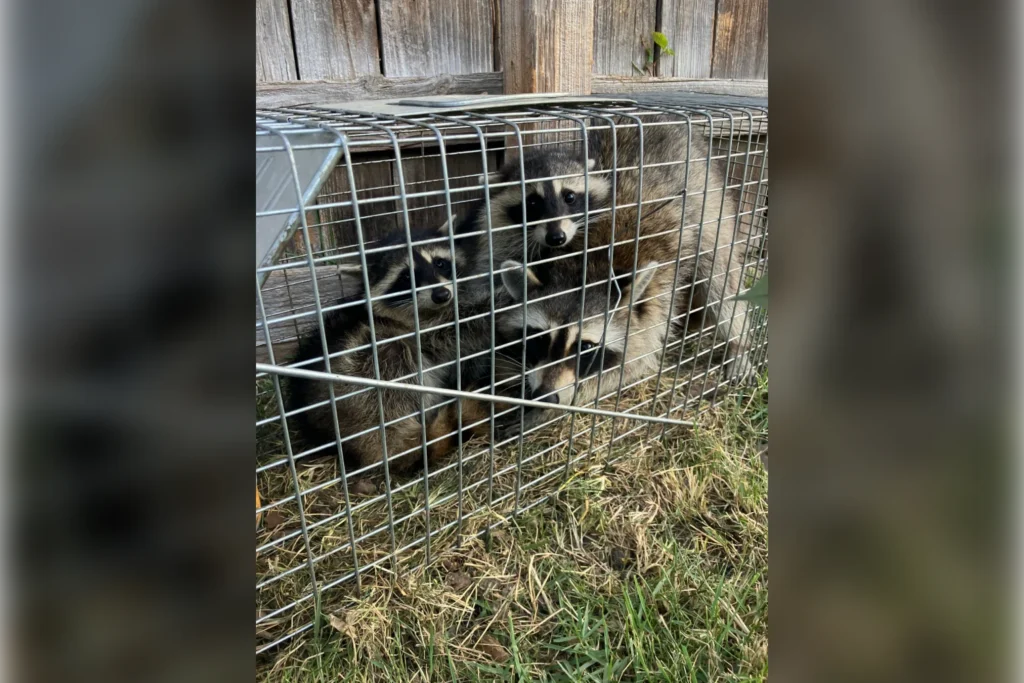
Trapping.
Catches the raccoon in a cage trap.
Exclusion.
Lets the raccoon leave and blocks the way back.
Sealing.
Closes and guards every entry point after.
When raccoons move into an attic, chimney or crawl space, there are two main ways to get them out: trapping and exclusion. Each has its place, and the right choice depends on where the raccoons are, whether there are babies and what the law allows. Here’s how raccoon trapping and exclusion compare.
What is raccoon trapping?
Raccoon trapping means catching the raccoon in a sturdy cage trap. The Missouri Department of Conservation recommends setting traps on shaded rooftops, in attics or where raccoons are active, and K-State Research and Extension recommends anchoring them firmly.
Trapping works well when you need the animal itself, such as a raccoon living in a garage or a male using an attic alone. But it has downsides:
- Babies get left behind. Trapping a mother in spring leaves her young in the attic.
- You catch other animals. Cats, opossums and skunks walk into raccoon traps too.
- Then what? A trapped raccoon has to be dealt with legally and humanely.
What is raccoon exclusion?
Exclusion means letting the raccoon leave on its own and blocking the way back. A one-way door goes over the main entry point after all other openings are sealed. The raccoon leaves to feed at night and can’t get back in.
Exclusion avoids handling the animal, but it only works when every raccoon, including any babies, can leave. Young raccoons stay in the den until about 8 to 10 weeks old, according to K-State, so exclusion during baby season needs a plan for the young.
What about relocating raccoons?
Many people assume a trapped raccoon can be driven out to the country and released. K-State notes that relocation is increasingly opposed. It can spread disease, relocated raccoons are often driven off by local raccoons and struggle to survive, and a raccoon may need to be moved more than 25 miles to keep it from coming back.
Can I trap a raccoon myself in Kansas or Missouri?
This is general information, not legal advice.
- Kansas: Raccoons are furbearers. K-State notes that under KSA 32-1002, landowners can control problem raccoons in or near buildings on their property without a permit, as long as they make reasonable efforts to solve the problem first and follow state and federal rules.
- Missouri: The Missouri Department of Conservation says homeowners may trap or shoot damage-causing raccoons out of season without a permit, under 3 CSR 10-4.130. Body-gripping traps aren’t allowed for dry-land sets in Missouri.
Check current rules and local ordinances before you set a trap. Many cities also restrict firearms.
Why sealing matters more than the method
Whether the raccoon is trapped or excluded, the job isn’t done until the house is sealed. Raccoons that find an open entry point move right in, and a good den site draws new raccoons every year.
Sealing has to be strong. Raccoons tear through thin screen, foam and plastic. Entry points need heavy materials, roof vents need guards and chimneys need caps.
How Rock Pest handles raccoons
Our wildlife team holds a KDWP Nuisance Wildlife Control permit, and we use a little of everything, starting with the most humane option:
- Encourage them to leave. With babies, we use an eviction fluid so the mother moves her young out one at a time, usually over about 5 days. We don’t block her entry point, since she has to come back for the rest.
- One-way door. With no babies, a one-way door lets the raccoon out and keeps it out.
- Live traps. Only when a raccoon won’t leave.
- Hand removal. For babies a mother has abandoned.
Most raccoons leave on their own, so relocation or euthanasia is a last resort. Then we repair the damage and seal and guard every entry point. The first wildlife inspection is usually free, and you get a detailed report with photos and a written estimate. See raccoon removal.
Need a raccoon out? Call 913-735-5451, answered 24/7, or schedule online. Most services can be scheduled same day.
Frequently Asked Questions
It depends on the situation. Exclusion avoids handling the animal, while trapping works when one raccoon needs to be caught. Either way, the house must be sealed after.
K-State notes relocation is increasingly opposed because it spreads disease and relocated raccoons often don’t survive. Check state and local rules first.
Landowners can control problem raccoons in or near buildings without a permit under KSA 32-1002, with conditions. This isn’t legal advice. Check current rules.
The Missouri Department of Conservation says homeowners may trap damage-causing raccoons out of season without a permit. Body-gripping traps can’t be used on dry land.
A door over the entry point that lets the raccoon push out but not back in. It’s used after every other opening is sealed.
Cat food, sardines and fish work, but they also attract cats. Sweets like marshmallows or grape jelly help avoid catching pets.