Spring is den season
Most attic raccoon problems in Kansas City start in late winter and spring.
February.
Mating season, and females start looking for dens.
April and May.
Babies are born, usually 4 to 7.
August.
Young are weaned and start to leave.
Raccoons are around all year in Kansas City, but their calendar shapes when they get into houses and how they have to be removed. Raccoon baby season is the big one. Here’s a month by month look, based on K-State Research and Extension and the Missouri Department of Conservation.
Raccoon season in Kansas City, month by month
- January: Raccoons don’t hibernate, but they sleep through cold spells, sometimes for days. Attics and chimneys make good winter dens.
- February: Mating season. K-State notes most breeding happens in February. Males travel more, and pregnant females start looking for safe dens.
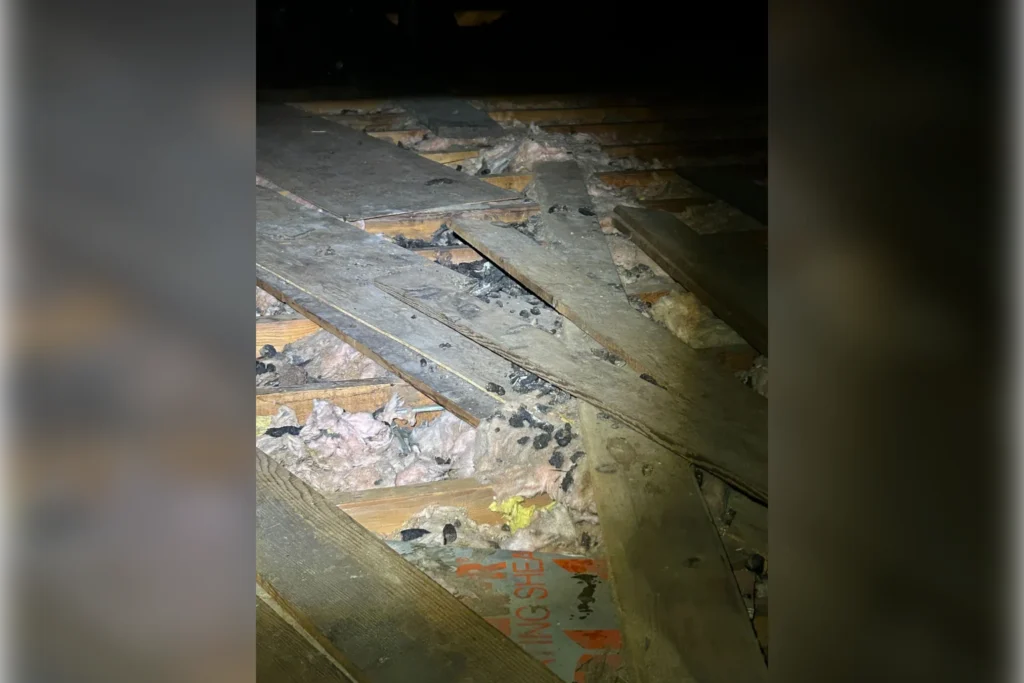
- March: Females settle into dens, often attics, chimneys, garages and under decks. Roof damage picks up as they tear in.
- April and May: Babies are born, usually 4 to 7 per litter, after about 63 days. Newborns are blind and stay in the den.
- June and July: Young raccoons grow fast and get noisy. They stay in the den until about 8 to 10 weeks old, then start following the mother out at night.
- August: Young are weaned. The Missouri Department of Conservation notes young may be present April through August.
- September through November: Some young raccoons disperse to find their own areas, often moving several miles. Raccoons eat heavily to build fat for winter.
- December: Activity slows as raccoons den up for cold weather.
Why raccoon baby season matters
Most raccoons in attics in spring and early summer are mothers with young. That changes how removal works. Sealing a mother out leaves the babies to starve, and she’ll tear back in to reach them. The Missouri Department of Conservation says to make sure no young are present before evicting adults or making repairs.
See baby raccoons in the attic for what to do.
When is the best time to raccoon-proof a house?
Late fall and early winter, before females start looking for dens in February, is a great time to seal and guard your roofline, cap the chimney and trim trees. But if raccoons are already in, don’t wait for the calendar. Get an inspection and a plan. See the raccoon prevention checklist.
Our wildlife team handles raccoons all year and plans every job around the season. The first wildlife inspection is usually free.
Raccoons moving in? Call 913-735-5451, answered 24/7, or schedule online. Most services can be scheduled same day.
Frequently Asked Questions
Mostly in February, according to K-State Research and Extension.
Mostly in April and May, after about 63 days of pregnancy. Litters are usually 4 to 7 babies.
Young stay in the den until about 8 to 10 weeks old and are weaned in August.
Less so. Raccoons don’t hibernate, but they sleep for days at a time in cold weather and come out on warmer nights.
Late fall and early winter, before females look for dens in February. If raccoons are already in, act right away.