Bigger buildings, same rules
Commercial bat removal uses the same exclusion method, planned around your building.
Every gap found.
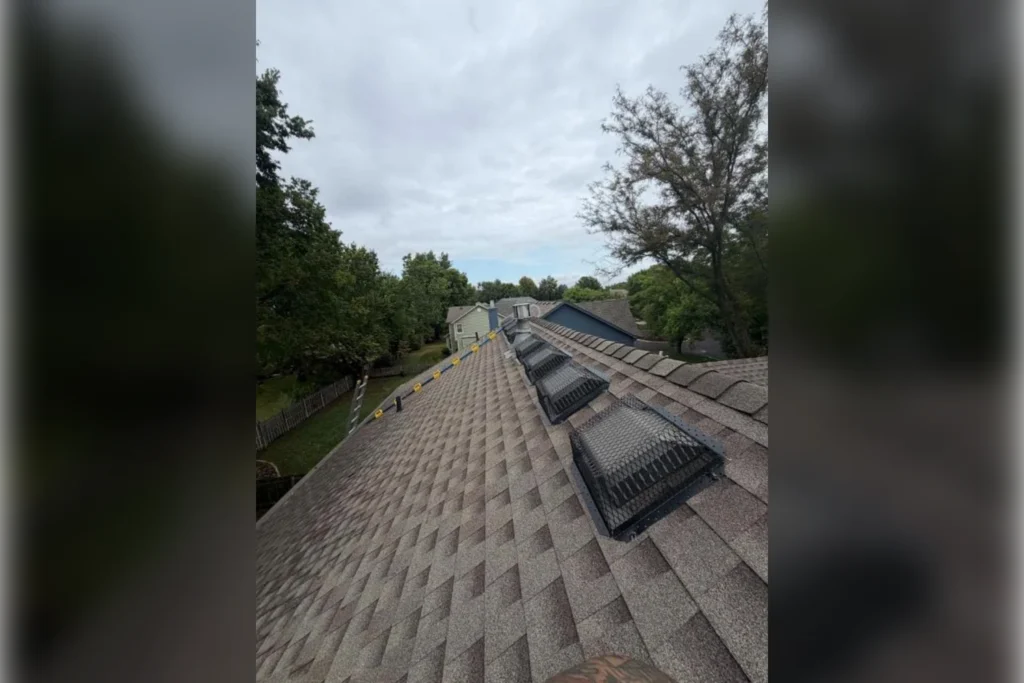
Larger rooflines mean more places to check.
Minimal disruption.
Most exclusion work happens on the outside.
Health first.
Bats in occupied spaces need quick attention.
Commercial bat removal follows the same rules as bats in a home: bats are protected in Kansas and Missouri, and the safe, legal way to get them out is exclusion. What changes on a commercial building is the scale. Rooflines are longer, entry points can be higher and harder to reach, and the work has to fit around employees, residents, students, congregations or customers.
Our wildlife team handles bats in buildings across the Kansas City area, alongside our commercial pest control services. Here’s how it works.
What kinds of buildings get bats?
Any building with warm, dark spaces and small gaps can draw bats. Apartment buildings are among the most common commercial bat calls we get. Others include:
- Churches, with steeples, tall gables and older trim
- Schools and daycare centers
- Office buildings and medical offices
- Warehouses, shops and metal buildings
- Apartment complexes, HOAs and rental properties
- Barns, stables and outbuildings
Bats need only a gap about 1/4 to 1/2 inch wide, and larger buildings usually have many of them. See how bats get in a building.
Why act quickly on bats in a commercial building?
Bats in occupied spaces raise health and liability concerns. A bat that gets into a classroom, office, apartment or sanctuary may need to be treated as a possible rabies exposure if anyone could have had contact, especially young children or people who were asleep. Built-up guano can grow the fungus that causes histoplasmosis, which matters for maintenance staff working in attics and mechanical spaces. Odor and staining can also affect tenants and customers.
If a bat is found in a space where someone may have had contact, keep it contained and contact a doctor or the local health department. In Kansas, the KDHE epidemiology hotline is 877-427-7317.
How does commercial bat exclusion work?
The process is the same as for a home:
- Inspection. We check the roofline and interior spaces for every gap bats use or could use, the size of the colony and how much guano has built up.
- Sealing. We seal every potential entry point except the main entrances the bats use most.
- One-way doors. We install bat cones on those main entrances so bats can leave but not return.
- Confirm and seal. Once the bats are gone, we remove the cones and seal the last openings.
In summer, the process usually takes 10 to 14 days. In cooler weather it takes longer because bats go out less. Timing also has to account for pups. See bat exclusion and bat maternity season.
Will bat removal disrupt our business?
Most exclusion work happens on the outside of the building, using ladders or lifts where the roofline calls for them. Interior access is usually needed for the inspection and the final visit, so we can see how bats are getting in from the inside. We’ll work with you on access and timing.
What about cleanup?
Guano cleanup, odor treatment, ectoparasite treatment and sanitizing are available as add-ons and are quoted after we see the space, since the amount of guano varies a lot. Heavily soiled insulation can be removed and replaced. See bat guano cleanup.
How much does commercial bat removal cost?
Commercial pricing depends on the size of the building, how many gaps need sealing, how high and hard to reach they are and how big the colony is. You get a detailed report with photos and a written estimate after the inspection. Commercial bat exclusion comes with the same one-year guarantee as our residential work: if bats get back in, we remove them again at no charge. Sealing a new entry point we didn’t cover may cost extra.
Bats in your building? Call 913-735-5451, answered 24/7, or schedule online. Most services can be scheduled same day.
Frequently Asked Questions
Yes. Our wildlife team handles bats in apartment buildings, churches, schools, offices, warehouses and other buildings across the Kansas City area.
With exclusion: sealing the backup gaps, installing one-way doors on the main entrances and sealing the last openings once the bats are gone.
Most of the work is done outside. Interior access is usually needed only for the inspection and the final visit.
In summer, usually 10 to 14 days. Cooler weather and pup season can make it take longer.
Keep it contained if anyone may have had contact, and contact a doctor or the local health department. Then schedule an inspection.
Yes, for one year. If bats get back in, we remove them again at no charge. Sealing a new entry point may cost extra.