Smaller than you think
A bat can slip through a gap about the width of your thumb.
Tiny gaps.
Openings of 1/4 to 1/2 inch are enough for a bat.
Roofline first.
Most entry points are high, where the roof meets the walls.
Look for stains.
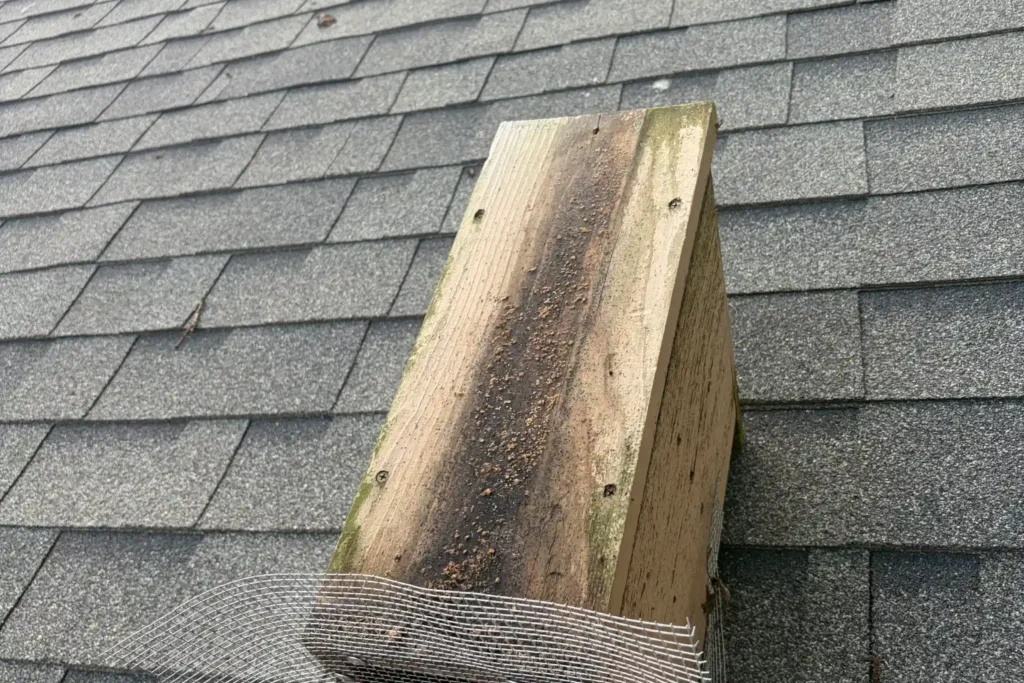
Dark rub marks and droppings point to active gaps.
How do bats get in the house? Through gaps that are already there. Bats don’t chew or dig their way in like mice and squirrels. They find small openings, usually up high, and squeeze through. A gap of about 1/4 to 1/2 inch is all a bat needs, according to Kansas and Missouri wildlife agencies.
That’s why many homeowners are surprised to find bats in an attic that looks sealed from the ground. Here’s where bats get in and what to do about it.
How small a hole can a bat fit through?
Most bats that live in Kansas City homes can fit through a gap about 1/4 to 1/2 inch wide, roughly the size of your thumb. Bats have soft bodies and flexible wings, so a crack that looks too small from the ground is often plenty.
Big brown bats, the most common bat in homes here, use slightly larger gaps. Smaller species like little brown bats and evening bats can get through even tighter spots.
Where do bats get into a house?
Most bat entry points are near the roofline, where heat collects and gaps are common. The spots we see most often include:
- Fascia and roof edge gaps. Where the roof decking meets the fascia board or gutter.
- Soffits. Loose or warped soffit panels and gaps at soffit returns. See bats in soffits.
- Gable and ridge vents. Damaged screens or gaps around the vent frame.
- Chimneys. Gaps in the flashing or between the chimney and siding. See bats in the chimney.
- Siding and trim. Corners, J channel and spots where siding has pulled away.
- Utility openings. Gaps around pipes, wires, vents and dryer exhausts.
- Shutters and attached decor. Bats roost behind shutters and can find gaps into the wall from there.
How do bats get from the attic into my living space?
Once bats are in the attic or walls, they sometimes wander into the house through interior gaps. Common paths include attic hatches and pull-down stairs, recessed lights, ceiling fan boxes, gaps around chimneys and plumbing chases, and open spaces around ductwork.
Young bats learning to fly in late summer are most likely to end up inside this way. If you’ve found a bat inside, read our steps for a bat in the house.
How can I find where bats are getting in?
The easiest way is to watch the house at sunset. Start about 15 minutes before sunset and watch for 30 to 45 minutes. Bats leave one at a time from their exits, so note each spot. Watching from two sides of the house, or with a helper, makes it easier.
During the day, look for clues:
- Dark, greasy rub marks around small gaps
- Droppings stuck to the siding or piled on sills below a gap
- Stains or droppings on the ground under the roofline
Our page on signs of bats covers more clues.
Should I seal the gaps where bats are getting in?
Not yet. If bats are still inside, sealing the gaps traps them. Trapped bats can die in the walls or find a new way into your living space. Bats are protected wildlife in Kansas and Missouri, and wildlife agencies recommend exclusion instead.
Exclusion uses one-way devices over the main exits so bats can fly out but can’t get back in. Once they’re gone, the entry points are sealed. Timing matters too, because exclusion shouldn’t happen while young bats can’t fly. Read about bat maternity season.
Why do bats keep finding a way back in?
Bats return to the same roost year after year. If only the obvious exit is sealed, they’ll often find a second gap nearby. That’s why a whole-house inspection matters. Sealing every gap a bat could use, not just the one you saw them using, is what keeps them out.
Our wildlife team inspects the full roofline, finds every entry point and completes bat exclusion with a one-year guarantee. The first wildlife inspection is usually free.
Want to know how bats are getting in? Call 913-735-5451, answered 24/7, or schedule online. Most services can be scheduled same day.
Frequently Asked Questions
Most house bats can get through a gap of about 1/4 to 1/2 inch, roughly the width of your thumb.
No. Bats don’t chew new holes. They use gaps that are already there, like loose soffits, vent gaps and spaces around the chimney.
Most likely it came from a colony in the attic or walls and got in through a gap around a light, attic hatch, chimney or plumbing.
Gaps along the roofline are most common, especially where the roof meets the fascia, around soffits and around gable vents.
Not until the bats are out. Sealing with bats inside traps them. Bats should be excluded first, then the gaps sealed.
Watch the house at sunset to see where bats come out, and look for rub marks and droppings below gaps. An inspection finds the rest.