Three bats do most of it
Kansas City bats that move into homes are almost always one of three species.
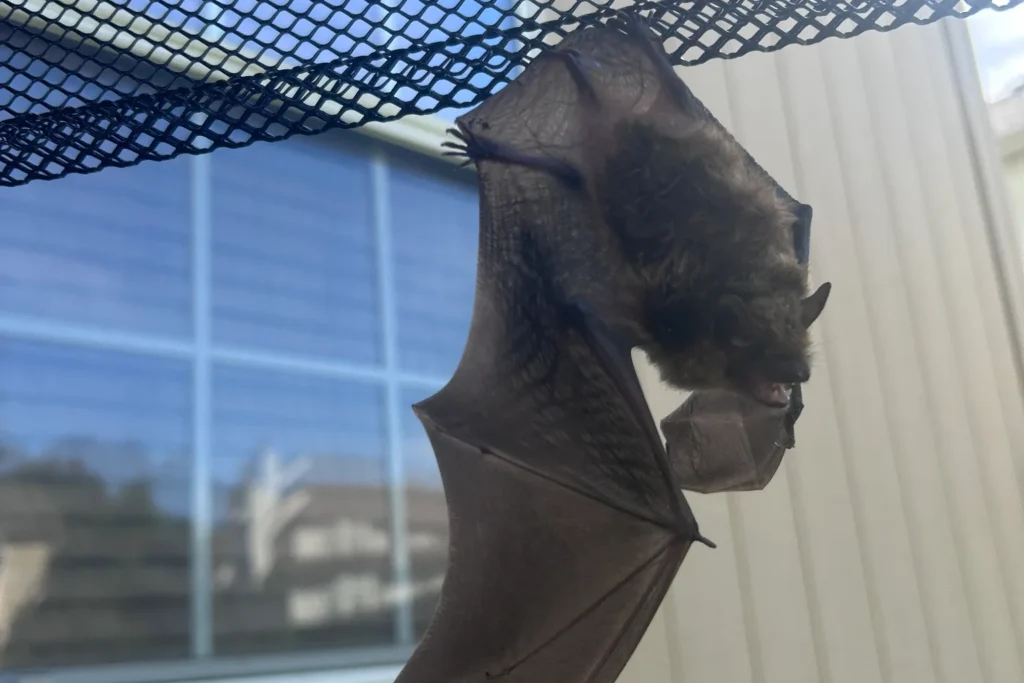
Big brown bat.
The most common house bat, and it can stay all winter.
Little brown bat.
Forms summer colonies in attics, then leaves to hibernate.
Evening bat.
A smaller bat that roosts in buildings in summer.
Kansas and Missouri are home to more than a dozen kinds of bats. Kansas alone has 15 species, according to the Kansas Department of Wildlife and Parks. Most Kansas City bats live in trees, caves and under bridges, and never come near a house.
A few species, though, love attics and walls. Here’s which Kansas City bats show up in homes and why.
Which bats live in Kansas City homes?
According to KDWP and University of Missouri Extension, the bats that most often roost in buildings in our area are:
- Big brown bat. The most common bat in homes. It’s about 4 to 5 inches long with a wingspan around a foot. Big brown bats handle cold well and sometimes hibernate right in attics and walls.
- Little brown bat. Smaller, with glossy brown fur. It forms summer maternity colonies in attics and barns, then moves to caves or mines to hibernate.
- Evening bat. A small, dark brown bat that roosts in buildings and trees in summer and migrates south for winter.
You may also see eastern red bats and other tree bats flying around yards and streetlights at night, but they rarely roost in houses.
When are bats active in Kansas City?
Most Kansas City bats are active from about April through October, feeding on insects at night. Maternity colonies form in late spring, and pups are born in late spring and early summer. Late summer is when young bats start flying and sometimes end up inside homes.
In fall, many bats leave for winter roosts. Big brown bats may stay in a building through the winter and come out on warm days. Read more about bat maternity season.
Why do Kansas City bats choose attics?
Attics are warm, dark and protected, which is exactly what a bat colony needs, especially mothers raising pups. Older homes and homes with gaps at the roofline, loose soffits or gable vents are easy targets. A gap of 1/4 to 1/2 inch is enough for a bat to get in. See how bats get into a house.
Are any Kansas City bats protected?
All bats are protected wildlife in Kansas and Missouri. Some Missouri species, like the gray bat, Indiana bat and northern long-eared bat, are also federally endangered, though they rarely roost in homes. That’s why bats are removed with exclusion, not traps or poison. Learn whether bats are protected.
Our wildlife team handles bats in homes across the Kansas City area. The first wildlife inspection is usually free.
Have bats at your house? Call 913-735-5451, answered 24/7, or schedule online. Most services can be scheduled same day.
Frequently Asked Questions
The bats most often found in Kansas City homes are big brown bats, little brown bats and evening bats. Many other species live in trees and caves nearby.
Kansas has 15 bat species, according to the Kansas Department of Wildlife and Parks. Only a few regularly roost in buildings.
Some do. Big brown bats can hibernate in attics and walls, while little brown bats go to caves and evening bats migrate south.
Bats eat large numbers of night-flying insects, including moths and beetles, so they help outdoors. They just don’t belong in your attic.
From about April through October, mostly at dusk and through the night. Late summer is when young bats are most likely to end up indoors.