Removal yes, harm no
Bats are protected, but you can still get them out of your house the right way.
No killing.
Bats are protected wildlife in both states.
No poisons.
There are no poisons registered for use on bats.
Exclusion is legal.
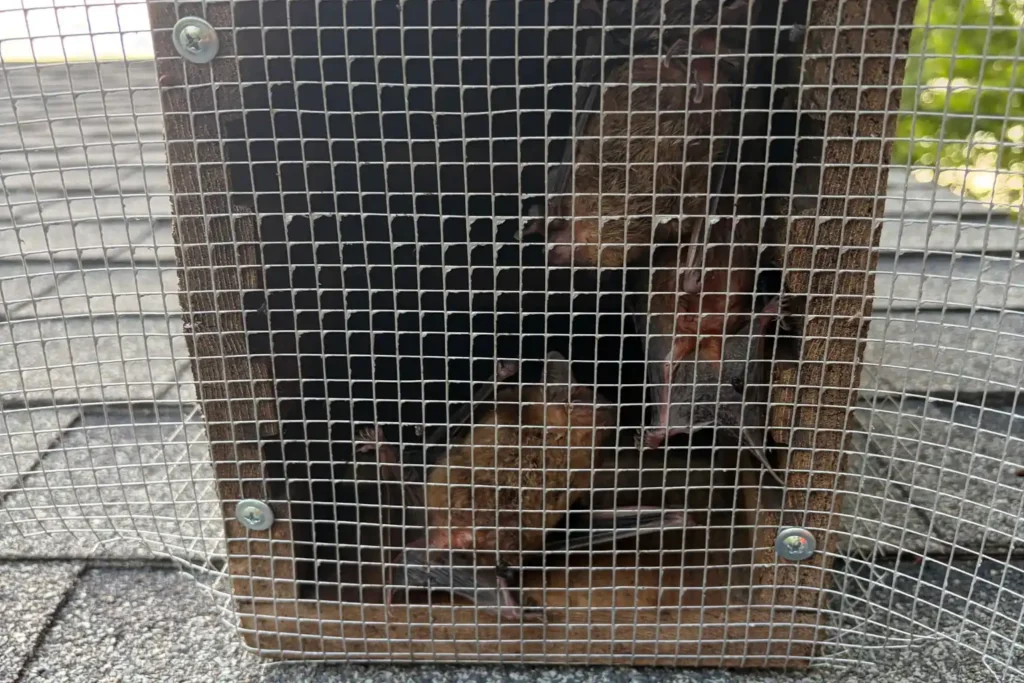
One-way exits let bats leave unharmed.
Are bats protected? Yes. In both Kansas and Missouri, bats are protected wildlife, and a few species are also federally endangered. That doesn’t mean you have to live with bats in your attic. It means they need to be removed in a way that doesn’t harm them.
Here’s what that looks like for Kansas City homeowners. This is general information from state wildlife agencies, not legal advice.
Are bats protected in Kansas?
Bats in Kansas are protected nongame wildlife under the Kansas Department of Wildlife and Parks. KDWP recommends that homeowners hire a company that holds a KDWP Nuisance Wildlife Control permit to remove bats, and it recommends exclusion as the way to do it. Our wildlife team holds a KDWP Nuisance Wildlife Control permit.
KDWP also advises against excluding bats while young bats can’t fly, roughly May through late June, and during winter hibernation.
Are bats protected in Missouri?
In Missouri, all wildlife, including bats, is protected under state law. University of Missouri Extension notes that killing bats is illegal except when they’re causing damage to property, and even then exclusion is the recommended approach.
Missouri is also home to bats protected under the federal Endangered Species Act, including the gray bat, Indiana bat and northern long-eared bat. These species rarely roost in homes, but it’s another reason not to harm bats you can’t identify.
Can I kill a bat in my house?
Killing bats is not the answer, and in most cases it’s not allowed. It also doesn’t solve the problem, since a single bat inside usually means more are roosting in the attic or walls.
The one important exception is health safety. If a bat may have bitten someone or was found in a room with a sleeping person, it may need to be tested for rabies. Health officials will guide you. Trap the bat in a container rather than killing it if you can, since damage to its head can make testing impossible. See what to do with a bat in the bedroom.
What bat removal methods are allowed?
Exclusion is the accepted method in both states. One-way devices are placed over the main exits so bats can fly out at night but can’t get back in. Once they’re gone, the gaps are sealed.
Some things don’t work or aren’t allowed:
- Poison. No poisons are registered for bats.
- Ultrasonic devices. University of Missouri Extension says these don’t work.
- Sealing bats in. Trapping bats inside can kill them and push them into your living space.
Our wildlife team removes bats with exclusion and seals the entry points. The first wildlife inspection is usually free.
Need bats removed the right way? Call 913-735-5451, answered 24/7, or schedule online. Most services can be scheduled same day.
Frequently Asked Questions
Bats are protected nongame wildlife in Kansas. KDWP recommends exclusion by a company with a Nuisance Wildlife Control permit instead of killing them.
All wildlife is protected in Missouri. MU Extension notes killing bats is illegal unless they’re damaging property, and exclusion is still recommended.
Yes. The gray bat, Indiana bat and northern long-eared bat are federally endangered. They rarely roost in homes.
No poisons are registered for bats. Ultrasonic devices don’t work. Exclusion is the reliable, legal way to remove them.
Bats can be excluded once young bats can fly, usually late summer and fall. Agencies advise against exclusion during the pup season and mid-winter.