Don’t let it go yet
A bat in the bedroom while someone slept is treated as a possible rabies exposure.
Contain it.
Trap the bat with gloves and a container if you safely can.
Call for advice.
Your doctor or health department will say if testing is needed.
Find the source.
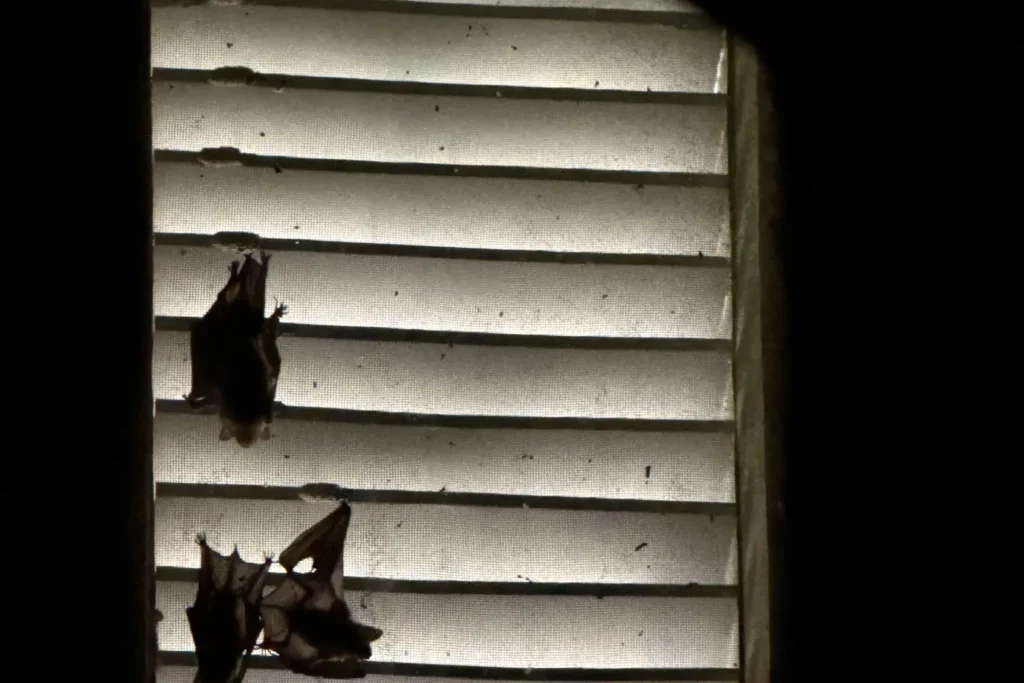
Bats inside often come from a colony in the attic.
Waking up with a bat in the bedroom is different from seeing one fly through the living room. Bat bites are tiny and can go unnoticed, especially in someone who was asleep. That’s why health officials treat a bat in the bedroom as a possible rabies exposure, even if no one feels a bite.
Here’s what to do right now, and why the bat matters.
What should I do if I wake up with a bat in the bedroom?
Stay calm and don’t swat at it. Get other people and pets out of the room and close the door.
If you can do it safely, catch the bat. Wear thick leather gloves, wait for it to land, cover it with a container and slide cardboard underneath. Tape the lid shut and keep the bat somewhere cool, away from people and pets.
Then call your doctor or local health department. In Kansas, the KDHE epidemiology hotline is 877-427-7317. Don’t release the bat until they tell you it’s OK. If you can’t catch it safely, our wildlife team can help get it out of the living space.
Why keep the bat instead of letting it go?
If the bat can be tested and comes back negative for rabies, rabies shots usually aren’t needed. If the bat flies away, there’s no way to test it, and health officials may recommend treatment to be safe.
Rabies is almost always fatal once symptoms start, but it’s preventable with prompt treatment after an exposure. Saving the bat gives you and your doctor the best information. Our page on whether bats carry rabies explains the risk.
What if the bat was in a child’s room?
Health officials treat a bat found in a room with a young child the same way as a sleeping adult, since a child may not know or be able to say if they were touched. The same goes for anyone who was impaired. Contact your doctor or health department right away.
If a pet was in the room, call your vet too, even if your pet’s rabies vaccine is current.
How did a bat get into my bedroom?
A bat in the bedroom usually comes from a colony roosting in the attic or walls. Young bats learning to fly in late summer are especially likely to wander into living spaces through gaps around ceiling lights, attic hatches, closets and chimneys.
Once the bat situation is handled, schedule an inspection. Our wildlife team checks the attic and roofline for a colony and the gaps they’re using. The first wildlife inspection is usually free.
Found a bat in the house? Call 913-735-5451, answered 24/7, or schedule online. Most services can be scheduled same day.
Frequently Asked Questions
Maybe. Health officials treat it as a possible exposure. Contact your doctor or health department. If the bat is caught and tests negative, shots usually aren’t needed.
Yes. Bat teeth are very small, and a bite may not leave a mark you can see or feel, especially if you were asleep.
Don’t kill it if you can avoid it. A crushed head can make rabies testing impossible. Trap it in a container instead and call for advice.
Call your doctor or health department anyway. Without the bat to test, they’ll help you decide whether treatment is needed.
Most come from a colony in the attic or walls and get in through gaps around lights, attic hatches, closets or chimneys.