Up, then in
Animals reach the roof, then find the weakest spot.
Roof returns.
The most common entry point.
Vents and chimneys.
Open or thin covers.
Small gaps.
Bats and mice need very little.
Knowing how animals get into attics is the first step to keeping them out. Most come in at the roofline, where wood is soft, gaps are hidden and trees or gutters give an easy way up.
The most common entry points
- Roof returns and soffit returns. Where the roof edge meets a wall. The most common entry point we see for animals.
- Soffits and fascia. Especially soft or rotted boards.
- Roof, ridge and gable vents. Thin plastic or loose screens.
- Chimneys. Without a cap. See chimney caps and animals in chimneys.
- Gaps where additions meet the house. Common on older homes.
- Pipe, wire and AC line openings.
Different animals, different gaps
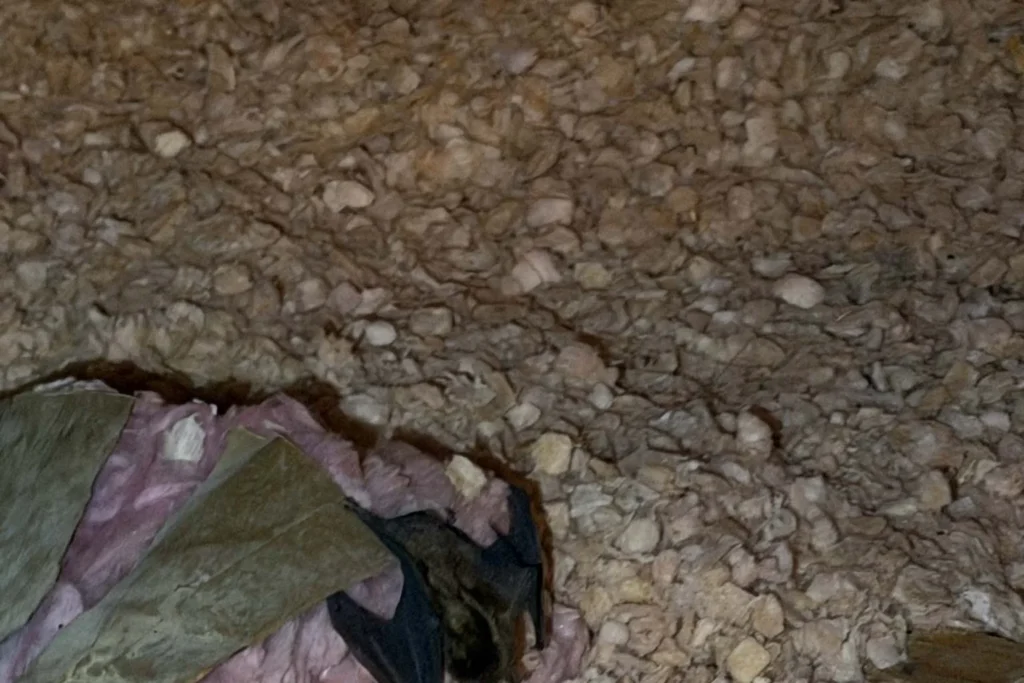
- Bats need only a small gap and often use the same spot for years. See how bats get in the house.
- Squirrels chew soft wood into round holes. See how squirrels get into houses.
- Raccoons tear open soffits, vents and roofing. See how raccoons get into attics.
- Mice and rats squeeze through tiny gaps and climb inside walls. See rodent exclusion.
Why older homes see more of it
In our experience, most wildlife problems are in older homes with deferred maintenance and wood rot from Kansas City rain and weather. Rushed new builds with gaps left in the trim show up too. See wildlife problems in older and newer homes.
How we seal them
We use one-way doors to get animals out, then close every gap with materials they can’t chew or tear: hardware cloth, metal flashing, vent guards, chimney caps and wood repairs matched to the house. See wildlife exclusion.
Signs an animal found a way in
- Chewed or torn wood along the roofline
- A bent or missing vent cover
- Stains or grease marks around a gap
- Droppings below an opening
- Noise in the attic at dawn or dusk
Check after storms
Storms loosen shingles, vents and soffit panels, and animals find those gaps fast. A quick look around the roofline after a big storm can catch an opening early.
Our wildlife team finds and seals entry points across Kansas City. See wildlife removal.
Not sure where they’re getting in? Call 913-735-5451, answered 24/7, or schedule online. Most services can be scheduled same day.
Frequently Asked Questions
Most come in at the roofline through roof returns, soffits, vents and chimneys.
Roof returns and soffit returns, where the roof edge meets a wall.
Yes. Bats and mice need very little room.
Wood rot and deferred maintenance open up soft spots and gaps.
With hardware cloth, metal flashing, vent guards, chimney caps and wood repairs matched to the house.