Up, then in
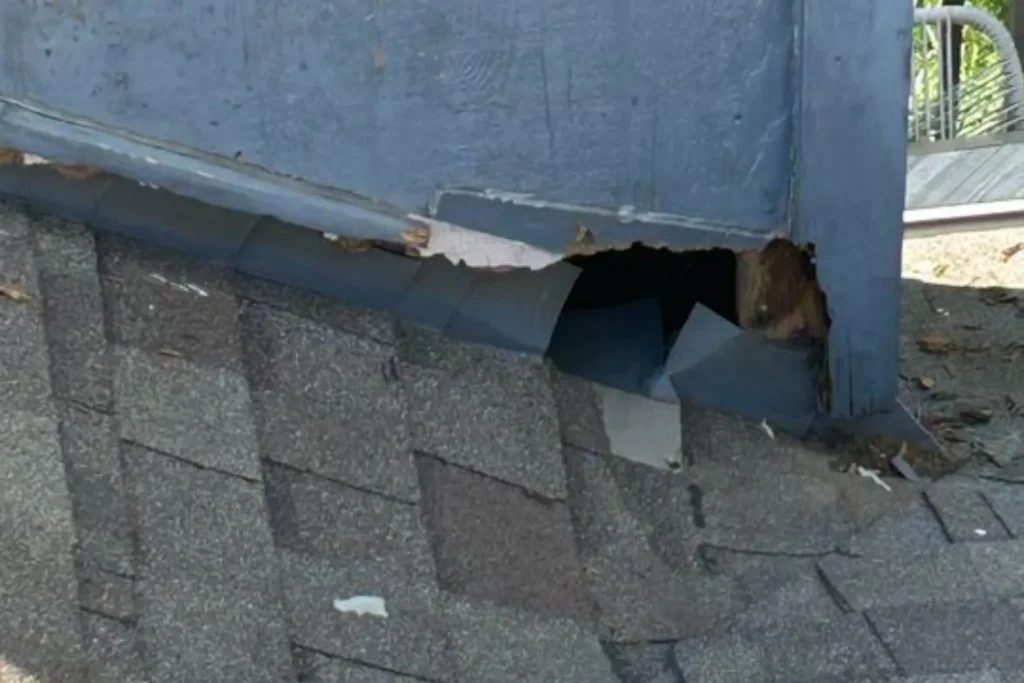
Squirrels reach the roof first, then chew into the softest spot.
The climb.
Trees, wires, gutters and downspouts.
The weak spot.
Roof returns, soffits and vents.
The chew.
They widen gaps into holes.
Knowing how squirrels get into houses is the first step to keeping them out. Squirrels don’t need a big opening. They find a small gap or a soft spot at the roofline and chew it into a way in.
How squirrels reach the roof
- Tree branches. The most common route. K-State Research and Extension puts a squirrel’s jump at about 5 to 6 feet. We recommend keeping branches about 10 feet back from the roof and gutter line.
- Utility and cable lines. K-State lists electrical and cable lines as a common entry route.
- Gutters and downspouts. Squirrels climb them easily.
- Siding and brick. Rough surfaces give them grip.
Where squirrels get in
- Roof returns. Where the roof edge meets a wall. The most common squirrel entry we see.
- Soffits and fascia. Especially soft or rotted boards.
- Vents. Gable, soffit, ridge and roof vents without sturdy covers. K-State lists unscreened vents as a common entry.
- Chimneys. Without a cap.
- Siding gaps and holes. Around pipes, wires and trim.
See squirrel damage to soffits and fascia and squirrels in soffit vents.
Why squirrels are so hard to keep out
Squirrels chew constantly. When one hole is sealed, they often move a couple of feet over and chew a new one. That’s why spot-patching one hole rarely works. The whole roofline needs to be sealed and protected.
How we seal squirrels out
- One-way doors on active holes so squirrels leave and can’t return.
- Sealing every other gap with materials squirrels can’t chew.
- Metal flashing on soffit returns and vent covers and guards to protect soft spots.
- Repairs to chewed soffits, fascia and roof returns.
The Missouri Department of Conservation and K-State both say to make sure no squirrel is inside before sealing.
What you can do
- Trim branches about 10 feet back from the roof and gutters (we don’t trim trees, so use a tree service)
- Replace rotted trim
- Cap the chimney
- Look over the roofline each spring and fall
Our wildlife team seals out squirrels across Kansas City. See squirrel removal and the squirrel-proof your home checklist.
Found a way in? Call 913-735-5451, answered 24/7, or schedule online. Most services can be scheduled same day.
Frequently Asked Questions
Usually from a tree, wire or gutter onto the roof, then through a chewed hole at a roof return, soffit, fascia or vent.
K-State Research and Extension says about 5 to 6 feet. We recommend trimming branches about 10 feet back.
They can chew through weak plastic vents and screens. Sturdy covers and guards stop them.
When one hole is sealed, they often chew a new one nearby. The whole roofline needs protection.
Not until you know no squirrels are inside. A trapped squirrel chews a new way out.