Climb, then tear
Raccoons get onto the roof first, then make or widen an opening.
The climb.
Trees, downspouts, trellises and house corners.
The weak spot.
Soffits, fascia, vents and roof returns.
The fix.
Heavy guards and sealing after they’re out.
Raccoons are some of the best climbers around a house, and they have strong front paws that can pull, pry and tear. Knowing how raccoons get into attics is the first step to keeping them out.
How do raccoons get onto the roof?
Most raccoons climb. Common routes include:
- Trees. Branches that touch or hang over the roof are the easiest path.
- Downspouts and gutters. Raccoons shimmy up downspouts and pull themselves onto the gutter.
- House corners. Brick, stone and siding corners give them grip.
- Trellises, fences and decks. Anything next to a lower roof gives them a step up.
- Utility lines. Raccoons can walk wires to reach a roof.
K-State Research and Extension recommends trimming trees that touch the house and placing slick metal on the roof edge where raccoons jump on from trees.
Where do raccoons get into the attic?
Once on the roof, raccoons look for a weak spot. The most common raccoon entry points are:
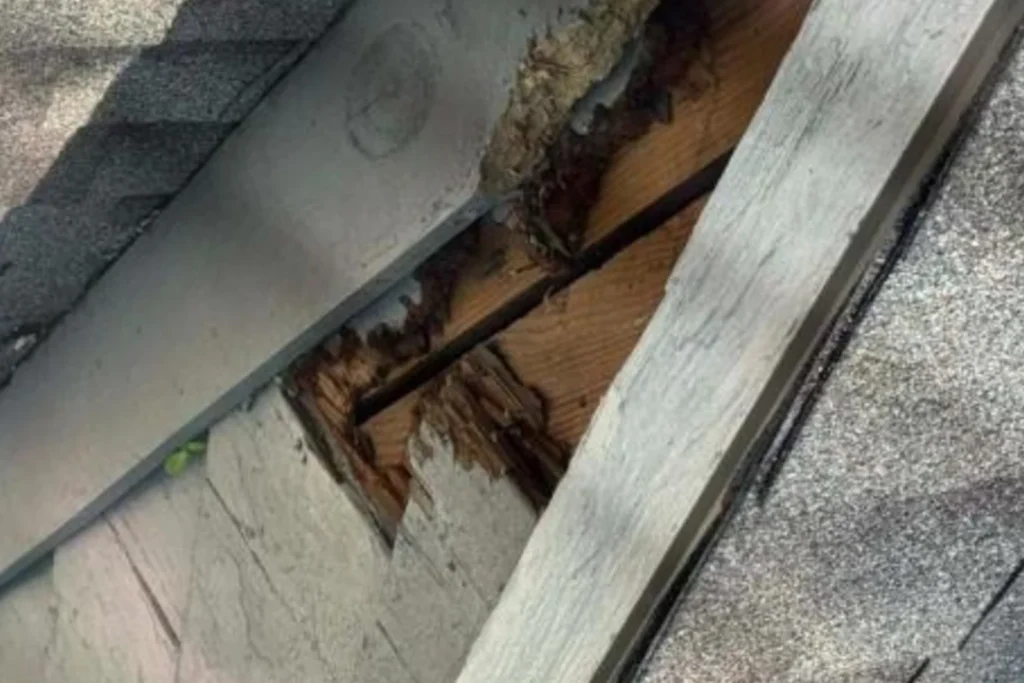
- Roof returns and soffit corners, where two rooflines meet and the soffit or fascia leaves a gap
- Soffit panels, which raccoons can pull down or push up
- Rotted or loose fascia boards
- Box vents and ridge vents, which raccoons can push in or tear off
- Gable vents with thin screens
- Shingles and decking at the roof edge, especially where wood is soft
- Plumbing vent and attic fan openings
- Chimneys without a cap
The Missouri Department of Conservation notes that female raccoons may breach attic screens or roof vents to set up dens and have young.
Do raccoons need an existing hole?
No. That’s what makes raccoons different from bats, mice and many other animals. A raccoon will widen a small gap or tear a new hole if the material is weak enough. Rotted wood, thin vinyl soffit and loose flashing are all fair game. See raccoon damage to roofs and soffits.
How do I stop raccoons from getting into the attic?
- Make sure the attic is empty first. Sealing a raccoon or babies inside causes more damage. Young may be present April through August, according to the Missouri Department of Conservation.
- Trim branches back from the roof.
- Cap the chimney with a sturdy, secured cap.
- Guard roof vents with heavy-gauge screen or vent guards.
- Seal and reinforce weak spots at roof returns, soffits and fascia with materials raccoons can’t tear.
- Remove food sources like open trash and pet food.
Thin screen, foam and caulk alone won’t stop a raccoon. Repairs need to be strong. Our wildlife team inspects the whole roofline and gets the raccoons out. Then we repair torn soffits, fascia and roofing, seal every entry point and add covers, vent guards and chimney caps where needed. The first wildlife inspection is usually free, and you get a detailed report with photos and a written estimate. See the raccoon prevention checklist.
Raccoons getting into your attic? Call 913-735-5451, answered 24/7, or schedule online. Most services can be scheduled same day.
Frequently Asked Questions
They climb trees, downspouts or house corners to the roof, then tear through soffits, fascia, roof vents or shingles at weak spots.
Yes. Raccoons can climb brick, siding corners, downspouts and trees with ease.
Smaller than most people expect. If a raccoon can get its head through a gap, it can usually get its body through too, and it can tear a small gap wider if the material is weak.
Raccoons mostly pull and tear rather than chew. They lift shingles, pry fascia and push in vents, especially where wood is rotted.
A heavy-duty guard fastened securely will. Thin screens or plastic covers usually won’t stop a determined raccoon.
Only after you know the raccoons, including any babies, are out. Then seal and reinforce every entry point.