When in doubt, call
Bat bites are easy to miss, so health officials want to hear about any possible bat exposure.
Bites and scratches.
Any bite or scratch counts, even a tiny one.
Sleeping or kids.
A bat in a room with a sleeper or young child counts.
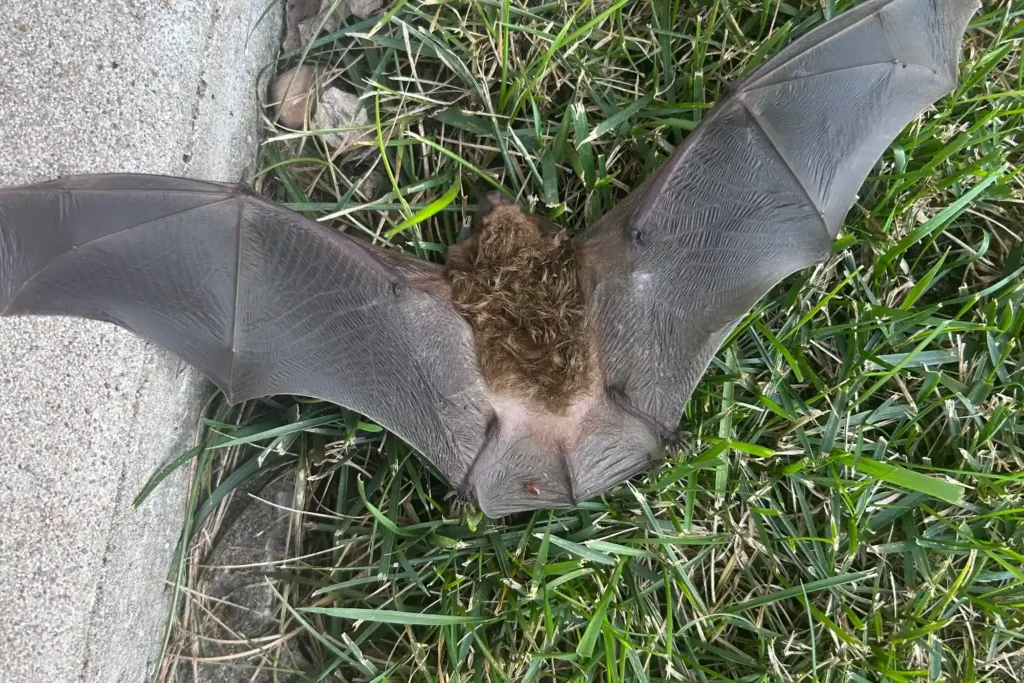
Save the bat.
A bat that tests negative can rule out shots.
A bat exposure is any situation where a bat’s saliva may have gotten into your body, usually through a bite or scratch. Because bat teeth are so small, people don’t always know they were bitten. That’s why health officials take a broad view of what counts.
This page covers what health officials, including the CDC and the Kansas Department of Health and Environment, consider a possible bat exposure. Always follow the advice of your doctor or health department.
What counts as a bat exposure?
Health officials generally treat these as possible exposures:
- A bite or scratch from a bat, even one that seems minor
- Bat saliva getting into your eyes, nose, mouth or an open wound
- A bat landing on bare skin
- Waking up to find a bat in the room
- A bat found in a room with a young child, or with someone who was impaired or can’t say what happened
If any of these apply, contact your doctor or local health department right away. In Kansas, the KDHE epidemiology hotline is 877-427-7317. Read more about what to do with a bat in the bedroom.
What usually doesn’t count?
These generally aren’t considered exposures on their own:
- Seeing a bat flying outdoors or in a room while you’re awake and it never touched you
- Having bats in the attic or walls
- Touching bat droppings, urine or blood
Bat droppings carry a different risk, histoplasmosis, which isn’t related to rabies. If you’re unsure whether something counts, call and ask.
Why does it matter if I keep the bat?
If the bat can be safely captured and tested, a negative result usually means no rabies treatment is needed. If the bat escapes, there’s no way to test it, so treatment may be recommended to be safe.
Wear thick gloves, cover the bat with a container, slide cardboard underneath and tape it shut. Don’t crush its head, since that can make testing impossible. Keep it away from people and pets and call for advice.
What happens if I need rabies shots?
Rabies treatment after an exposure is called post-exposure prophylaxis. For someone who has never had a rabies vaccine, the CDC describes it as a dose of rabies immune globulin plus a series of vaccine shots given over about two weeks. It’s very effective when started promptly. Once symptoms of rabies appear, it’s almost always fatal, which is why health officials don’t recommend waiting.
If a pet may have been exposed, call your vet, even if its rabies vaccine is current. Our page on whether bats carry rabies explains the overall risk.
After the health questions are handled, find out how the bat got in. Our wildlife team inspects for a colony and seals the entry points. The first wildlife inspection is usually free.
Had a bat in the house? Call 913-735-5451, answered 24/7, or schedule online. Most services can be scheduled same day.
Frequently Asked Questions
Usually not, if you were awake and sure it didn’t touch you. Any bite, scratch or skin contact should be reported to a doctor or health department.
Rabies spreads through saliva, so a bite, scratch or saliva in an open wound or your eyes, nose or mouth is the concern. Call your doctor if you touched one.
If you were asleep, health officials treat it as a possible exposure. Call your doctor or health department. Testing the bat may rule out shots.
As soon as possible. Contact your doctor or health department right away rather than waiting for symptoms.
Your doctor or local health department, or the KDHE epidemiology hotline at 877-427-7317.