Cool, damp and quiet draws a crowd
Kansas City basements give pests the moisture and cover they want, but a few changes and a steady plan keep them in check.
Moisture.
Damp corners, sump pits and window wells pull in crickets, centipedes and silverfish.
Clutter.
Cardboard boxes and stored items give spiders and mice quiet places to hide.
Coverage.
The common basement pests are covered on our plans, with free re-service between visits.
The most common basement pests in Kansas City are crickets, spiders, centipedes, silverfish, millipedes and mice. They come for moisture, steady temperatures and places to hide. Drying things out, cutting clutter and keeping a barrier in place handles most of them.
These pests, including light mouse activity, are covered by our home pest control plans. Here’s what each one means and how to make your basement less inviting.
What basement pests are most common in Kansas City?
Crickets, spiders, centipedes, silverfish, millipedes, pillbugs and mice top the list. Each one leaves its own clues.
- Crickets gather near damp walls, and some chirp at night.
- Spiders, including brown recluse, hide in boxes, corners and unused rooms. See our spider control page.
- Centipedes move fast and hunt other bugs. Our post on millipedes and centipedes shows how to tell them apart.
- Silverfish like damp paper, cardboard and stored clothes.
- Mice leave droppings along walls and near stored food.
Why do basement pests love moisture?
Most basement pests need water as much as food. Damp walls, leaky pipes, sump pits and window wells keep the air humid, and bugs follow it.
Moisture also draws the small insects that spiders and centipedes eat. Dry out the basement and you cut down their food supply too.
How do you keep basement pests out?
Start with moisture, then clutter, then gaps. Those three steps make a basement far less inviting.
- Run a dehumidifier and fix leaky pipes.
- Clear leaves and debris from window wells.
- Store items in sealed plastic bins instead of cardboard.
- Keep stored items off the floor and away from walls.
- Seal gaps around pipes and utility lines.
Our pest proof your home checklist covers more fixes on the outside of the house.
How do we treat basement pests?
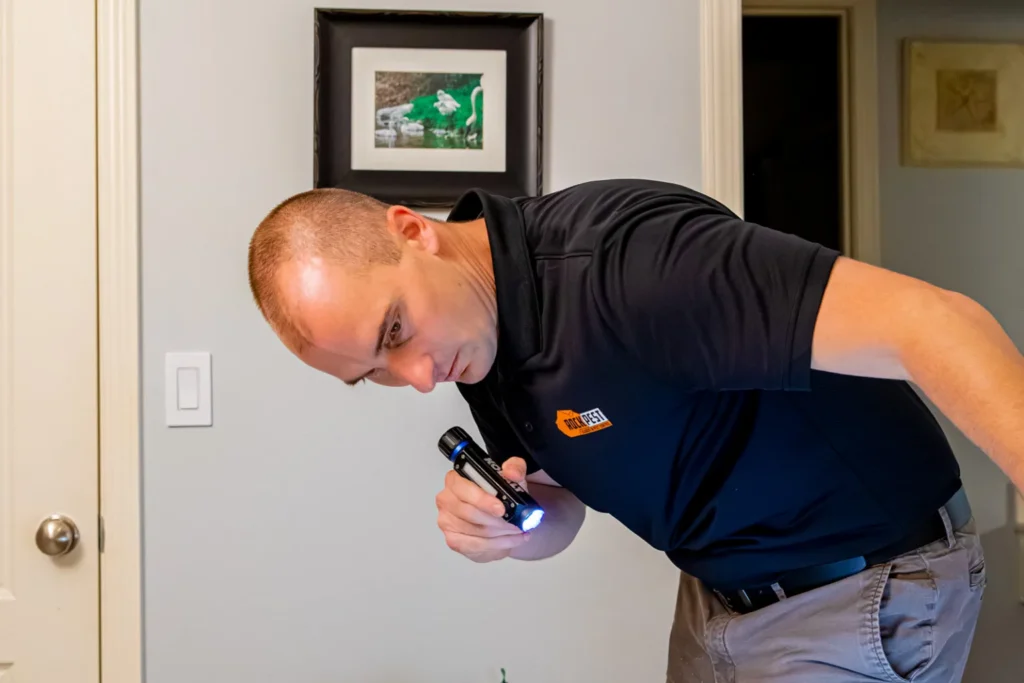
Each visit, we inspect your home, yard and entry points, treat an exterior barrier plus inside where needed and email you a report. In a basement, that means treating where pests hide and enter, based on the layout and the season.
Our techs seal small mouse gaps with copper mesh. Bigger exclusion goes to our wildlife team, who quote the work. Allow 10 to 14 days for products to take full effect.
When are basement pests worst?
Activity often picks up after heavy rain and when nights turn cold in the fall. Mice and crickets push indoors looking for warmth and shelter.
Spotting small bugs upstairs as well? Learn about bugs in the bedroom that aren’t bed bugs.
Know who’s down there: camel crickets, cellar spiders and silverfish.
Seeing more bugs downstairs than you’d like? Call 913-735-5451, answered 24/7, or schedule online. Most services can be scheduled same day.
Frequently Asked Questions
Basements are cool, damp and quiet, which draws crickets, spiders, centipedes and silverfish. Reducing moisture and clutter, plus a regular barrier treatment, cuts most basement bugs down.
Yes, brown recluse spiders live in the Kansas City area and like quiet basements and storage boxes. They are covered on every Rock Pest plan.
Yes, a dehumidifier helps because most basement pests depend on moisture. Drier air makes the space less inviting to crickets, silverfish and centipedes.
Yes, crickets, spiders, centipedes, silverfish, millipedes and light mouse activity are covered on Rock Pest plans. Quarterly service is $56.50 a month with free re-service between visits.
Allow 10 to 14 days for products to take full effect. Some activity right after treatment is normal while products work.