One crumb, then a whole parade
Ants find your kitchen because it has what the colony needs, and a few habits plus steady service send them packing.
Food.
Crumbs, sticky spills, pet food and open sweets give scout ants a reason to recruit the rest.
Water.
Leaky faucets, damp sponges and wet sink cabinets keep ants coming back, especially in dry spells.
Coverage.
Ants, including carpenter ants, are covered on every Rock Pest plan with free re-service between visits.
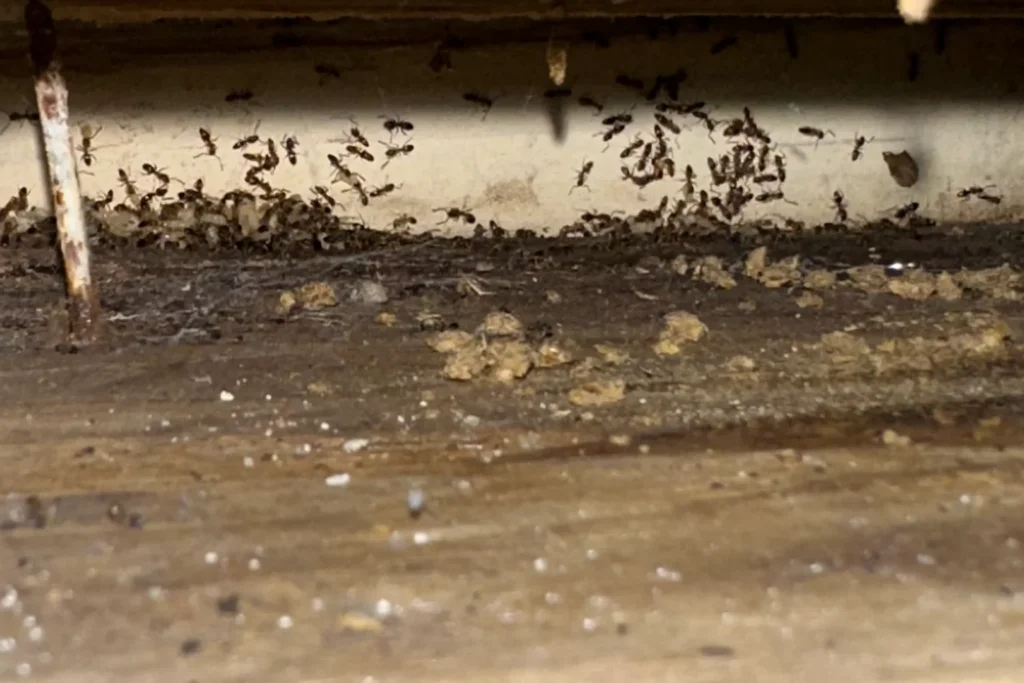
You have ants in the kitchen because a scout found food or water and laid a scent trail for the rest of the colony. Most of these ants nest outside, in walls or under slabs, and walk in through small gaps. Remove what drew them and block the way in, and the trail fades.
Ants are covered on all of our home pest control plans, so a steady barrier keeps them from coming back. Here’s why they show up and what actually works.
What attracts ants in the kitchen?
Food and water attract ants in the kitchen more than anything else. Sugar, grease, crumbs and pet food are the big draws, and a damp sink cabinet is a bonus.
- Crumbs under the toaster, stove and fridge
- Sticky spots from juice, soda or honey
- Pet food bowls left out all day
- Trash cans without tight lids
- Leaky faucets and wet sponges
Our post on keeping pests out of your Kansas kitchen covers more cleanup habits.
Why are ants worse in late summer?
Ants surge in Kansas City homes in late summer, especially August. Colonies are at their biggest, and hot, dry weather pushes them to look for food and water indoors.
Ants come back in waves through the year. Our Kansas City pest calendar shows when each pest peaks.
Should I spray the ant trail?
No, spraying the trail usually kills only the ants you see. The colony keeps sending more, and some sprays can scatter ants into new spots.
Wipe the trail with soapy water to remove the scent. Then call us so we can treat where ants nest and enter, not just where they walk.
How do we get rid of ants in the kitchen?
We inspect your home, yard and entry points, then apply an exterior barrier plus treatment inside where needed. We match the treatment to the ant type, your layout and the season.
Allow 10 to 14 days for products to work. Some ant activity right after treatment is normal. If ants keep showing up between visits, our free re-service guarantee covers a return trip.
Could kitchen ants be carpenter ants?
They could be. Carpenter ants are larger, often black, and can nest in damp or damaged wood near sinks and dishwashers.
Our guide on signs of a carpenter ant infestation shows what to look for. Carpenter ants are covered on our plans too.
Before you grab the spray, read ant bait vs spray. Seeing wings? Here’s what flying ants in the house means.
Tired of wiping up ant trails every morning? Call 913-735-5451, answered 24/7, or schedule online. Most services can be scheduled same day.
Frequently Asked Questions
Ants usually show up suddenly because a scout found food or water and laid a scent trail for the colony to follow. Late summer heat and dry weather in Kansas City make this more common.
Ants rarely leave on their own while food and water are easy to reach. Cleaning up helps, but the colony keeps sending scouts until the nest and entry points are treated.
Yes, ants, including carpenter ants, are covered on every Rock Pest home pest control plan. Quarterly plans start at $56.50 a month with free re-service between visits.
Allow 10 to 14 days for treatment to take full effect. You may see some ants right after a visit while the products work.
Yes, kids and pets can be in treated areas once the product is dry, usually 15 to 30 minutes. Clean counters before the visit so we aren’t treating over dirt.