The ants you see are the small part
Most of a colony stays hidden, so the right treatment is the one that reaches the nest.
Bait goes home.
Worker ants carry bait back and share it, so it can reach the queen.
Spray stops at the trail.
Contact sprays kill the ants they hit and leave the colony intact.
Patience pays.
Good ant treatments take about 10 to 14 days to work through a colony.
In the ant bait vs spray debate, bait usually wins for ants already inside. Worker ants carry bait back to the nest and share it, so it can reach the queen. A store bought contact spray kills only the ants it touches, and the colony keeps sending more.
That’s why our home pest control plans focus on the colony, not just the trail. Ants, including carpenter ants, are covered on every plan.
Does ant bait work better than spray?
For most indoor ant trails, yes. Bait works slowly on purpose, which gives workers time to carry it home and feed it to the rest of the colony.
You’ll often see more ants at the bait for a few days. That’s a good sign. Leave the trail alone and let them feed.
Why can spraying ants make things worse?
Repellent sprays kill the ants you see, but the survivors simply route around the treated spot. Some species, like pharaoh ants, can split into several new colonies when stressed.
Spraying also kills the workers that would have carried bait back. If you’re using both, don’t spray near the bait. Our post on exterminator vs DIY covers more of what store bought products can and can’t do.
When does spray make sense?
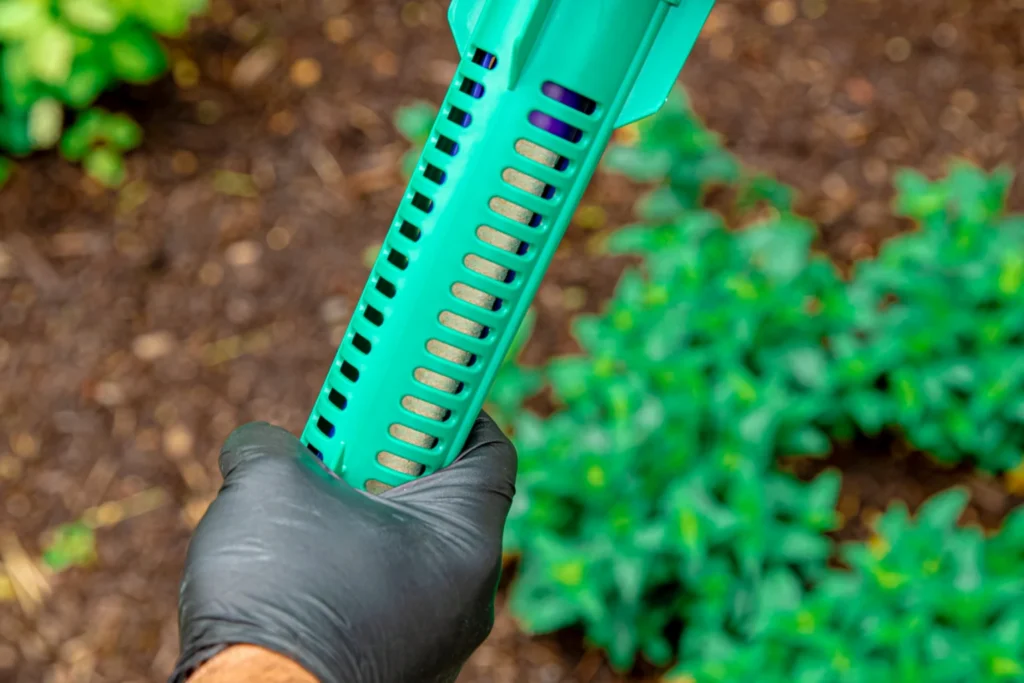
Outside, the ant bait vs spray choice often flips. Spray makes sense there, as a barrier that stops ants before they get in. It also helps with ants nesting in the yard or foundation, where a colony can be reached directly.
The key is the type of product. Pros generally use products matched to the pest and the spot, and you can read more in what professionals use for pest control.
Ant bait vs spray: what does Rock Pest use?
We use the method that fits the ant, the home and the season. Every visit starts with an inspection of your home, yard and entry points, then an exterior barrier plus interior treatment where needed. Your tech will walk you through the treatment plan for your home.
Allow 10 to 14 days for products to work, and expect some ant activity while they do. Kansas City ants surge in late summer, around August, so that’s when we hear about them most. If ants come back between visits, re-service is free on every plan. Our ant infestation page covers the ants we see most.
See what’s bringing ants in the kitchen, and read up on pavement ants and flying ants in the house.
Tired of chasing ant trails? Call 913-735-5451, answered 24/7, or schedule online. Most services can be scheduled same day.
Frequently Asked Questions
Ant bait is usually better for ants inside, because workers carry it back and share it with the colony and queen. Contact spray only kills the ants it touches, so new ones keep coming.
Ant bait typically takes several days to a couple of weeks, since workers need time to carry it back and spread it through the colony. Rock Pest asks customers to allow 10 to 14 days for treatments to work.
More ants at the bait for a few days means they found it and are carrying it home. Leave the trail alone and don’t spray it, or you’ll kill the workers that spread the bait.
It’s better not to spray a kitchen ant trail if you’re using bait, because spray kills the workers that carry bait back to the nest. Wipe up crumbs and spills instead and let the bait work.
Yes, ants, including carpenter ants, are covered on every Rock Pest home pest control plan. Quarterly plans start as low as $56.50 a month after a $289 initial service, with free re-service between visits.