When weighing a professional exterminator vs. DIY, many homeowners reach for the store-bought solution first. That’s not a mistake. It’s a reasonable instinct. Products are cheap, hardware stores carry everything you need, and the problem seems manageable. But after years handling infestations across the Kansas City metro at Rock Pest Control, one pattern shows up consistently: homeowners who delay calling a professional tend to spend significantly more by the time it’s over, particularly with harder-to-treat pests like bed bugs and cockroaches, where delays commonly allow infestations to spread and push costs higher. This isn’t a scare piece. It’s a straight cost-benefit comparison across five areas that actually matter: cost, effectiveness, recurrence, safety, and a clear decision checklist so you know exactly where you stand.
DIY has real value in the right situations. That’s worth saying up front. The goal here isn’t to push you toward a phone call you don’t need. It’s to give you an honest read on when home treatment works and when it quietly makes things worse.
When DIY Pest Control Actually Makes Sense
For minor, isolated infestations, over-the-counter products work. A handful of ants near a windowsill, a single mouse spotted before it nests, a small cluster of garden pests- these are situations where ant baits, snap traps, and basic sprays are genuinely reasonable responses. The key variable isn’t the product; it’s the severity and the species.
Manageable looks like this: visible, contained, single-location activity with no signs of structural access, no recurring return after treatment, and no indication the pest has established a colony. If you treat and the problem stops, you solved it. DIY worked.
The Pests That Shrug Off Home Remedies
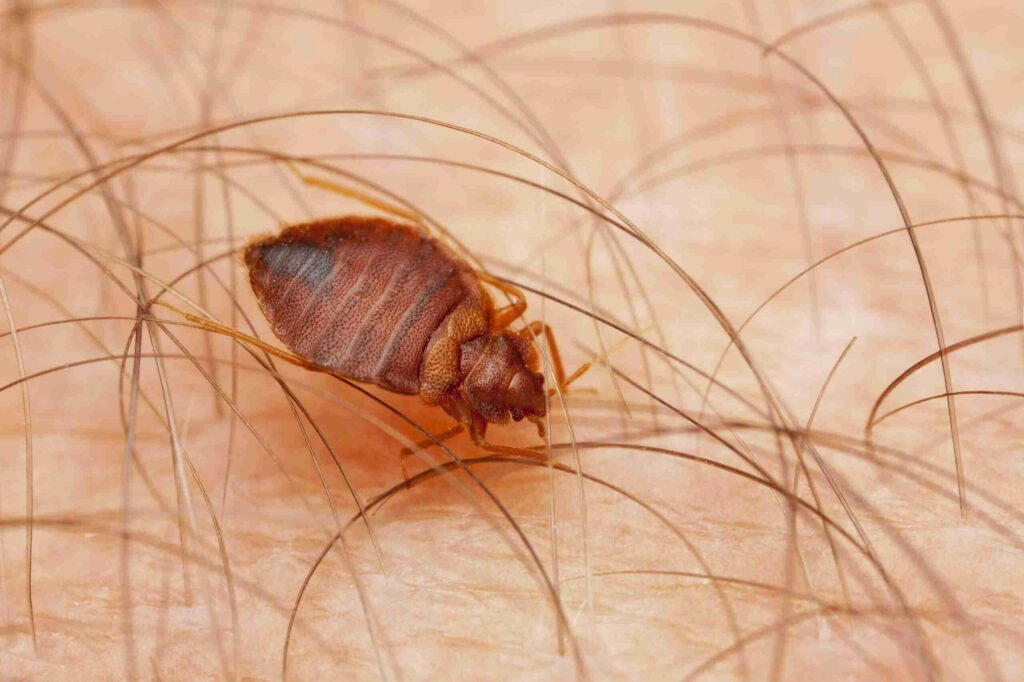
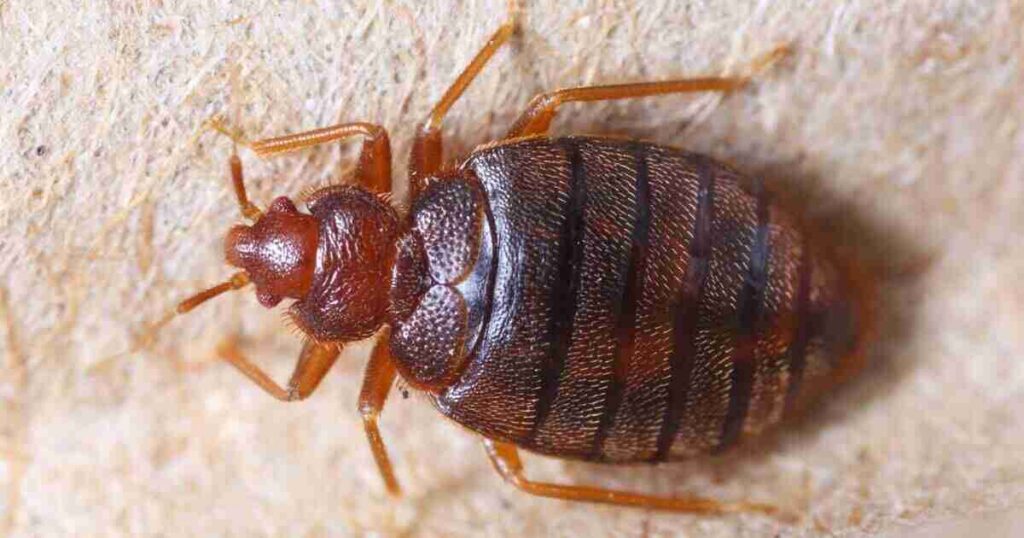
Bed bugs and cockroaches behave differently from common household pests, and the difference is biological, not a marketing claim. Bed bugs hide in wall voids, mattress seams, outlet plates, and furniture joints. Cockroaches establish deep colonies in wall cavities and under appliances. Standard OTC sprays and foggers don’t reach harborage points, meaning they kill what’s visible and leave the colony intact. Rutgers University and Texas A&M Extension research both confirm that foggers are largely ineffective against bed bugs because the aerosol never penetrates the cracks and crevices where bugs actually live. The infestation pauses, then rebuilds.
Professional Exterminator vs. DIY: Cost and Effectiveness
Most people assume DIY is always cheaper. It’s cheaper upfront. Over time, especially with the harder pests, the math often reverses completely.
When Professional Treatment Makes More Sense
Store-bought products can seem like an easy solution for cockroaches or bed bugs, especially when the infestation appears small. The problem is that visible pests are often only part of what’s happening inside the home.
Cockroaches can remain hidden in cracks, cabinets, wall voids, and areas near plumbing, while bed bugs can spread beyond the mattress into bed frames, furniture, baseboards, and other protected spaces. Products such as foggers may fail to reach these hiding areas and can sometimes cause pests to move deeper into the structure.
Professional treatment starts by identifying the extent of the infestation and choosing a treatment method based on the pest, property, and level of activity. For established or recurring infestations, addressing the entire problem is generally more effective than repeatedly treating only the pests you can see.
The Hidden Problem With Repeated DIY Attempts
A persistent bed bug infestation can become much harder to control when homeowners spend weeks or months trying different DIY products without eliminating the source of the problem. Sprays, foggers, mattress treatments, and other store-bought solutions may kill some exposed bed bugs while leaving others hidden in furniture, bed frames, baseboards, wall gaps, and nearby rooms.
The longer the activity continues, the more opportunity bed bugs have to reproduce and spread beyond the original area. Homeowners may also begin throwing away bedding or furniture unnecessarily, only to discover that the infestation remains elsewhere in the home.
Getting professional help early can make it easier to determine how widespread the infestation actually is and which treatment approach is appropriate. Instead of repeatedly treating visible activity, a professional inspection focuses on finding harborages, identifying signs of spread, and developing a plan for the entire infestation. With bed bugs, delaying effective treatment often gives the problem more time to grow.
Why Professional Treatment Prevents Recurrence, and DIY Usually Doesn’t
The recurrence problem isn’t about product strength; it’s about reach and method. OTC products treat what’s visible. Professional integrated treatments address harborage, eggs, and the entire infestation cycle.
The Recurrence Problem with OTC Pesticides
The EPA puts it plainly: if pests reappear after DIY cleanup, some were missed or eggs survived. Bed bug eggs are chemically resistant, meaning standard sprays don’t eliminate them. Cockroach populations rebuild rapidly from survivors, even small numbers. Extension guidance from Rutgers, Texas A&M, and the EPA indicates that DIY success rates for established bed bug infestations fall well below 50%, while professional integrated treatments, using monitoring, multiple methods, and follow-up inspections, consistently outperform single-application approaches. It’s worth noting that comparable head-to-head recurrence data for termites, rodents, and cockroaches is less standardized, but the core problem remains the same across species. You’re not just treating the pest; you’re treating the biology behind it.
What Heat Treatment Actually Does (and Why DIY Can’t Replicate It)
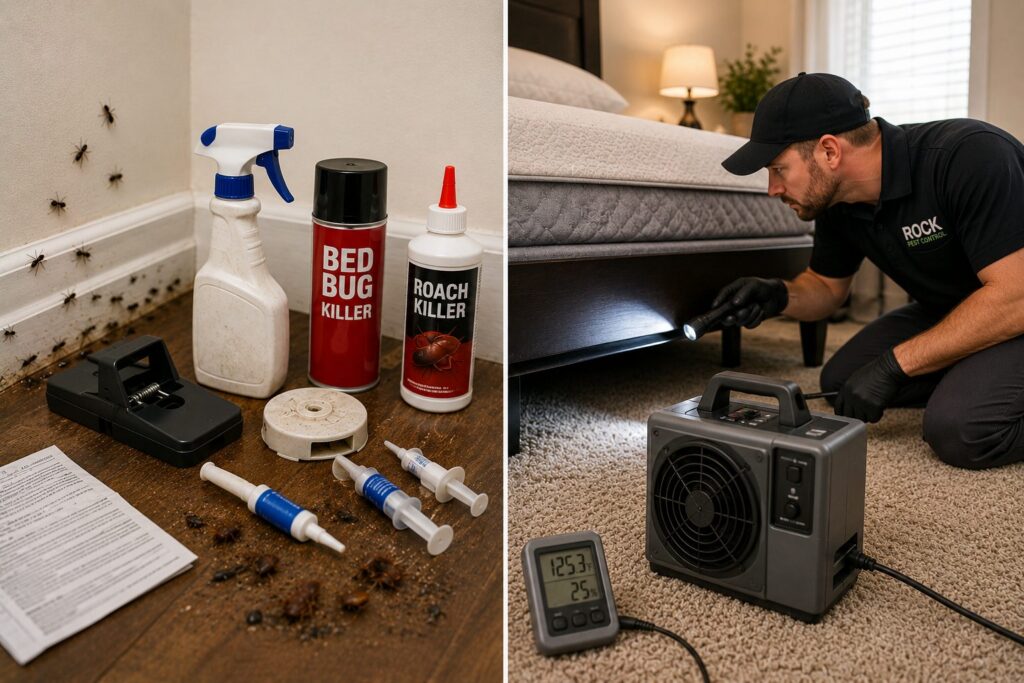
Heat treatment is the technology gap between professional-grade extermination and anything available at a hardware store. Sustained temperatures above 120°F kill bed bugs at every life stage, including eggs, in a single treatment session, a threshold documented by University of Florida and Virginia Tech extension research. The heat penetrates wall voids, mattress interiors, furniture joints, and every harborage point a fogger misses entirely. University of Florida research found a 100% kill rate in 9 of 11 heat treatment trials, with the remaining two achieving around 83% effectiveness due to containment challenges rather than limitations of the method itself. Rock Pest Control uses professional heat treatment technology for Kansas City homeowners, and in general, professional heat treatments can achieve high kill rates in a single visit, though results in any individual home can depend on containment and property complexity. Consumer foggers and aerosols have substantially lower efficacy for bed bugs than professional heat treatments, according to extension guidance from Penn State, Rutgers, Texas A&M, and the University of Florida.
Health and Safety: What’s on That DIY Label (and What Isn’t)
Many homeowners may not read pesticide labels carefully, and that’s where real risk begins. The concerns here are genuine, but they don’t require alarm. Understanding how professional methods differ is enough to make a smarter call.
The Risks Hiding in Over-the-Counter Pesticides
Under EPA law, a pesticide label is a legal document. Using a product inconsistently with its label isn’t just ineffective; it’s a federal violation. Children are especially vulnerable because they breathe more air per body weight, spend significant time on treated floors, and are more likely to contact and ingest surface residues. Pets face ingestion risks through paw licking and grooming. Foggers and spray concentrates can linger on surfaces, in carpets, and in HVAC systems well past the ventilation period stated on the label. The EPA has also raised concerns that many fogger products contain flammable propellants, and over-application creates fire and explosion risk, risks the agency links to common patterns of label misuse rather than rare accidents.
Why Eco-Friendly Professional Methods Are Different
Professional exterminators apply licensed-grade products at effective concentrations in targeted locations, not broadcast-sprayed across entire rooms. The difference isn’t just product quality; it’s precision. Rock Pest Control’s eco-friendly methods reduce chemical exposure while maintaining effectiveness, something a consumer fogger cannot achieve. In practice, eco-friendly professional treatment means targeted application, lower residue, proper disposal, and work performed under state-licensed protocols. For households with young children or pets, that distinction matters significantly more than the label on a store-bought spray.
5 Signs You’ve Already Crossed the DIY Threshold
The decision between hiring a pest control professional and continuing DIY treatment doesn’t have to be a gut call. Concrete indicators exist, and most homeowners see at least one before they reach out for help.
What to Look for in Your Home Right Now
Run through these five indicators honestly:
- Pests are reappearing after a completed DIY treatment. If the problem came back, you didn’t eliminate the colony. You addressed the surface, not the infestation.
- You’re seeing activity in multiple rooms or locations. Spread means establishment. A stray ant is a scout. Ants in three rooms, or bed bugs in the bedroom and the living room couch, means the infestation is already distributed.
- There’s visible structural evidence. Gnaw marks, droppings in wall voids, damage to baseboards, hollow-sounding wood, or chewed wiring are all signs of an established infestation that DIY is unlikely to resolve.
- You’ve identified the species as bed bugs or cockroaches. Both are professional-level pests by the nature of their biology. Their harborage behavior alone makes consumer-grade treatment unreliable for established infestations.
- The infestation has persisted for more than 30 days despite treatment attempts. A month of failed treatment is a month of colony growth. The problem is not getting smaller on its own.
Any one of these signs suggests professional help is warranted. Two or more makes the case clear. Extension guidance consistently maps these indicators- recurring activity, multi-location spread, and species type- to recommendations for integrated professional treatment.
What to Ask Before You Hire Anyone
Not all pest control companies are equal, and hiring the wrong one doesn’t solve the problem any faster than DIY. Before you book, ask these five questions:
- Are they licensed in Missouri or Kansas?
- Do they offer a written satisfaction guarantee?
- Is a free estimate included before any commitment?
- Do they use an integrated approach with follow-up inspections?
- Do they offer eco-friendly treatment options for homes with children and pets?
Rock Pest Control is licensed, offers a satisfaction guarantee, provides free estimates, uses an integrated treatment approach, and offers eco-friendly options for the full range of residential pests. That’s what a reliable exterminator should be able to confirm before you sign anything.
The Bottom Line on Professional Exterminator vs. DIY Pest Control
The professional exterminator vs. DIY question doesn’t have a universal answer. But for serious infestations, it does have a clear one. For a small ant trail near a window, try DIY first. For established bed bug or cockroach infestations in a Kansas City home, extension sources and local cost data consistently point toward professional treatment, particularly when you factor in the full cost of repeated failed attempts, recurring infestations, property damage, and exposure risk.
The mistake most homeowners make isn’t trying DIY. It’s continuing DIY past the point where the evidence supports it. Months of foggers and sprays against an established bed bug colony typically cost more, cause more disruption, and create more stress than a single professional heat treatment session. The biology doesn’t change because the product is cheaper.
When comparing a professional exterminator vs. DIY for persistent pest problems, Rock Pest Control offers free estimates within 24 hours and a satisfaction guarantee on every treatment. If you’re in the Kansas City metro area and you’ve hit any of those five threshold signs, stop guessing and get a real answer. Call us or request your free estimate online today.
Frequently Asked Questions About Professional Exterminators vs. DIY Pest Control in Kansas City
It depends on the pest and the severity of the infestation. DIY pest control in Kansas City can work for minor, isolated problems such as a small ant trail or a single mouse caught early. Professional pest control is generally a better option when pests keep returning, spread to multiple areas, or involve difficult-to-treat pests such as bed bugs and cockroaches.
Consider calling a Kansas City exterminator if pests return after treatment, activity appears in multiple rooms, you find droppings or structural damage, or DIY treatments have failed for 30 days or longer. These signs can indicate an established infestation that requires a more comprehensive treatment approach.
DIY pest control is usually cheaper upfront, but repeated treatments can increase the total cost. Buying multiple sprays, foggers, traps, and other products without eliminating the infestation can add up over time. If pests continue to reproduce or spread, delaying professional pest control in Kansas City may also make the eventual treatment more extensive.
DIY products may kill some exposed bed bugs, but established infestations can be difficult to eliminate completely. Bed bugs can hide in mattress seams, bed frames, furniture, baseboards, wall gaps, and nearby rooms. A professional bed bug exterminator in Kansas City can determine how far the infestation has spread and recommend an appropriate treatment method.
Recurring pest activity is one of the clearest warning signs. Pests appearing in multiple rooms, droppings, gnaw marks, property damage, or an infestation that continues despite repeated DIY treatments can indicate a more established problem. A professional Kansas City pest control inspection can help determine the extent of the infestation and the appropriate treatment.