Morning noises, chewed edges
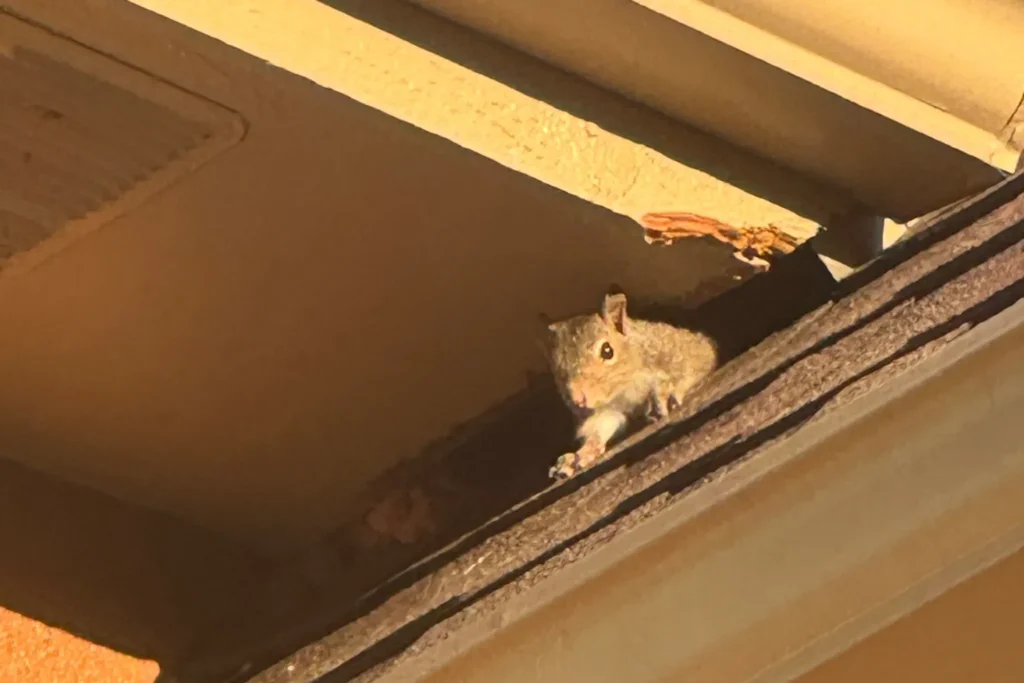
Squirrels in the attic are busy at dawn and dusk and chew their way in.
Listen at sunrise.
Running and scratching early and late in the day.
Look at the roofline.
Chewed soffits, fascia and vents.
Don’t seal them in.
A trapped squirrel chews a new way out.
Squirrels in the attic are one of the most common wildlife calls in Kansas City. According to K-State Research and Extension, most squirrel complaints involve attics or the knee walls next to them. Once inside, squirrels damage insulation, wiring and anything stored up there. Here’s how to tell it’s squirrels and how to get them out.
Signs of squirrels in the attic
- Daytime noise. Fox and gray squirrels are active during the day. Scratching and running right after sunrise and before sunset points to squirrels. Noise in the middle of the night is more likely mice, raccoons or flying squirrels.
- Chewed entry holes. Rounded, chewed openings at soffits, fascia, roof returns, vents or siding.
- Squirrels on the roof. Watch the roofline in the morning. Squirrels going in and out of the same spot is a giveaway.
- Nesting material. Shredded insulation, leaves and twigs.
- Droppings. Larger than mouse droppings, often near the nest or entry.
See signs of squirrels in the house and squirrel noises in the attic.
Why squirrels get into attics
An attic is a dry, warm place to nest. K-State lists the common ways in as tree limbs near the roof, electrical and cable lines, holes in siding, unscreened vents and chimneys. Squirrels also chew into soft or rotted wood, especially at roof returns. See how squirrels get into houses.
The damage squirrels cause
- Chewed wiring. A real fire risk.
- Chewed ductwork. Torn AC ducts waste heating and cooling.
- Insulation. Packed down, torn up and soiled with droppings and urine.
- Wood damage. Soffits, fascia and roof returns chewed open, which can let in water. The Missouri Department of Conservation notes attic squirrels can cause water, structural and wiring damage.
How we get squirrels out of the attic
- Inspection. We find every entry point, check for babies and look for damage. The first wildlife inspection is usually free.
- One-way doors. Squirrels leave to feed and can’t get back in. We use live traps only occasionally.
- Time for babies. If there are young, we give the mother time to move them instead of catching everyone at once.
- Sealing. Every other gap is closed, then the door comes off and the last hole is sealed. We add vent covers and metal flashing on soffit returns so squirrels can’t chew the softer wood.
- Follow-up. Most jobs take 2 to 3 visits over about 10 to 14 days.
Squirrels are one of the most stubborn animals to keep out. When one hole is sealed, they often move a couple of feet over and chew a new one, so the sealing has to be thorough.
Why not just seal the hole?
K-State and the Missouri Department of Conservation both warn not to seal a squirrel inside. It will chew its way out, often through the ceiling or a new spot in the roof. Babies left inside can also die in the attic.
Cleanup after squirrels
Cleanup is an add-on. We remove nesting material and droppings, recommend sanitizing and can replace soiled insulation. If we find chewed wiring or ducts, we’ll recommend an electrician or HVAC tech fix them before new insulation goes in. See squirrel attic cleanup.
Keeping squirrels out
- Trim tree branches about 10 feet back from the roof and gutter line.
- Guard vents and keep soffits and roof returns in good repair.
- Have the roofline checked if squirrels are active in your yard.
Our wildlife team handles squirrel removal and exclusion across the Kansas City area. See squirrel removal.
Hearing squirrels overhead? Call 913-735-5451, answered 24/7, or schedule online. Most services can be scheduled same day.
Frequently Asked Questions
Scratching and running right after sunrise and before sunset, chewed holes at the roofline and squirrels going in and out of the same spot are the most common signs.
Fox and gray squirrels are active during the day, mostly early morning and late afternoon. Night noise points to another animal.
One-way doors let squirrels leave but not return. Then every entry point is sealed with materials they can’t chew.
No. A squirrel sealed inside will chew its way out, and babies left inside can die in the attic.
They chew wiring, which is a fire risk, and damage ductwork, insulation and wood.
Most jobs take 2 to 3 visits over about 10 to 14 days.