Usually from above
Raccoons in the walls almost always come down from the attic or up from a crawl space.
Find the source.
The entry point is usually on the roof.
Babies fall in.
Young raccoons can slip down wall cavities.
We open walls.
We’ll cut in to get a stuck animal out.
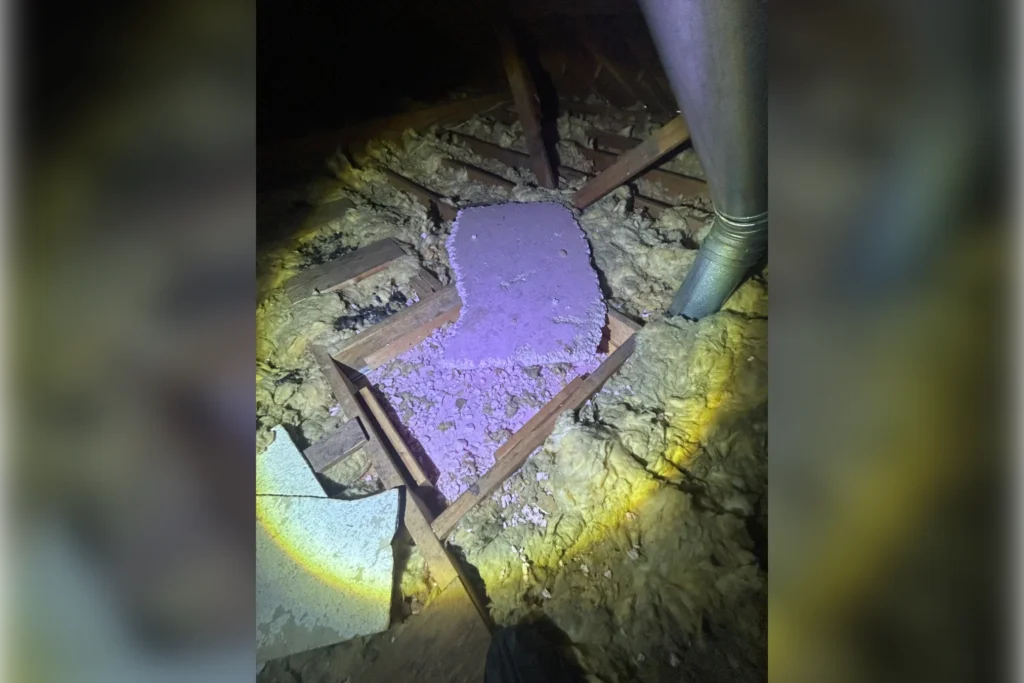
Raccoons in the walls is less common than raccoons in the attic, but it happens. Most of the time, a raccoon in the attic finds an open top plate, a chase or the gap around a chimney and climbs or falls down into a wall. Baby raccoons are especially likely to fall in.
How do I know there’s a raccoon in the wall?
Signs of raccoons in the walls include:
- Heavy scratching, thumping or climbing inside a wall, mostly at night
- Crying or chirping from one spot in the wall, often a baby that fell in
- Sounds that move up and down between the attic and wall
- A strong odor in one room
- Stains or a bulge in drywall in severe cases
If the sound is light and quick, it’s more likely mice, rats or squirrels. If it’s chirping in summer from high in a wall, bats are possible too. See raccoon noises at night.
How do raccoons get into walls?
Most come from the attic. Open top plates on interior or exterior walls, plumbing and duct chases, and the space around chimneys all lead down into wall cavities. Raccoons in a crawl space can also climb up into walls from below. The real entry point to the house is almost always on the roofline or foundation.
What should I do if a raccoon is in my wall?
- Don’t seal the entry point on the roof or foundation. A raccoon in the wall needs a way out.
- Don’t cut into the wall yourself. A cornered raccoon can bite and scratch.
- Don’t use poison or repellents. A dead animal in a wall causes odor for weeks, and the Missouri Department of Conservation says no repellents are known to work.
- Get an inspection to find the source and plan the removal.
How do you get a raccoon out of a wall?
Our wildlife team finds where the raccoon got in and whether it can climb back out on its own. If a raccoon or baby is stuck, we’ll open the wall to get it out. We don’t do drywall repair, so you’ll want a handyman or drywall contractor to patch the opening afterward.
Once the raccoons are out, we seal and guard the entry points on the roofline. The first wildlife inspection is usually free. See raccoons in the attic.
Something in your walls? Call 913-735-5451, answered 24/7, or schedule online. Most services can be scheduled same day.
Frequently Asked Questions
Raccoons usually live in the attic and get into walls through open top plates, chases or gaps near chimneys. Babies often fall into wall cavities.
Leave its entry point open and call a wildlife professional. If the raccoon is stuck, the wall may need to be opened to get it out.
It can if it’s stuck, which causes a strong odor. That’s why a stuck raccoon should be removed quickly.
We’ll open the wall to remove the animal, but we don’t do drywall repair. A handyman or drywall contractor can patch it.
Mice, rats, squirrels and bats are all common in walls. Light, quick scratching is usually rodents.