Size is only the start
Mice and rats look alike at a glance, but they act differently and need different treatment.
Mice.
Small, big ears, long thin tail and droppings the size of a rice grain.
Rats.
Heavy body, small ears, thick tail and droppings closer to a raisin.
Different plans.
Mice are handled on regular service. Rats go to our wildlife team.
The quickest way to tell mice vs rats is size. A house mouse is about 3 to 4 inches long with a slim tail. A Norway rat, the most common rat in Kansas City, is closer to 7 to 10 inches with a thick, scaly tail.
Most rodent calls we get are mice. About 1 in 20 rodent jobs turns out to be rats. Light mouse activity is covered on all of our home pest control plans, while rats are handled by our wildlife team.
How do you tell mice vs rats by looking at them?
Look at the head, ears and tail. Mice have small, pointed heads, large ears for their size and long, thin tails.
Rats have blunt noses, small ears and heavy bodies. Their tails are thick and shorter than their body. A young rat can look like a large mouse, but its head and feet look oversized for its body.
How do mouse and rat droppings compare?
Droppings are often the easiest way to tell them apart. Mouse droppings are about 1/4 inch long and pointed at the ends, like a grain of rice.
Rat droppings are 1/2 to 3/4 inch long with blunt ends, closer to a raisin. Either way, don’t sweep or vacuum them. Spray them with disinfectant first, then wipe them up with gloves on.
Do mice and rats act differently?
Yes. Mice are curious and explore new things, so they take to traps and bait stations fairly quickly.
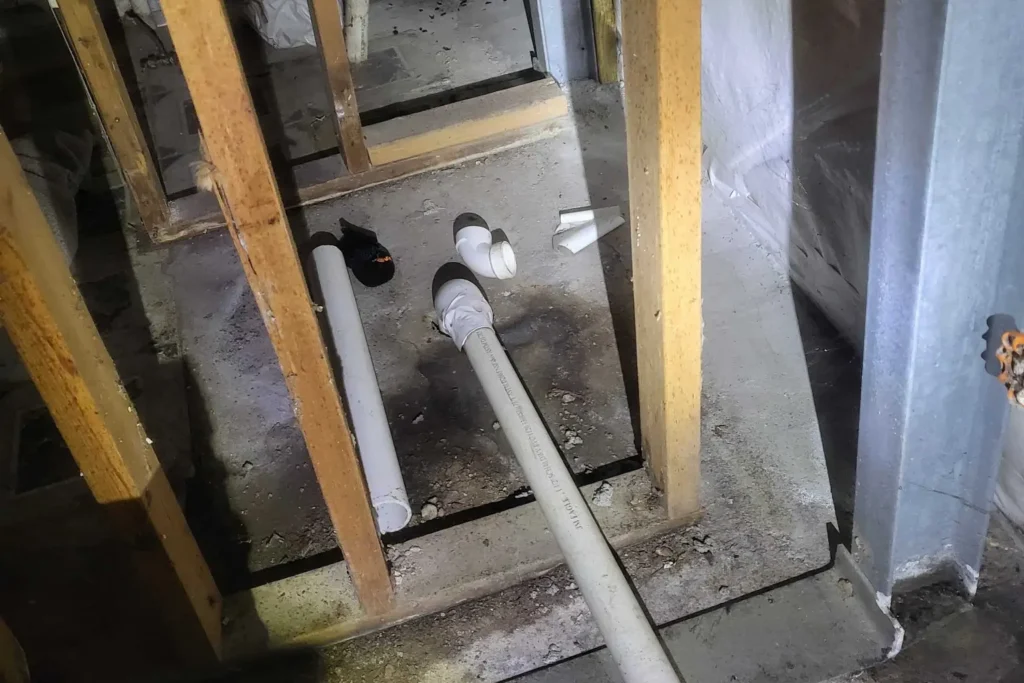
Rats are smarter and more cautious. They often avoid new objects in their path for days. That’s why rat control takes more skill and a plan built from a careful inspection. Rats also tend to live lower in the house, in basements, crawl spaces and burrows along the foundation. Mice will climb into walls, cabinets and attics.
How do you get rid of mice vs rats?
Mice are handled on a regular plan with tamper-resistant bait stations and snap traps. For heavier activity, we recommend bi-monthly pest control with a follow-up at about 3 weeks.
Rats are not part of our general pest plans. Our wildlife team inspects first, then builds a plan for trapping and exclusion. Rat jobs usually run $650 to $950. See our rodent control service for details.
Learn more about the droppings mice leave behind, the signs of mice and the signs of rats in Kansas City.
Not sure which one you’ve got? Call 913-735-5451, answered 24/7, or schedule online. Most services can be scheduled same day.
Frequently Asked Questions
Check the droppings and size. Mouse droppings are about 1/4 inch and pointed, like rice, while rat droppings are 1/2 to 3/4 inch and blunt, and rats are two to three times the size of a mouse.
The Norway rat is the most common rat in Kansas City. It’s a heavy, brown rat that often burrows along foundations and lives in basements and crawl spaces.
Yes, rats are smarter and more cautious than mice and often avoid new traps and bait stations. That’s why our wildlife team handles them with a plan built from an inspection.
A young rat has a large head and big feet compared to its body, while a mouse has a small head and large ears. If you’re unsure, a free inspection can tell you.
No, rats are handled by our wildlife team and are not part of general pest plans. Light mouse activity is covered on every Rock Pest plan.