Most families searching for a pest control company in Kansas City want the same thing: get rid of the problem without filling the house with chemicals that make the dog sick or send the kids to their grandparents’ for a week. That’s a reasonable thing to want. The problem is that finding a reliable green exterminator in Kansas City has gotten harder, not easier, because “eco-friendly exterminator” has become one of the loosest phrases in the home services industry. Any company can print it on a truck and call it a day.
Real green pest control is built on integrated pest management, targeted products, and documented prevention work. It is not the same as slapping a leaf icon on a website. This article walks you through what the phrase actually means, which Kansas City providers are worth a call, what to expect from different treatment options, and how to verify any company’s claims before you sign anything. Rock Pest Control is a Kansas City-based company that specializes in bed bug heat treatment and sustainable general pest control across the metro area, one local option that backs its green claims with actual methodology.
Green Exterminator Kansas City: What Eco-Friendly Actually Means
The gap between green marketing and real low-toxicity treatment
“Eco-friendly” is not a regulated term in pest control. No federal or state agency approves that label before a company can use it. What actually separates a genuine low-toxicity program from a standard spray route is the underlying approach: integrated pest management, or IPM. IPM follows a documented sequence: inspect and identify the pest accurately, remove the conditions that attract and harbor it, monitor activity, then apply a precise treatment only when inspection confirms it is needed. That process is fundamentally different from showing up every quarter to broadcast-spray baseboards regardless of whether anything is present. If a company cannot explain that process when you ask, the “green” label on their materials is marketing, not methodology.
Certifications worth knowing before you hire
Three voluntary third-party credentials come up most often in this space: GreenShield Certified, GreenPro, and EcoWise Certified. GreenShield is administered by the IPM Institute, a nonprofit, and requires on-site evaluation plus approval of the specific products a company can use. GreenPro is an NPMA industry program that emphasizes IPM training, written policies, and audits, but does not maintain the same restricted product list. EcoWise Certified is a third-party credential focused on reduced-risk practices and environmental stewardship. None of these are legally required. They are quality signals, not licenses.
On the licensing side, Missouri pest control companies are licensed through the Missouri Department of Agriculture. Companies serving Johnson or Wyandotte County in Kansas need a Kansas Department of Agriculture Pesticide Business License, with structural pest control falling under Category 7. Ask any provider for their license number and verify it directly with the state agency, not just through the company’s website. For third-party certifications, ask for the certification name, certificate number, expiration date, and whether it covers the whole company or only specific technicians. Then verify it against the certification body’s own directory.
Low-Toxicity Treatment Methods That Actually Eliminate Pests
How IPM handles common Kansas City pests
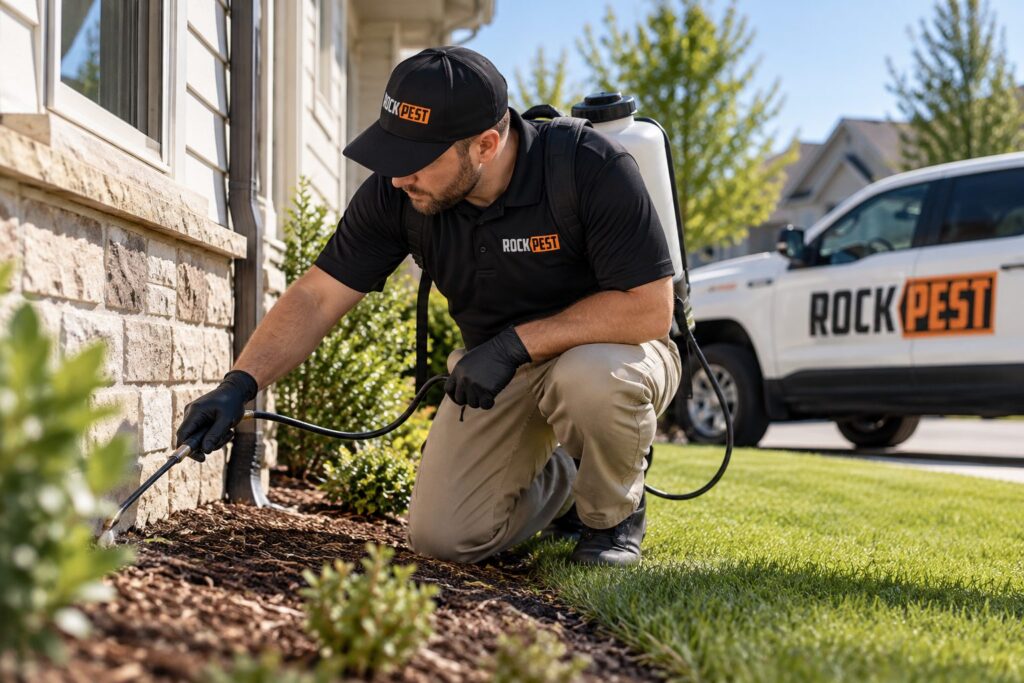
For ants and cockroaches, a genuine IPM program uses species-specific baits rather than indoor broadcast sprays. Workers carry slow-acting bait back to the colony, eliminating the source rather than just the individuals you can see. Technicians seal entry points, correct moisture and sanitation issues, and limit chemical applications to cracks, crevices, and contained bait stations. For rodents, exclusion is the primary method: metal mesh, door sweeps, gap sealing, and removal of food and water access. Monitored snap traps come next. Rodenticide bait is a last resort, placed only in tamper-resistant stations where children and pets cannot reach it.
For flies, the focus is source removal first: drain cleaning, garbage management, and elimination of decaying organic material. UV traps, drain treatments, and site-applied botanical insecticides fill in where source removal alone is not enough.
What low-toxicity products actually look like
Genuinely reduced-risk programs draw from a specific set of product categories. Common examples include botanical insecticides, insecticidal soaps, boric acid, silica gel and diatomaceous earth desiccant dusts, targeted EPA-registered baits, and horticultural oils. These are not the same as doing nothing; they work. But “natural” does not automatically mean harmless. Botanical oils can irritate skin, harm aquatic organisms, and be toxic to cats. Before any technician treats your home, ask for the active ingredient and EPA registration number for each product they plan to use, the exact application locations, and the re-entry interval. Any IPM-oriented company should answer those questions without hesitation.
Heat Treatment: The Most Chemical-Free Option for Bed Bugs in KC
Why heat treatment is the cleanest pest control method available
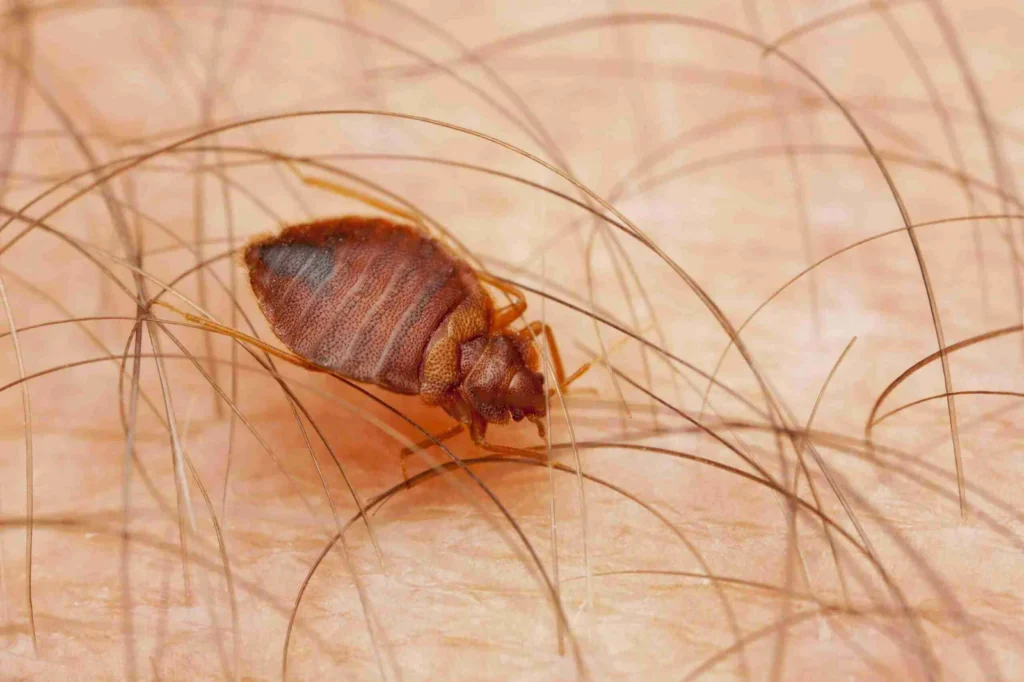
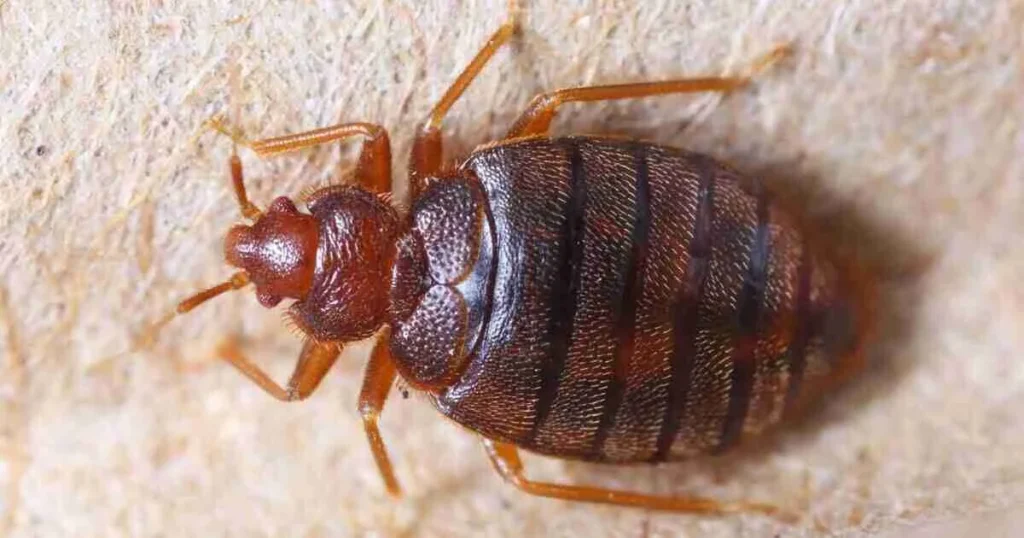
Whole-room heat treatment raises interior temperatures above 122 degrees Fahrenheit, held long enough to kill bed bugs at every life stage, including eggs. Commercial heaters and fans circulate hot air through mattresses, furniture, wall voids, and cracks where bugs actually hide. Heat reaches those harborages more reliably than most chemical applications can. The result: no residual pesticide applied inside the living space, no chemical off-gassing, no re-entry restrictions tied to chemical exposure, and no residue on furniture, bedding, or children’s belongings. For families with young kids, pets, or chemical sensitivities, it is the straightforward choice.
One important note: heat treatment provides no residual protection after the job is complete. Reintroduction can cause a new infestation, so follow-up monitoring and prevention remain necessary even after a successful heat treatment.
Rock Pest Control’s approach in the Kansas City metro
Rock Pest Control, based in Kansas City, MO, specializes in bed bug heat treatment for homes, apartments, and commercial buildings across the metro area, including Overland Park, Liberty, and Independence. For readers dealing with a bed bug problem who want to avoid chemical treatments entirely, this is the first local option worth contacting. The company pairs heat treatment with low-toxicity methods for general pest issues, including cockroaches and rodents, offering customized treatment plans and free estimates within 24 hours, backed by a satisfaction guarantee. Get in touch with the team to request a no-cost estimate and confirm which treatment approach fits your situation.
Questions to ask any provider before you book
A company running a real IPM program should answer these without hesitation. If they deflect, give vague non-answers, or pivot immediately to pricing, that tells you what you need to know.
- What is the exact active ingredient and EPA registration number for each product you plan to use?
- Where specifically will products be applied, and are there designated no-spray zones for pet bedding or children’s areas?
- What is the re-entry interval after treatment?
- What nonchemical prevention steps are included in this service?
- Is there a written retreatment guarantee, and what specifically triggers it?
What to Expect From a Green Exterminator in Kansas City (2026)
How Green Pest Control Varies by Service Type
Green pest control focuses on targeted treatments, thorough inspections, and preventative strategies that help manage pest activity while minimizing unnecessary pesticide use. The approach depends on the type of pest, infestation severity, and conditions around the property.
- One-time general treatment: Focuses on identifying active pest problems and applying targeted solutions where needed.
- Quarterly pest plan: Includes routine inspections, preventative treatments, monitoring, and recommendations to reduce recurring pest activity.
- Bed bug heat treatment: Uses controlled high temperatures to eliminate bed bugs and their eggs without relying on conventional chemical applications.
- Termite treatment: May involve targeted treatments, monitoring systems, and preventative measures based on the extent of termite activity and structural conditions.
What to confirm before accepting any quote
A vague quote is a red flag. Before you accept any estimate, confirm in writing whether the price includes inspection, interior treatment, exterior perimeter coverage, and follow-up visits. Ask specifically about retreatment or warranty terms, whether entry-point sealing and sanitation corrections are included or billed separately, any per-room pricing for bed bugs, and whether there are minimum charges or travel fees. A company that cannot provide clear written answers to those questions is not running a professional operation, green or otherwise.
How to Verify a Green Exterminator’s Credentials Before Signing Anything
Checking state licensing and third-party certifications
Missouri pest control companies can be verified through the Missouri Department of Agriculture’s Pesticide Program. You can also contact their Bureau of Pesticide Control at 573-751-5509 if the online record is unclear. For Kansas companies serving the Overland Park or Wyandotte County side of the metro, check the Kansas Department of Agriculture’s Pesticide and Fertilizer Program at 785-564-6700. Ask the company for their exact legal business name and license number, then run the check yourself. Do not rely on the company’s own website to confirm their licensing status.
For third-party certifications, verify against the certification body’s directory directly. GreenShield Certified maintains its own provider directory. GreenPro verification runs through the NPMA. Confirm whether the certification covers the entire company or only specific technicians and services, those are very different things.
Red flags that signal a company is greenwashing
The warning signs are consistent. A company is not running a genuine green program if they use “eco-friendly” or “natural” without naming a specific active ingredient. Other red flags include refusing to provide re-entry times, pushing long annual contracts with significant cancellation fees on the first sales call, offering no written retreatment guarantee, and never mentioning nonchemical prevention steps during the estimate. A legitimate IPM-based exterminator should welcome those questions. The entire framework of IPM is built on documentation and transparency. If a company treats your questions as obstacles rather than reasonable requests, that is your answer.
The Bottom Line
Green pest control is real, and it works. The label alone means nothing. What matters is whether a company is actually running an IPM-based program with documented inspection, species-specific products, and prevention built in. That is the standard to hold any green exterminator in Kansas City to before you hand over a credit card. If you want a starting point for natural pest control in Kansas City, use the verification steps in this article; the right company will have no problem answering every question on the list.
For Kansas City homeowners, renters, and property managers dealing with bed bugs who want to avoid chemical treatments entirely, heat treatment is the strongest available option, and Rock Pest Control is the local provider to contact first. They offer free estimates within 24 hours and back their work with a satisfaction guarantee. For organic pest control, KC residents can trust Rock Pest Control for general infestations handled sustainably; apply the same questions and verification steps before signing anything.
Frequently Asked Questions
A genuine green exterminator follows Integrated Pest Management (IPM), using inspections, prevention, monitoring, and targeted treatments instead of routine chemical spraying.
Green pest control can manage ants, cockroaches, rodents, flies, and bed bugs through targeted baits, exclusion methods, sanitation, and professional heat treatment.
Green pest control aims to reduce unnecessary pesticide exposure, but not all natural products are harmless. Always ask about active ingredients, application areas, and re-entry instructions.
Yes. Professional heat treatment uses controlled high temperatures to eliminate bed bugs and their eggs without applying conventional pesticides. Follow-up monitoring helps detect reintroduction.
Verify licensing through the Missouri or Kansas Department of Agriculture and check voluntary certifications such as GreenShield or GreenPro. Ask for written treatment details, product information, and guarantees.