They leave, then come back
Raccoons go out every night to feed. The question is whether they come home.
Nightly trips.
Leaving to feed isn’t moving out.
Babies stay put.
Young are in the den 8 to 10 weeks.
Open door.
A raccoon that leaves leaves a way in.
It’s a fair question. If a raccoon goes out every night, why not wait until it’s gone and close the hole? The short answer is that raccoons rarely leave a good den on their own, and even when they do, the problem usually isn’t over.
Will a raccoon leave the attic on its own?
A raccoon leaves the attic nearly every night to feed, but it comes back before dawn. A warm, dry, safe attic is a great den, and raccoons don’t give one up easily.
There are a few times a raccoon may move on:
- A mother may move her young once they’re older, usually by mid to late summer. K-State Research and Extension notes that young stay in the den until 8 to 10 weeks old and are weaned in August.
- Young raccoons disperse in fall and spring, according to K-State.
- A raccoon may switch dens if it’s disturbed, though often to another spot on the same house.
Why waiting usually doesn’t work
- The damage keeps adding up. Raccoons flatten and soil insulation, tear ducts and add to their latrine every day.
- The health risk builds. Latrines can carry roundworm eggs that last a long time. See raccoon latrines and roundworm.
- The hole stays open. Even if this raccoon leaves, the entry point invites the next one. Raccoons remember good den sites.
- You may seal it in. Closing the hole when you think it’s gone risks trapping a raccoon or babies inside.
Do raccoons leave in winter?
No. Raccoons don’t hibernate, but K-State notes they may sleep for several days at a time in winter. A quiet attic in January doesn’t mean it’s empty. The raccoon may just be sleeping through the cold.
Will noise or lights make a raccoon leave?
Sometimes, for a little while. K-State notes that lights, noise and radios can reduce problems, but raccoons get used to them, so they don’t work for long. The Missouri Department of Conservation says no repellents are known to work. See do raccoon repellents work.
What actually ends it
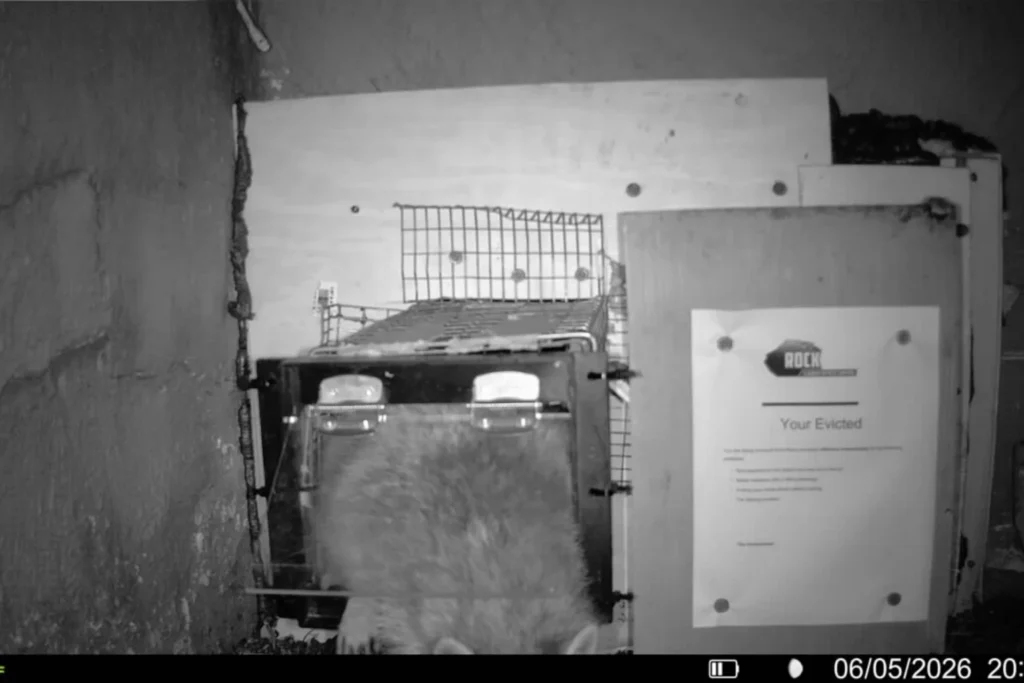
Left alone, raccoons rarely leave for good. With a push, most do. Our first step is to encourage them out, using an eviction fluid when babies are present so the mother moves them, or a one-way door when there are none. Traps are a backup. Then every entry point gets repaired, sealed and guarded. Our wildlife team handles all of it. The first wildlife inspection is usually free, and you get a detailed report with photos and a written estimate. See how long raccoons stay in an attic.
Tired of waiting? Call 913-735-5451, answered 24/7, or schedule online. Most services can be scheduled same day.
Frequently Asked Questions
Rarely for good. Raccoons leave to feed at night but come back to a good den, especially with babies.
Only if you’re sure no raccoons or babies are still inside. Sealing one in leads to more damage.
No. Raccoons don’t hibernate, but they may sleep for days during cold weather, so a quiet attic may not be empty.
Young stay in the den until about 8 to 10 weeks old and are weaned in August. The mother may move them before then.
Often, yes. Raccoons remember good dens, and an open entry point invites the next raccoon in.