Keep mice out of your machines
Chewed wiring means downtime. Yard-wide rodent control keeps equipment running.
Perimeter.
Stations around the yard and buildings.
Equipment lines.
Stations where machines park.
Monthly.
Checked, serviced and documented.
Rodent control for construction equipment is about preventing downtime. Mice and rats love parked equipment. Cabs and engine compartments are sheltered, warm after a day of work, and full of insulation and wiring to nest in and chew. A mouse nest in an air filter housing or chewed wiring in an excavator can mean a machine that won’t start, a repair bill and a crew waiting on the job.
We do a lot of rodent work at construction equipment yards around Kansas City. Here is how we keep rodents out of cabs and away from wiring.
Why rodents go after equipment
- Shelter. Cabs and engine compartments are dry and protected.
- Warmth. Engines stay warm after shutdown, especially in fall and winter.
- Nesting material. Insulation, seat foam and cab liners make good nests.
- Chewing. Rodents’ teeth never stop growing, and wire insulation is easy to chew.
- Cover. Equipment parked for weeks, plus tall grass, pallets and materials nearby, gives rodents safe paths to the machines.
Signs of rodents in equipment
- Droppings in cabs, on floor mats or in engine compartments
- Nesting material in air filter housings, cab vents or battery boxes
- Chewed wiring, hoses or insulation
- Warning lights or electrical faults that come and go
- A smell of urine in the cab
Chewed wiring is more than a nuisance. It can cause electrical problems and can be a fire hazard. Have any chewed wiring repaired by your mechanic before the machine goes back to work.
How we protect equipment yards
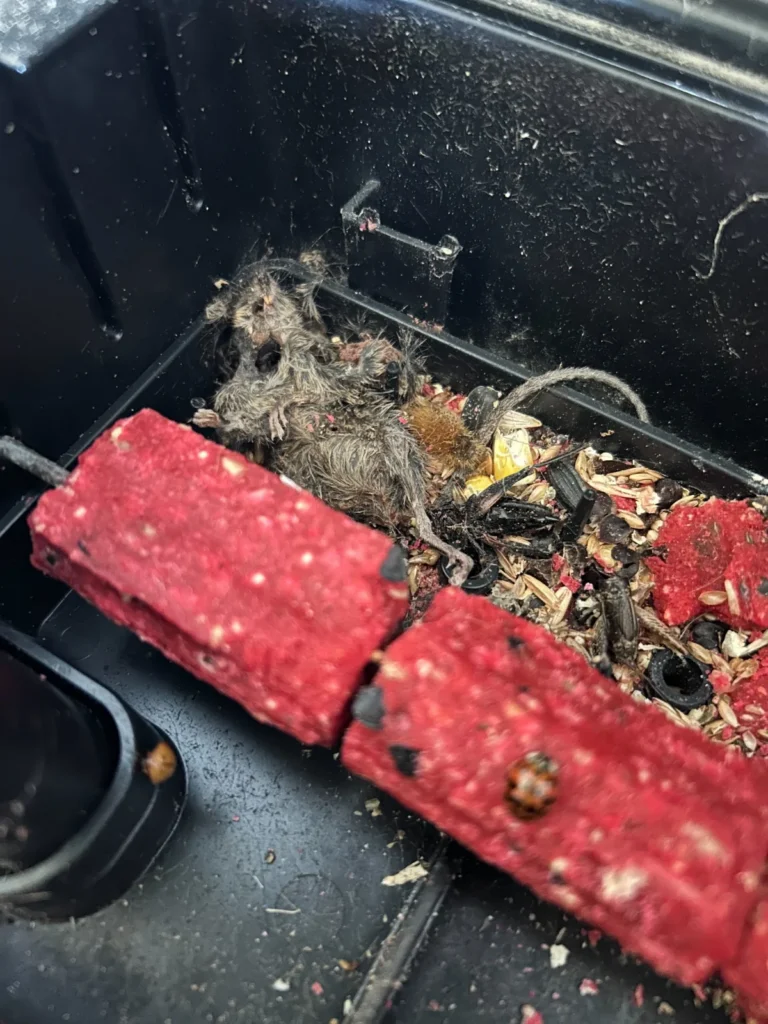
Perimeter stations. We place weighted, tamper-resistant rodent stations around the yard perimeter, fences and buildings to stop rodents moving in from fields and neighboring lots. Any rodenticide stays inside locked stations.
Equipment lines. Stations go along the rows where equipment parks, so rodents moving toward machines hit stations first. Placement keeps them out of the way of equipment moving in and out. We don’t place stations, traps or products inside the machines themselves.
Buildings and shops. Shops, offices, parts rooms and storage buildings get stations and traps inside and out. Parts rooms are a favorite spot for mice.
Monthly service. Large yards are serviced monthly, and every station is checked every visit. The tech notes where activity is heaviest, so you know which part of the yard or which equipment line needs attention.
Records. Each visit produces a service report within minutes, with station activity and recommendations, saved in your customer portal.
What your crew can do
- Keep cab doors and windows closed when equipment is parked.
- Don’t leave food or wrappers in cabs. Even crumbs attract mice.
- Move idle equipment when you can. Machines that sit for weeks are the ones that get nests.
- Check air filter housings and engine compartments on equipment that’s been parked a while.
- Keep grass mowed and clear brush, scrap and pallets from around parked equipment.
- Report signs right away so we can focus on that area.
Home remedies like dryer sheets don’t keep rodents out on their own. A yard-wide program is what makes the difference.
Equipment that travels
Machines move between job sites, and a mouse can ride along. Check equipment that comes back from a site with rodent problems before it’s parked with the rest of the fleet. Trailers, tool boxes and job boxes that sit on sites for weeks can carry mice back to the yard too. If a machine comes back with nesting material, clean it out and let us know so we can focus on that area.
Fall and winter pressure
Mice push toward shelter as it cools off in fall. That’s when equipment yards usually see the most activity, especially on machines parked for the season. Plan ahead and have stations in place before cold weather.
Rats at equipment yards
Norway rats are the most common rat in Kansas City and can do serious damage. Rat work is handled by our wildlife team with trapping and exclusion around buildings. See rat control.
Construction sites
Active job sites have their own rodent pressure, especially in office trailers, restrooms and materials stored under pole barns or outside. See pest control for construction sites. For termite pre-treats before a slab pour, see termite pre-treatment for builders.
For more on our rodent programs, see commercial rodent control.
Our commercial team protects equipment yards across Kansas City. See commercial pest control.
Mice getting into your equipment? Call 913-735-5451, answered 24/7, or schedule online. Most services can be scheduled same day.
Frequently Asked Questions
Cabs and engine compartments offer shelter, warmth and nesting material, and wiring is easy to chew.
With stations around the yard perimeter, along equipment lines and around buildings, serviced monthly, plus good habits from your crew.
No. Have your mechanic repair chewed wiring before the machine goes back to work.
Not on their own. A yard-wide rodent program is what makes the difference.
Fall and winter, when mice look for shelter and machines sit parked for the season.
Yes. Our wildlife team handles rats with trapping and exclusion around buildings.