Scheduled around your services
Kitchens, classrooms, sanctuaries and rooflines kept pest free.
Kitchens.
Fellowship halls and food pantries.
Classrooms.
Treated when kids aren’t present.
Rooflines.
Bats, birds and squirrels.
Church pest control has to work around a busy, varied building. A church can have a sanctuary, offices, a fellowship hall kitchen, a food pantry, nurseries, classrooms, a gym and a steeple, all used by different groups on different days. Pests that show up during a service, a wedding or a children’s program get noticed.
Here is how we service churches.
Pests churches see most
- Mice in kitchens, food pantries, storage rooms and older walls
- German roaches in fellowship hall kitchens
- Ants in kitchens, classrooms and around entrances
- Spiders in basements, storage and quiet corners
- Stinging insects around entrances, eaves and playgrounds
- Bats in attics, steeples and bell towers. See commercial bat removal.
- Birds roosting on ledges, steeples and entrances. See pigeon control.
- Squirrels and raccoons in attics and rooflines
Kitchens and food pantries
Fellowship hall kitchens and food pantries handle a lot of food, often with volunteers who rotate. Donated food can arrive with pantry pests or mice. Rodent stations, baits for roaches and ants and regular inspection of storage keep problems small. Store pantry items in sealed containers and off the floor when possible.
Nurseries, classrooms and children’s areas
We typically don’t treat where kids are present. Children’s areas are serviced when they’re empty, like weekdays between programs, and we use baits and targeted treatments rather than broad spraying. Tell us your schedule, and we’ll plan around it.
Scheduling around services and events
Churches are busiest on weekends and certain weeknights. We schedule service on quieter days and work around weddings, funerals and events. Lockboxes or door codes are common on commercial accounts if staff aren’t there.
Old buildings and rooflines
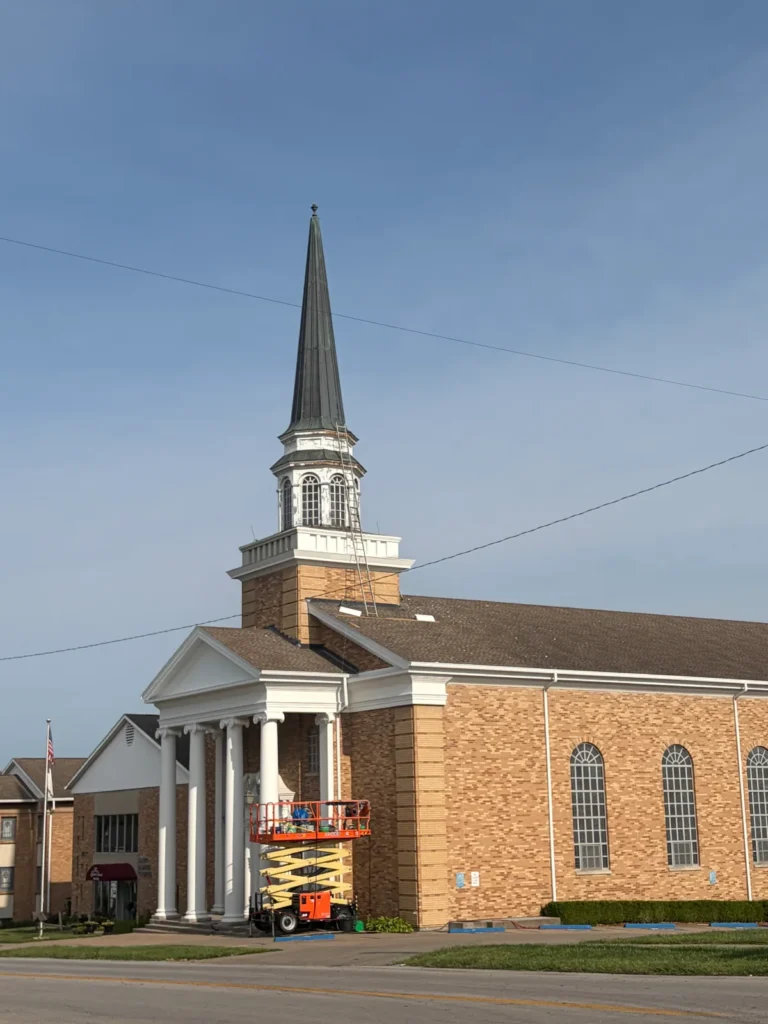
Many churches are older buildings with years of additions, settling and repairs. Gaps in stone, brick and wood give mice, bats and squirrels ways in. Our wildlife team handles wildlife removal and exclusion on commercial buildings, including steeples and high rooflines, using lifts where needed. Repairs are matched to the existing building as closely as possible. See commercial wildlife removal.
Bats in churches
Bats often find their way into church attics and bell towers. We evict bats with one-way doors and seal the building only after they’re out. Bat work follows the seasons, since we wait until pups can fly before excluding a colony.
Termites
Churches with wood framing, older additions or wooden steps are at risk for termites. Termite inspections are free. See commercial termite control.
Service frequency
Many churches do well on monthly service, especially those with active kitchens, food pantries or rodent history. Smaller churches with less food activity can sometimes work on a less frequent schedule, which we decide during the inspection.
Records
Every visit produces a service report within minutes, saved in your customer portal. Trustees, building committees and anyone else who needs to know can see what was done. If your kitchen is inspected for events or a food program, records are ready.
Volunteers can help
- Clean the kitchen after every event
- Keep pantry food sealed and off the floor
- Take trash out after events, not days later
- Report sightings to the office with the location
- Don’t prop doors open during events
Gyms and family life centers
Many churches have gyms or family life centers with locker rooms, concessions and heavy use. Those spaces get the same attention as a gym. See gym and fitness center pest control.
Mice in older church buildings
Older churches often have stone foundations, crawl spaces, basements and additions built at different times. Each seam between old and new construction can leave gaps mice use. Exterior stations and sealing those seams, plus stations in basements and storage rooms, keep mice from settling in for the winter. Fall is the time to get ahead of it. Stored decorations, choir robes and classroom supplies in basements and closets make good nesting spots, so keep them in sealed plastic bins instead of cardboard.
Cemeteries and grounds
Groundhogs under outbuildings, wasps in sheds and mice in maintenance buildings are common on church grounds. Our wildlife team handles animals on, in or under structures.
Church schools and daycares
If your church runs a school or daycare, those spaces need a careful program built around children’s schedules. See daycare pest control and school pest control.
Our commercial team services churches across Kansas City. See commercial pest control.
Need pest control for your church? Call 913-735-5451, answered 24/7, or schedule online. Most services can be scheduled same day.
Frequently Asked Questions
Mice, roaches in kitchens, ants, spiders, stinging insects, and wildlife like bats, birds and squirrels in rooflines.
Yes. We schedule on quieter days and work around weddings, funerals and events.
Yes, when they’re empty. We typically don’t treat where kids are present.
Yes. Our wildlife team evicts bats with one-way doors and seals the building once they’re out.
Many churches do well monthly, especially with active kitchens or food pantries. Some can go less often.
Yes. Termite inspections are free, and churches with wood framing or older additions are worth checking.