Repair and deter
Woodpeckers are protected, so the fix is repairs and deterrents.
Fill.
The holes they drilled.
Flash.
Metal over the spot.
Deter.
Spinners and streamers.
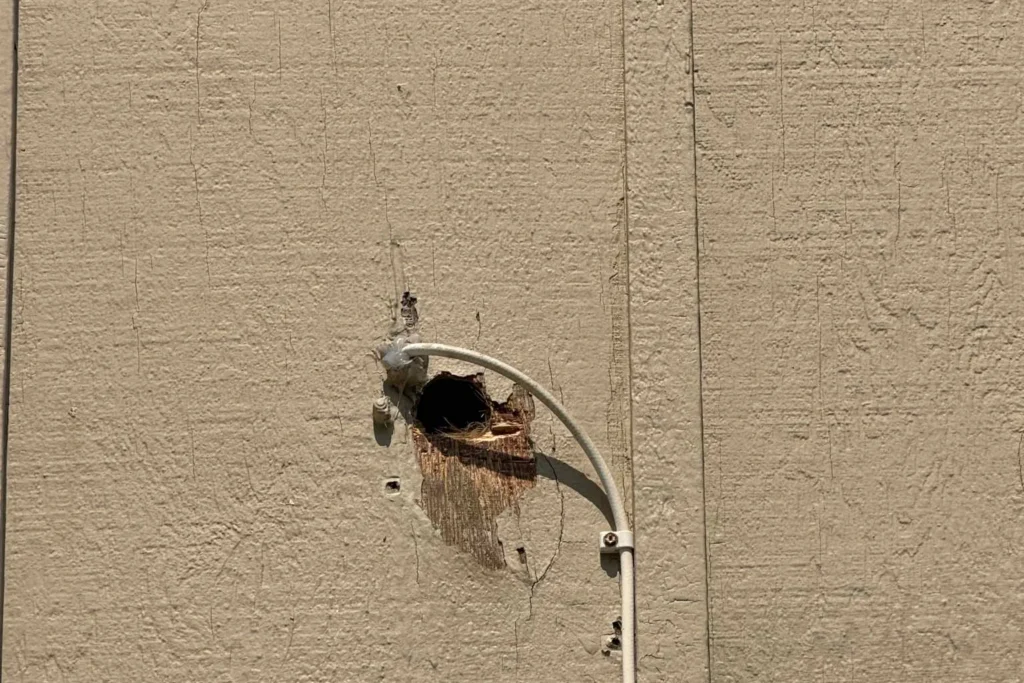
Woodpecker damage shows up as round or rough holes in wood siding, trim, fascia and eaves. Woodpeckers drill to find insects, to make a nest or roost, or to drum and mark territory.
Signs
- Round holes in a line or cluster
- Drumming or hammering on the house, often in the morning
- Wood chips on the ground below
- Holes in cedar or other soft wood siding
How we fix it
Woodpeckers are protected, so the fix is repairing the damage and making the spot less attractive.
- Fill the holes.
- Cover the spot with metal flashing so the bird can’t drill there again.
- Add deterrents like spinners and flash streamers.
About deterrents
Spinners, flash streamers and similar deterrents have a limited life outdoors. They help, but they’re usually cheaply made and don’t last long, so we don’t warranty them.
Don’t wait too long
Open holes let in water, insects and other animals. Squirrels and starlings sometimes move into old woodpecker holes. See birds nesting in soffits and eaves.
Our wildlife team handles woodpecker repairs across Kansas City. See other wildlife removal.
Woodpecker holes in your siding? Call 913-735-5451, answered 24/7, or schedule online. Most services can be scheduled same day.
Frequently Asked Questions
They drill to find insects, make a nest or roost, or drum to mark territory.
We fill them and cover the spot with metal flashing.
They help, but they wear out outdoors and aren’t warrantied.
Woodpeckers are protected, so we repair and deter instead.
Yes. Squirrels and starlings sometimes move into them.