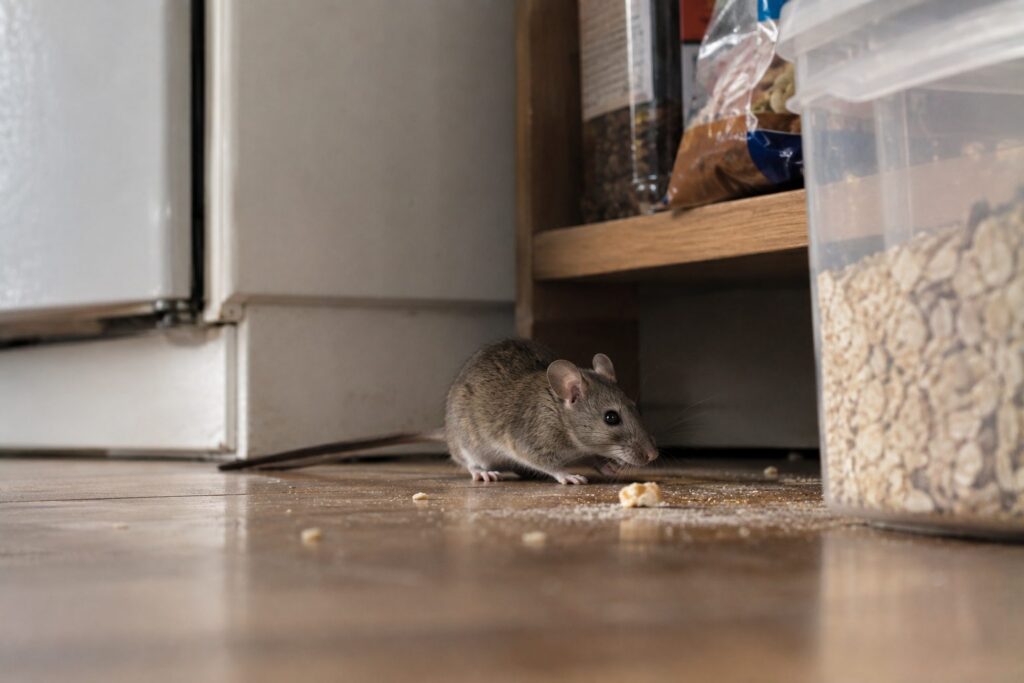
If you’re wondering what attracts rodents to homes in Kansas City, the answer almost always comes down to food, warmth, and hiding spots, and after running rodent calls across the KC metro for more than 20 years, I’ve never seen a random infestation. Every single one has a reason, usually several. Mice and rats are practical animals. They go where the food is, where it’s warm, and where they can hide safely. When those three things exist inside your home, they move in, and they don’t leave on their own.
Kansas City creates a specific combination of conditions that make homes here particularly vulnerable. Cold winters push rodents indoors just as older housing stock throughout the metro gives them dozens of ways to get there. About 12% of Kansas City households report rodent signs annually, slightly above the national average, and the neighborhoods with the most calls tend to be older areas where settling foundations and aging construction have left gaps everywhere.
This article walks through exactly what attracts rodents to homes in Kansas City, where they’re getting in, and what fixes actually hold. By the end, you’ll know what to inspect, what materials to use, and when to bring in a professional.
What attracts rodents to homes in Kansas City: food habits that quietly invite them in
Most rodent problems start in the kitchen or pantry long before anyone spots a mouse. House mice and Norway rats, the two most common invaders in Kansas City homes, are driven primarily by food access. They don’t need much. A bag of rice with a loose seal, a bowl of dry kibble left overnight, a trash can without a lid: that’s enough to anchor a rodent to your home indefinitely.
Pantry and kitchen storage that rodents can reach easily
Cardboard boxes, thin plastic bags, and containers with loose lids offer no real barrier to a house mouse. Grains, cereals, oats, rice, flour, and baked goods are top attractants because they’re calorie-dense, strongly scented, and easy to carry away. Rodents operate on smell first, and even a “sealed” pantry with loosely fitting lids signals opportunity. Transfer dry goods to rigid, airtight containers made of glass, metal, or heavy-duty plastic, and you remove one of the primary reasons mice stay.
Pet food, birdseed, and garage storage
Dry kibble left in open bags or bowls overnight is one of the most consistent triggers I see on service calls across the metro. Birdseed stored in garages and sheds is another, especially in winter when backyard feeding picks up. Both are high-calorie, strongly scented, and completely exposed, exactly what rodents look for. Transfer pet food to sealed metal containers, store birdseed in a metal trash can with a locking lid, and don’t leave food bowls out after your pet has finished eating.
Trash and recycling habits that signal a free meal
Uncovered indoor trash bins and food-residue recyclables are two of the most overlooked rodent attractants in Kansas City homes. Empty cans and bottles with leftover residue carry enough scent to draw rodents from outside, and an uncovered kitchen trash can is effectively a free buffet. Use bins with tight-fitting lids, rinse recyclables before storing them, and don’t let garbage bags sit in the garage overnight. Small changes here eliminate a major reason rodents keep coming back.
How clutter creates nesting conditions rodents can’t resist
Food brings rodents in. Clutter keeps them there. House mice build nests from whatever soft material they can find, and a cluttered home gives them an abundance of options. Available food plus available nesting material is what turns a passing rodent into a breeding colony.
Indoor clutter: the nesting material problem
Stacked cardboard, fabric piles, stored paper goods, and accessible insulation in garages or basements all become nesting material. A house mouse doesn’t need much; a small pile of shredded paper tucked behind stored boxes is a complete nest. The practical fix is to reduce what you store in vulnerable areas, switch from cardboard to sealed plastic bins, and keep garage and basement floors clear enough that you’d notice new activity quickly. Clutter doesn’t just provide nesting material; it conceals an infestation until it’s already well established.
Outdoor conditions that increase rodent pressure around your home
Norway rats are ground burrowers that need outdoor cover to thrive near your home. Woodpiles stacked against the foundation, dense shrubs or ivy close to the structure, and debris piles in the yard all provide exactly the harborage they’re looking for. Move woodpiles at least 18 inches from the foundation, trim back ground-level vegetation, and clear any debris that sits on the ground for more than a few days. Reducing outdoor cover forces rodents to stay further from your home’s entry points and makes your property a less attractive destination overall.
Why Kansas City winters drive rodent activity indoors
Daytime highs in Kansas City average around 43°F in January, with overnight lows dropping into the mid-20s. When outdoor food and shelter become scarce, heated homes turn into prime targets, and rodents start moving before the coldest weather even arrives.
The fall-to-winter migration pattern in the Kansas City metro
The highest-risk window isn’t January. It’s September and October, before sustained freezing weather sets in. That’s when mice and rats begin relocating from outdoor nesting areas to the warmth of nearby structures. The best time to seal entry points is late summer and early fall, before the migration happens. Waiting until you see signs inside the home means rodents have already made the move, and stopping them at that point requires a different approach entirely.
How house mice and Norway rats behave differently across seasons
Norway rats move into foundations, basements, and crawlspaces as cold sets in because that’s where their ground-burrowing behavior naturally leads them. House mice prefer wall voids and interior spaces year-round but become noticeably more active indoors during winter months. Deer mice, common in suburban and rural areas around the Kansas City metro, also shift indoors during cold snaps and are worth watching for in homes near open fields or wooded lots. Knowing which species you’re dealing with tells you where to focus your inspection and what evidence to look for.
Common rodent entry points in Kansas City homes
A mouse can fit through a gap the size of a dime. A rat needs roughly a quarter-sized opening. These are small targets, and most homeowners walk right past dozens of them during a typical day. A proper inspection requires getting low, looking closely, and checking areas that rarely get attention.
Foundation cracks, utility penetrations, and weep holes
Older Kansas City homes settle over time, and settling cracks in foundations are one of the most consistent entry points I find. Gaps around water lines, HVAC connections, electrical conduit, and gas lines are equally common and often hidden behind appliances or under sinks. Brick homes have another specific vulnerability: weep holes. These small openings at the base of brick exterior walls are designed to let moisture escape, but they’re perfectly sized for mice. Don’t caulk them shut. Use weep-hole covers designed to allow drainage while blocking rodents.
Vents, soffits, rooflines, and garage doors
Damaged vent screens, gaps where soffits meet fascia, and worn garage door seals are among the most commonly missed access points, especially in homes more than 20 or 30 years old. These spots are harder to catch because they require looking up rather than down, and deterioration happens gradually over years. During your inspection, walk the full perimeter and look up at the roofline. Check every vent screen for damage, run your hand along the bottom of the garage door to feel for gaps, and press along the soffit line where it meets the fascia. Any gap that fits a pencil is a gap that fits a mouse.
Rodent-proofing your home: materials and methods that hold up
Using the right exclusion materials makes the difference between a permanent fix and something a rodent chews through in a few days. The core rule: durable metal stops rodents; soft fillers and foam alone do not.
What to use: steel wool, copper mesh, hardware cloth, and caulk
For small gaps, pack them tightly with steel wool or copper mesh, then lock the fill in place with exterior-grade silicone caulk. The mesh keeps rodents out; the caulk keeps the mesh from shifting. For vents and crawlspace openings, 1/4-inch galvanized hardware cloth is the right call; rodents physically cannot chew through properly installed metal mesh, and it allows airflow. Around utility penetrations, press copper mesh tightly into the gap before sealing the edges with caulk. Match the material to the size and location of the opening, and make sure everything is mechanically secured rather than just pressed in place.
Door sweeps, vent covers, and whatnot to rely on
Heavy-duty door sweeps on every exterior door close one of the most commonly used entry routes. Metal vent guards over exposed vents handle another. One material to avoid relying on alone: expanding foam. It insulates well, but rodents chew through it without much effort. Use foam only as a supplement over steel wool or copper mesh, never as the sole barrier. That mistake shows up on a lot of DIY jobs I’ve inspected, and it gives homeowners false confidence while rodents keep finding their way in through the same gaps.
When prevention isn’t enough: signs of an active infestation and next steps
Sometimes the problem is already inside the walls before you start looking. Knowing what to watch for changes how quickly you respond, and response time matters. A single pair of mice can produce a serious infestation in as little as two to three months under favorable indoor conditions. Populations grow fast, and they grow quietly.
Signs that rodents are already living in your home
Droppings along walls or in cabinet corners are usually the first visible sign. Gnaw marks on food packaging, baseboards, or wiring tell you they’ve been active in that area recently. Grease trails, dark smear marks left where rodents travel the same route repeatedly along walls, indicate an established pathway. Shredded nesting material tucked into corners, behind appliances, or inside stored boxes confirms they’ve moved in and are breeding. If you’re hearing movement in your walls or ceiling at night, that’s not something to investigate slowly.
Why Kansas City homeowners call Rock Pest Control when DIY falls short
DIY trapping catches individual rodents. It rarely addresses the full scope of an infestation, and it rarely identifies where rodents are getting in. Rock Pest Control handles rodent extermination across the Kansas City metro, including Overland Park, Liberty, and Independence, with free estimates within 24 hours, eco-friendly methods, and a satisfaction guarantee. When you’ve found active signs but can’t locate the entry point, or when traps aren’t keeping up with the population, a licensed professional makes all the difference. We’ve inspected hundreds of Kansas City homes, and we know where the gaps hide.
The bottom line on what attracts rodents to homes in Kansas City
Understanding what attracts rodents to homes in Kansas City makes prevention straightforward. Food access, clutter, seasonal pressure, and structural gaps don’t have to coexist in your home at the same time. Start by sealing entry points before fall arrives. From there, tackle food storage and outdoor harborage around your foundation. Fix those conditions and you eliminate most of what draws rodents here in the first place.
If you’ve already found signs of an active infestation, the right move is a call to someone who knows Kansas City homes and has the tools to handle it properly. The longer a rodent population has to establish itself, the more work removal takes. Early action is always cheaper and faster than waiting to see how bad it gets.
Frequently asked questions about rodent attractants in Kansas City
The combination of cold winters and older housing stock sets Kansas City apart. Rodents are drawn by the same basics, food, warmth, and shelter, but KC homes give them unusually easy access through settling foundation cracks, aging utility penetrations, and brick weep holes common in the region’s housing inventory.
September and October are the peak risk months. That’s when mice and rats start moving from outdoor nesting areas into heated structures ahead of winter. Most homeowners don’t notice until they see droppings in late fall or winter, by which point an infestation is already underway.
For prevention, yes, sealing entry points, switching to airtight food storage, and clearing outdoor harborage handles most of the risk. For an active infestation, DIY trapping can reduce numbers but rarely eliminates the problem or identifies where rodents are getting in. That’s where a professional inspection pays off.
A house mouse can squeeze through a gap roughly the size of a dime, about 1/4 inch. Rats need a slightly larger opening, closer to the size of a quarter. Both are easy to miss during a casual walkthrough, which is why a systematic perimeter inspection matters.