Mice don’t stop at the unit line
Building-wide rodent control works where unit-by-unit trapping can’t.
Outside.
Stations around every building.
Inside.
Units, utility rooms and common areas.
Sealed.
Gaps closed where mice move.
Multifamily rodent control has to treat the building, not just the unit that called. Mice in apartment buildings run through wall voids, ceiling spaces, plumbing chases and utility rooms. A resident traps one mouse, and another shows up two units down. Building-wide rodent control is how you actually get ahead of it.
Here is how we handle mice and rats at apartment complexes.
How mice get into apartment buildings
- Gaps around utility lines where they enter the building
- Foundation cracks and gaps under siding
- Garage and breezeway doors
- Dryer vents and other exterior vents without guards
- Trash areas that draw them close to the building
- Landscaping, mulch and shrubs against the walls
Once inside, mice use the building’s hidden spaces as highways.
Signs to watch for
- Complaints from several units in the same building
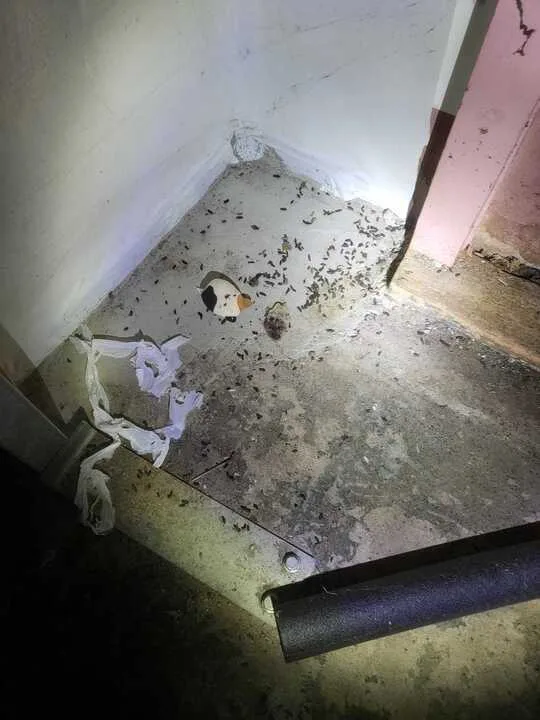
- Droppings under sinks, in cabinets, behind appliances and in utility closets
- Gnaw marks on food packages or baseboards
- Noises in walls or ceilings at night
- Activity in maintenance shops, storage rooms and laundry rooms
Our multifamily rodent approach
Exterior stations. Weighted, tamper-resistant stations go around each building, near entry points, trash areas and along walls. Any rodenticide is kept inside locked stations.
Interior traps and stations. Inside units, utility rooms, maintenance areas and common areas, we use snap traps and tamper-resistant stations where they’re safe for residents, kids and pets.
Exclusion. Techs seal small gaps with copper mesh during service. Larger openings, like gaps around utility lines, damaged siding or vents, are sealed by our wildlife team, and exclusion work carries a 1-year guarantee. See pest exclusion for commercial buildings.
Monthly service. Our apartment customers are serviced monthly. Every station is checked every visit, and about a third of the units are treated each month in rotation, plus problem units.
Extra units on every visit. On large complexes, the agreement includes a set number of additional units serviced every time we’re out, based on inspection, so mouse complaints get handled on the next visit.
Rats
Rats are less common than mice at apartment complexes, but more serious when they show up. Norway rats are the most common rat in Kansas City. Rat work is handled by our wildlife team with trapping and exclusion. See rat control.
Fall is mouse season
Mice push into buildings as the weather cools in fall. That’s when complaints usually jump. Getting stations in place and gaps sealed before fall is the best way to stay ahead of it.
Residents’ part
- Keep food sealed and off counters
- Take trash out regularly
- Report droppings or sightings right away
- Don’t move or block traps and stations
Include a short note about mice in move-in materials and fall reminders to residents.
Cleanup
Heavy rodent activity leaves droppings and nesting material that should be removed and sanitized. Our wildlife team offers cleanup and sanitization as an add-on, including attics and crawl spaces when needed.
Records
Every visit produces a service report within minutes, with station activity and units treated, saved in your customer portal. The records show where activity is concentrated and when it dropped, and they help if a resident claims management isn’t handling the problem. See pest control records in tenant disputes.
Why unit-by-unit trapping fails
When each resident buys their own traps or calls for one unit at a time, mice simply move to the next unit. Without exterior stations, sealed gaps and coverage across the building, the population never drops. A building-wide program costs less over a year than chasing the same mice from unit to unit.
Garages and storage units
Detached garages, storage units and carports give mice shelter close to the buildings. Stations around these structures and sealing gaps in garage doors keep them from becoming a staging area for mice moving into units. Residents storing pet food, birdseed or grass seed in these spaces should keep it in sealed metal or heavy plastic containers.
Older buildings
Older apartment buildings often have years of utility changes, settled foundations and gaps behind cabinets. They usually need more exclusion work up front, but the results last once the main entry points are closed.
For more on rodent programs, see commercial rodent control. For full apartment programs, see apartment pest control for property owners.
Our commercial team handles rodent control for apartment complexes across Kansas City. See commercial pest control.
Mouse complaints across your property? Call 913-735-5451, answered 24/7, or schedule online. Most services can be scheduled same day.
Frequently Asked Questions
Mice travel through wall voids, ceilings and utility runs, so treating one unit at a time doesn’t stop them.
Exterior stations around each building, interior traps and stations, sealing entry points and monthly service.
Yes. Stations are tamper-resistant, and any rodenticide stays inside locked stations.
Fall, when mice push indoors as the weather cools.
Yes. Our wildlife team handles rats with trapping and exclusion.
Yes. Our wildlife team offers cleanup and sanitization as an add-on.