That noise at night is real
Scratching in the walls almost always means mice have found a way inside.
Find the way in.
Mice use gaps around pipes, vents and the foundation.
Bait, don’t chase.
Stations and traps along their path work better than cutting into walls.
Seal it up.
Closing entry points keeps the next group from moving in.
Mice in the walls usually announce themselves with scratching, scurrying or squeaking at night. They travel inside wall voids between their nest and your kitchen, so the noise means they’ve found both shelter and food.
Light mouse activity is covered on all of our home pest control plans. Here’s what’s going on and what to do about it.
How do mice get in the walls?
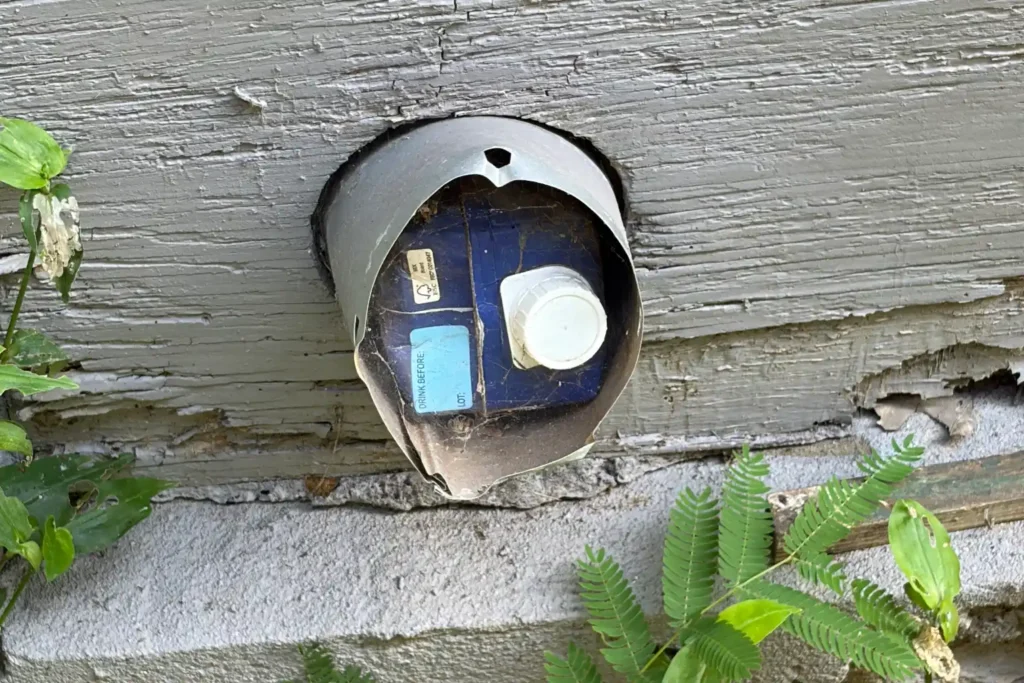
Mice get in through small gaps on the outside of the house. They squeeze through openings around pipes, utility lines, vents, garage doors and the foundation.
Once inside, wall voids give them a protected highway. They follow plumbing and wiring runs up to kitchens, bathrooms and attics. Older homes tend to have more gaps, which our older homes guide covers.
Why do I hear mice in the walls at night?
Mice are most active at night, so that’s when you hear them. The sound is usually them traveling to food or building a nest.
Noise in the walls picks up in Kansas City in fall and winter. Mice move indoors once nights turn cold, and mouse activity stays high all winter.
How do you get mice out of the walls?
The best way to get mice out of the walls is to catch them where they travel, then seal the way in. Cutting into drywall is rarely needed for mice in the walls.
We place tamper-resistant bait stations and snap traps in corners, under or inside lower cabinets and behind furniture, out of reach of kids and pets. We add an exterior bait station along the foundation. You’ll usually see a big drop in activity within about two weeks.
For mice as the main problem, we recommend bi-monthly pest control, with an automatic follow-up at about 3 weeks. Our techs seal small gaps with copper mesh. Bigger gaps go to our wildlife team for exclusion work.
What if a mouse dies in the wall?
A mouse that dies in the wall can smell for a couple of weeks before the odor fades. That’s why we only use bait inside the living space in extreme cases, and only after talking it through with you.
If a larger animal dies in a wall, our wildlife team can remove it. We don’t do drywall repair, so patching the opening is on the homeowner.
Still not sure? Read the signs of mice to watch for, whether mice leave on their own and how rodent exclusion seals them out.
Hearing scratching at night? Call 913-735-5451, answered 24/7, or schedule online. Most services can be scheduled same day.
Frequently Asked Questions
No, mice in the walls rarely leave on their own once they have shelter and food nearby. They breed quickly, so the problem usually grows until they’re trapped and the entry points are sealed.
Mice make light, quick scratching sounds, mostly at night. Heavy thumping or noise during the day can point to squirrels or rats, which our wildlife team handles.
No, cutting into walls is rarely needed. Bait stations and traps placed along the paths mice use, plus sealing entry points, handle most cases.
The smell from a dead mouse in a wall usually lasts a couple of weeks before it fades. That’s why we use interior bait only in extreme cases and only after discussing it with you.
Yes, light mouse activity is covered on every Rock Pest plan, with one free exterior rodent station included. For heavier activity, bi-monthly service is the better fit.