Fewer pests, less product, better records
IPM means finding the cause, not just spraying the symptom.
Inspect.
Find the source and the cause.
Prevent.
Fix entry points and conditions.
Target.
Treat only where it’s needed.
Integrated pest management, or IPM, is an approach to pest control that focuses on preventing pests and treating only where it’s needed, instead of spraying on a schedule whether there’s a problem or not. For businesses, IPM means fewer pests, less product used in your building and records that show your program is working.
Many businesses get asked about IPM by a corporate office, a property owner, an auditor or a customer. Here is what it means and how our commercial programs follow it.
The basic steps of IPM
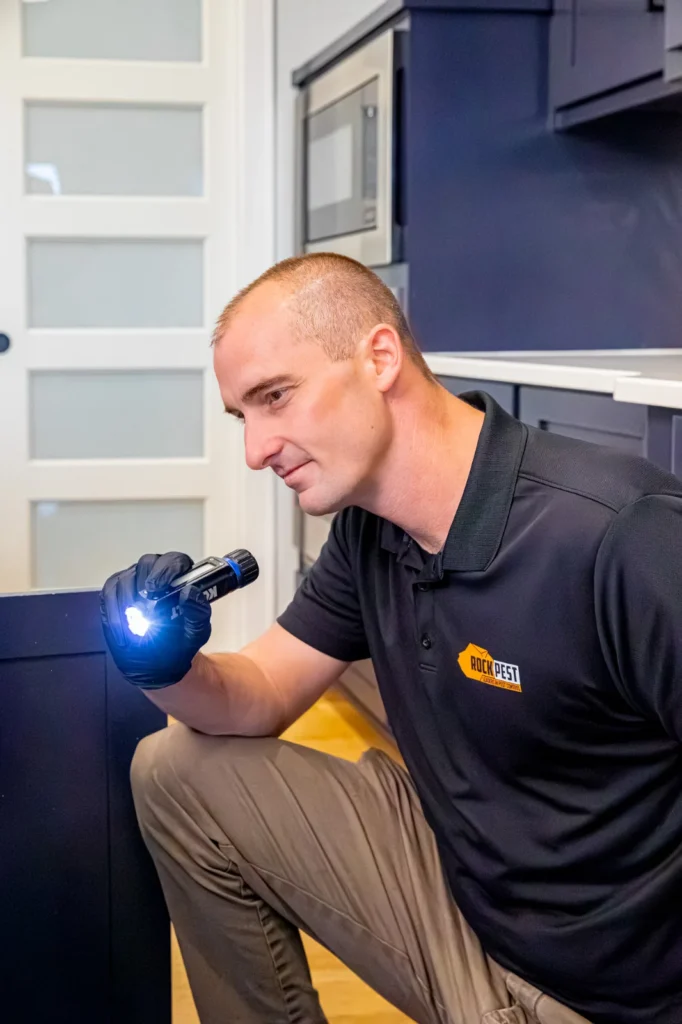
1. Inspect. Find out what pests are present, where they’re living and how they’re getting in. Every program starts with an inspection, and every visit includes one. See what a commercial pest inspection includes.
2. Identify. Different pests need different solutions. German roaches, American roaches, pantry pests, drain flies and house flies all have different sources and different fixes.
3. Monitor. Insect monitors and rodent stations show where activity is and whether it’s going up or down. Monitoring tells the tech where to focus.
4. Prevent. Seal entry points, fix leaks, improve storage and sanitation, and remove harborage. Prevention is the part of IPM that keeps pests from coming back.
5. Treat where needed. When treatment is needed, use the right product in the right place, like gel baits in cracks and voids for roaches or locked stations for rodents, rather than broad spraying.
6. Document and review. Record what was found, what was done and what needs to change. Review the records over time to see trends.
How our commercial programs use IPM
- Monthly visits with an inspection every time, not just a spray. Most of our commercial accounts are monthly.
- Monitoring tools like insect monitors and rodent stations, checked and recorded every visit.
- Exclusion. Techs seal small gaps with copper mesh. Our wildlife team handles larger exclusion work. See pest exclusion for commercial buildings.
- Targeted treatments, including gel baits and low-odor products where spraying isn’t the right fit.
- Recommendations in every report for sanitation, storage or repairs.
- Records within minutes after each visit, saved in your customer portal. See pest control service reports and logs.
Why IPM matters for businesses
- Food service and health codes. Inspectors want to see pests controlled at the source, with documentation.
- Occupied buildings. Apartments, senior living, schools, daycares and offices benefit from less product and more targeted treatment.
- Audits and corporate requirements. Many organizations require an IPM-based program with records.
- Long-term cost. Fixing the cause costs less than treating the same problem every month forever.
Your part in IPM
IPM works best as a partnership. The tech handles inspection, monitoring, treatment and records. Your staff handles the things only they can do:
- Report sightings right away with a pest sighting log
- Keep up with sanitation, especially under equipment and in drains
- Store product off the floor and away from walls
- Keep doors closed and fix damaged door sweeps
- Act on the recommendations in each report
IPM in practice: a roach example
Say a restaurant has roaches in the dish area. A spray-only approach treats the floor every month and the roaches keep coming back. An IPM approach inspects and finds roaches living in a dish machine base and a wall void behind a leaky sink. The tech places gel baits in those spots, treats the void, sets monitors and recommends fixing the leak and degreasing behind the machine. On the next visit, the monitors show whether it worked. That’s the difference.
IPM in practice: a rodent example
At a warehouse, mice keep hitting interior stations near one dock door. Instead of just adding more stations, the tech checks the door and finds a torn bottom seal and a gap at the leveler. The report recommends replacing the seal, the gap gets sealed, and station activity drops over the next few months. The records show the cause and the fix.
Is IPM more expensive?
Not usually. Most of IPM is what a good tech should be doing anyway: inspecting, monitoring and fixing causes. Over time, it often means fewer callbacks and less product. See commercial pest control cost.
Our commercial team builds IPM-based programs for businesses across Kansas City. See commercial pest control.
Need an IPM program for your business? Call 913-735-5451, answered 24/7, or schedule online. Most services can be scheduled same day.
Frequently Asked Questions
An approach that focuses on inspection, prevention, monitoring and targeted treatment, with records, rather than spraying on a schedule.
Yes. Every visit includes inspection, monitoring, targeted treatment where needed, recommendations and a service report.
No. It means using the right product in the right place only when it’s needed, like baits in cracks or locked rodent stations.
Many organizations and audits expect a documented program that controls pests at the source.
Report sightings, keep up sanitation, store product properly, keep doors closed and act on report recommendations.
Not usually. It often means fewer callbacks and less product over time.