The garage is the front door for pests
A garage that stays open, cluttered or poorly sealed lets pests in, and many of them keep going into the house.
Seal the door.
A worn bottom seal leaves a gap big enough for mice and crickets to walk under.
Store it smart.
Sealed bins and shelves off the floor take away hiding spots and food.
Treat the edges.
A regular exterior barrier helps stop crawling pests before they reach the garage.
The most common garage pests in Kansas City are spiders, mice, crickets, ants and wasps. Garages are easy to get into and full of places to hide, so pests settle there first. Better seals, smarter storage and tighter trash habits keep most of them out.
Our home pest control plans cover all of these pests, including light mouse activity. Here’s how to make your garage a lot less welcoming.
What garage pests are most common?
Spiders, mice, crickets, ants and wasps lead the list. Each one comes for a different reason.
- Spiders hide in corners, shelves and stored boxes, and feed on the bugs that wander in.
- Mice slip under worn door seals and nest in clutter, especially when nights turn cold.
- Crickets follow moisture and light near the garage door.
- Ants trail to spilled food, pet food and trash.
- Wasps build nests in garage corners, eaves and rafters.
How do you keep garage pests out?
Seal the gaps, clear the clutter and close off food. Those three steps do most of the work.
- Replace a worn garage door bottom seal and weatherstripping.
- Keep the garage door closed when you’re not using it.
- Store items in sealed plastic bins, not cardboard, and up on shelves.
- Keep pet food, birdseed and grass seed in sealed containers.
- Use trash cans with tight lids and rinse them out now and then.
- Seal gaps around pipes and utility lines.
Our pest proof your home checklist covers more fixes around the rest of the house.
Can garage pests get into the house?
Yes, many garage pests move right into the house. The door between the garage and your home is often the easiest way in, so check its sweep and seal too.
Mice are the biggest concern. Our guide on stopping mice this winter has more tips. Our techs also seal small mouse gaps with copper mesh during service.
What about wasp nests in the garage?
Wasps and hornets are covered on our plans, and we knock down webs and nests on every visit. Don’t swat at a nest near the door. Our post on wasp nests explains how to handle them safely.
How do we treat garage pests?
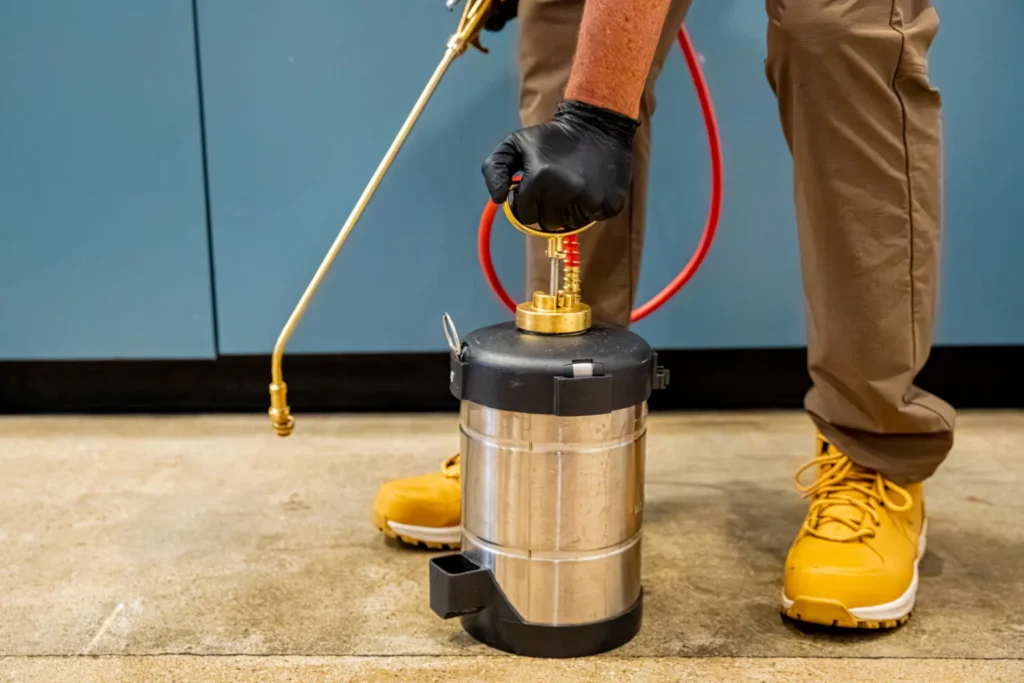
Each visit, we inspect your home, yard and entry points, treat an exterior barrier plus inside where needed and email you a report. Plans include treating the inside of your garage every visit, as long as we can get in. If there’s no access, we treat the exterior and get the garage interior on the next visit.
If pests show up between visits, re-service is free on every plan.
Seeing bees around the garage or eaves? Find out whether pest control gets rid of bees.
Tired of finding spiders and mice in the garage? Call 913-735-5451, answered 24/7, or schedule online. Most services can be scheduled same day.
Frequently Asked Questions
Replace a worn garage door bottom seal, keep the door closed and store pet food and birdseed in sealed containers. Rock Pest techs also seal small mouse gaps with copper mesh during service.
Garages have plenty of hiding spots and a steady supply of insects for spiders to eat. Cutting clutter and keeping a regular exterior barrier in place cuts them down.
Yes, spiders, crickets, ants, wasps and light mouse activity are all covered on Rock Pest plans. Quarterly service is $56.50 a month after a $289 initial service.
Yes, wasps and hornets are covered on every Rock Pest plan. Techs knock down nests during service, and you can call for free re-service if a new one shows up between visits.