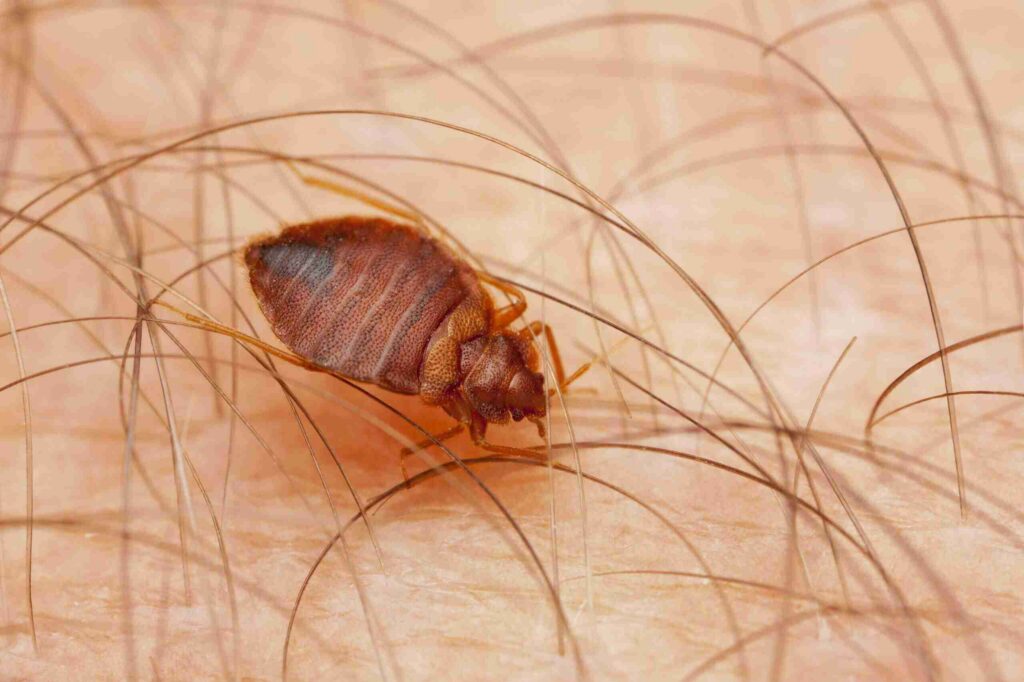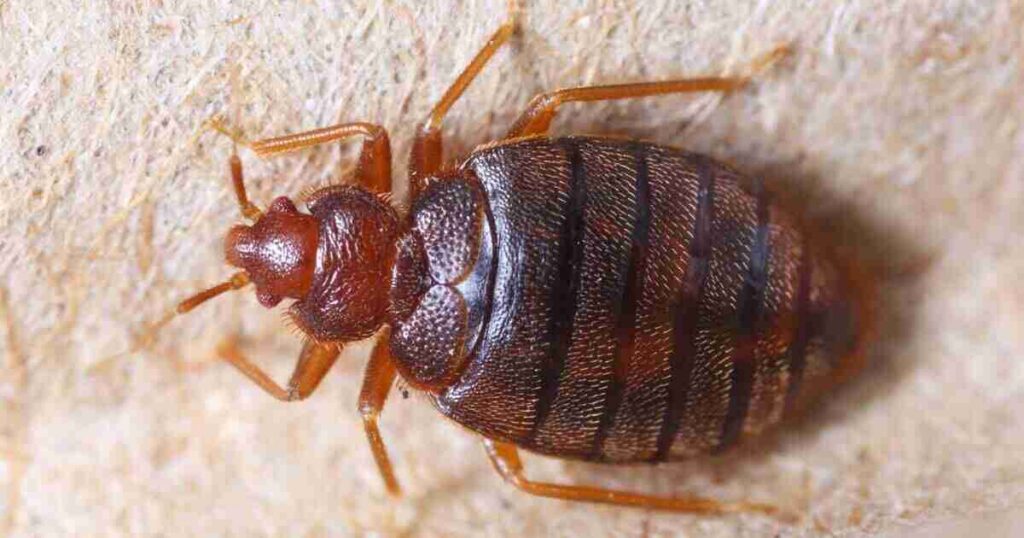

Most people find out they have bed bugs the hard way. They wake up with welts, assume it’s mosquitoes, and by the time they figure out what’s actually happening, the infestation has been running for weeks. The bugs are in the box spring, behind the headboard, maybe already in the couch. What started as a small problem is now a big one. Early bed bug detection can prevent a few bugs from becoming a full-blown infestation, but only if you know what to look for.
The earliest signs of bed bugs show up long before you ever see a live insect. Knowing what those signs look like, and where to find them, is the difference between catching a problem early and dealing with something that’s completely out of hand. At Rock Pest Control, we’ve inspected hundreds of homes across the Kansas City metro area, and the pattern is consistent: the families who called us at the first sign had a much simpler path to resolution than those who waited.
This guide covers what the real early indicators look like, how to inspect your home the right way, and what to do the moment you confirm something’s wrong.
What early bed bug signs actually look like
Most people picture a bug crawling across a white sheet. That’s not how it usually starts. The first signs are subtle, easy to dismiss, and often misread as something else entirely. By the time you see a live bug moving in plain sight, the infestation has been active for a while. Effective early bed bug detection means learning to recognize what comes before that moment.
Blood spots and fecal stains: the first clues you’ll see
Fecal stains are usually the first thing you’ll find. They appear as tiny black or dark brown dots on mattress seams, along bed frame joints, on the box spring fabric, and sometimes on nearby walls. On absorbent fabric like cotton sheets, they bleed into the material like ink from a fine-tip marker rather than sitting on the surface as a clean spot. They don’t wipe off the way dirt does; they smear. If you dab a fecal stain with a damp white cloth, it transfers as a rusty-brown mark because it’s digested blood.
Blood spots show up alongside fecal staining. These are small reddish or rust-colored marks on bedding or mattress fabric, usually from crushed bugs or minor bleeding during feeding. By themselves, one blood spot means little. Combined with dark ink-like specks along a seam, you have a pattern worth investigating further.
Shed skins, eggs, and a smell that doesn’t go away
Shed exoskeletons are another physical marker that arrives before live bugs become obvious. Bed bug nymphs molt five times before reaching adulthood, leaving behind translucent, bug-shaped husks in mattress seams, folds of the box spring, and crevices along the headboard. Finding shed skins means reproduction has already been underway, not that it’s about to start. Eggs reinforce that point: they are pearl-white, about 1 mm long, often tucked in tight seams or cracks, and older ones may show a small dark eyespot before hatching.
A musty, sweet smell, sometimes compared to wet towels or coriander, can accompany a growing infestation. Some people notice it earlier than others. If a room has a faint, unexplained odor that wasn’t there before, and you’re also finding dark specks on the mattress, take that combination seriously.
Bites are not a reliable early signal. Some people react to bed bug feeding with small red marks in clusters or lines. Others have no skin reaction at all. Bites can look identical to mosquito bites, flea bites, or an allergic reaction to laundry detergent. Use bites as a reason to inspect the room thoroughly, not as confirmation of anything on their own.
Why timing matters more than most people realize
Bed bugs reproduce fast. Under typical indoor temperatures, eggs hatch in roughly 6 to 10 days. Nymphs reach reproductive adulthood in as little as 3 to 6 weeks. A single fertilized female can produce 1 to 5 eggs per day and 200 to 500 eggs over her lifetime. Pest control research consistently estimates that five bugs under favorable conditions can become 500 in approximately six weeks.
The practical consequence of a one-month delay is significant. A contained early-stage infestation might involve one mattress, one bed frame, and a nightstand. A 30 to 60-day delay commonly means bugs have spread to adjacent furniture, moved through wall voids and electrical outlets, and established harborage sites in multiple rooms. What was a targeted treatment becomes a whole-room or multi-room protocol, with a noticeably larger price tag to match.
This isn’t meant to create panic; it’s a math problem. The earlier you act, the simpler the solution. A small infestation caught at the first sign of fecal staining is manageable. The same infestation, left for two months, is a much larger project. Every two to three weeks of delay can mean another doubling of the population under warm conditions.
How to detect bed bugs early: a room-by-room inspection guide
Start in the bedroom. That’s where 70 to 80 percent of early bed bug activity concentrates, because the bugs stay close to their feeding source. Strip the bed completely. Use a bright flashlight held at a low angle, working through every mattress seam, tuft, and label. Check the box spring from below, removing the dust cover if possible, and inspect along all the wood frame joints.
Move to the headboard next, looking behind it and along every rail and connection point on the bed frame. Finish with the nightstands: inside drawers, along drawer slides, underneath, and behind them.
You’re looking for fecal staining, shed skins, eggs, and live bugs. Nymphs are pale yellow and very small; a 10x magnifying loupe helps considerably. Don’t rush this step. A slow, methodical pass with a bright light catches what a glance misses entirely.
Living areas require the same systematic approach. Couches and armchairs are common secondary harborage sites because people regularly sit or sleep on them. Inspect seams, underneath cushions, in folds along the frame bottom, and around the legs. Check behind picture frames and wall décor near the bed, along baseboard edges, carpet edges, and curtain rod hardware. Bed bugs follow the host, so wherever you regularly sleep or sit for long periods becomes a potential harborage location.
Tools that make early bed bug detection faster and more accurate
A bright flashlight is non-negotiable for any serious inspection. A 10x magnifying loupe makes identifying nymphs, eggs, and faint fecal staining much more reliable than the naked eye alone. A flat card or old credit card is useful for scraping along mattress seams to expose hidden staining or bugs tucked into tight folds. A UV flashlight can reveal fecal staining and exoskeletons that look invisible under normal light, which is particularly useful for checking upholstered furniture surfaces and wall areas around the bed.
Monitoring tools that give you ongoing visibility
Passive climb-up interceptor traps are the most practical monitoring tool for home use. Placed under each bed leg, they work by trapping bugs as they travel between their harborage site and the host. Bugs fall into the outer well and can’t climb out. They’re non-toxic, inexpensive, and give you continuous passive data without any ongoing effort. Check them every few days when you suspect a problem.
Interceptors work best when the bed is properly isolated: no bed skirt touching the floor, no items stored underneath that create an alternate bridge for bugs to bypass the trap entirely. They have real limitations worth understanding. A low-level infestation may take a week or more to register in the traps, and they perform less reliably in unoccupied rooms where no one regularly sleeps, since they depend on bugs following host cues across the floor.
CO2-baited active monitors can be useful in vacant spaces by mimicking a sleeping host, but in an occupied bedroom, the bed itself already serves that function. No monitor replaces a thorough physical inspection. What they add is ongoing documentation: confirmation that bugs are present, and data on whether the problem is moving to new areas.
What to do the moment you find evidence
The first rule: don’t move infested items to another room. That’s the fastest way to turn a contained problem into a whole-home problem. Keep everything in place while you work through the initial steps.
Encase the mattress and box spring in bed bug-proof encasements immediately. This traps any bugs inside and prevents the mattress from becoming a larger harborage site over time. Wash all bedding, clothing, and soft items from the room in hot water and dry on the highest heat setting for at least 30 minutes. Vacuum the mattress seams, bed frame, and surrounding floor thoroughly, then seal and dispose of the vacuum bag outside right away. Reduce clutter in the affected area to eliminate additional hiding spots.
DIY containment slows the spread after early detection. It does not eliminate the infestation. If you’ve confirmed fecal staining, shed skins, or a live bug, the population is already established enough that professional heat treatment is the most reliable path to full elimination. Rock Pest Control offers free estimates within 24 hours for Kansas City area homeowners and renters, meaning a same-day or next-day assessment of how far the problem has actually progressed before it doubles again. Catching it at this stage typically means a targeted treatment, not a multi-room protocol. That’s the window worth protecting, and calling a pro is how you protect it.
The bottom line on early bed bug detection
Early bed bug detection comes down to knowing what to look for before a live bug appears. Fecal stains, blood spots, shed skins, and a faint musty smell are the real early indicators. Not bites, and not a bug crawling across the mattress at midnight. A systematic room-by-room inspection using the right tools closes the gap between suspicion and confirmation, and it’s something any homeowner can do with a flashlight and a loupe.
Once you’ve found physical evidence, even early-stage signs, the smartest move is getting a professional assessment quickly. Prompt early bed bug detection gives you the best chance of eliminating the problem before it spreads. At Rock Pest Control, we’ve helped Kansas City homeowners and renters catch infestations before they became serious problems, and we’ve seen what a two-month delay costs in time, money, and disruption. The math always favors acting early. Get the free estimate, understand exactly what you’re dealing with, and make a clear decision from there.