Cockroach prevention tips can help Kansas City homeowners stop infestations before they start, but knowing which steps actually matter is what separates a roach-free home from one that keeps cycling through the same problem. Cockroaches are one of the most persistent pest problems in Kansas City homes, especially common in older housing stock and multi-family buildings across the metro area. The reason isn’t bad luck or poor hygiene alone. It’s usually a combination of unsealed entry points, available food and moisture, and daily habits that give roaches exactly what they need to survive. At Rock Pest Control, we see this play out constantly in homes and apartments from Overland Park to Liberty to Independence. The good news is that most infestations are preventable when you address the right problems in the right order. This is a practical, room-by-room guide covering where roaches enter, what attracts them, and which tools are actually worth using.
Cockroach Prevention Tips: How Cockroaches Find Their Way Inside Your Home
Roaches don’t materialize out of thin air. They enter through specific, identifiable gaps that most homeowners walk past every day without noticing. The bigger problem is that cockroaches can squeeze through openings as small as a few millimeters, which means partial sealing isn’t enough. Sealing entry points is the first layer of any effective roach-proofing plan, and it works best alongside sanitation and moisture control, not instead of them.
Gaps Around Doors, Windows, and Wall Cracks
Worn door sweeps and threshold gaps are among the most common visual entry points roaches use, particularly in homes with older doors that have settled or warped over time. Check these by looking for light coming under the door when it’s closed. Replace worn sweeps, add weather stripping to door frames, and use caulk to seal gaps around window frames where the frame meets the wall. Torn window screens should be replaced immediately, since even a small tear gives roaches a reliable entry route. Exterior-facing gaps deserve the most attention first, since that’s where outside roaches are actively looking for a way in.
Plumbing, Drains, and Utility Penetrations
Pipes entering walls or floors are often left with gaps wide enough for roaches to pass through freely. These openings are common under kitchen and bathroom sinks, around washing machine connections, and wherever utility lines enter the home. Seal them with caulk, expanding foam, or a specialized utility sealant depending on the gap size. Drain covers are a less obvious but frequently used entry point, particularly for American and Oriental cockroaches, the species most likely to travel through sewer systems and floor drains in Kansas City basements. Vents and exhaust openings should be fitted with fine mesh screens to block access while still allowing airflow.
The Sanitation Habits That Cut Off Food and Water
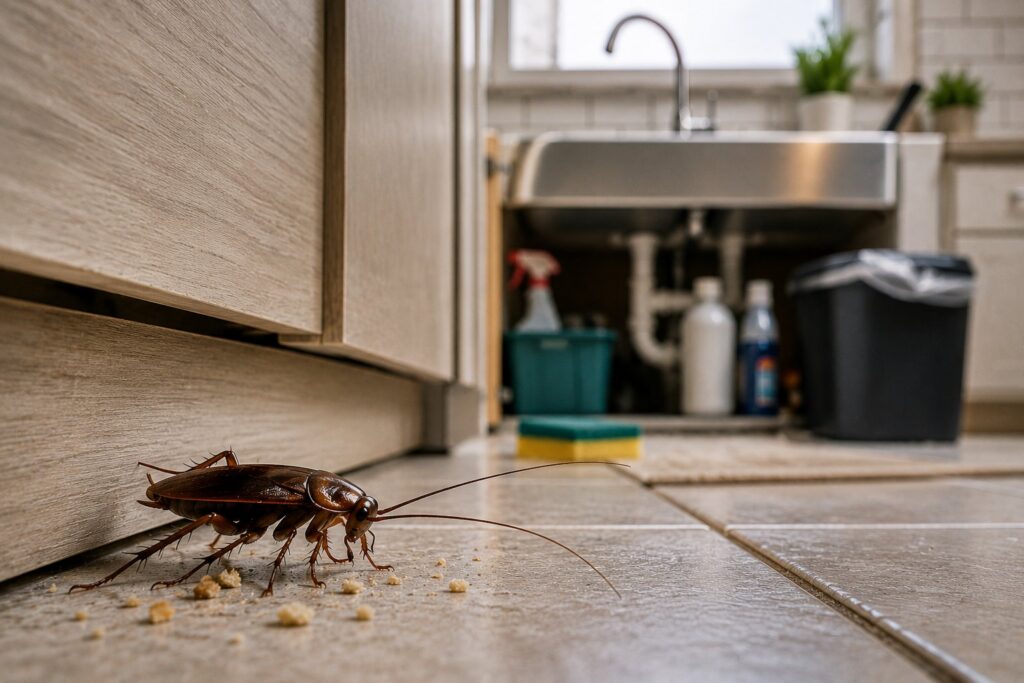
Roaches are far less likely to establish themselves in consistently clean, dry spaces; infestations are driven by available food, moisture, and harborage. Good sanitation isn’t about deep-cleaning once a month. It’s about consistent daily habits that eliminate both resources before roaches can rely on them. German cockroaches, the most common species found in Kansas City apartments and homes, feed at night. That means overnight messes are high-risk, and nightly cleanup matters far more than a weekend scrub-down.
Kitchen Cleaning Routines That Starve Roaches Out
The nightly routine should include wiping counters and stovetops, rinsing dishes rather than leaving them in the sink, sweeping or vacuuming floor edges and under appliances, emptying the kitchen trash, and putting away pet food. The area behind the refrigerator and the spaces around stove burners are two of the most common roach hotspots in KC kitchens because they collect grease, crumbs, and warmth simultaneously. Weekly, degrease burner areas and clean the rims and interior of your trash bin. These aren’t optional tasks when you’re dealing with roach pressure. They’re the core of any effective cockroach control plan.
Moisture Control in Bathrooms and Utility Spaces
Roaches are just as attracted to water as they are to food. Bathrooms, under-sink cabinets, and laundry rooms are prime locations because of drips, condensation, and pooling water that most homeowners don’t notice until it’s been sitting for weeks. Dry sinks and tubs before bed, run exhaust fans during and after showers, and fix even slow drips immediately rather than delaying. Check under bathroom and kitchen sinks monthly for hidden moisture buildup around pipe connections. Keeping indoor humidity below 50% is the practical target: roaches thrive at 60, 80% relative humidity, so even a modest reduction makes your home a significantly less hospitable environment for them.
A Room-by-Room Cockroach Prevention Checklist
Think of this as a one-time setup that becomes a recurring maintenance habit. Work through the kitchen and bathroom first, since those spaces drive the vast majority of infestations. Secondary spaces like basements and garages matter too, but they’re lower priority until the primary food and moisture sources are addressed.
Kitchen and Pantry Essentials
Transfer dry goods, flour, rice, oats, and cereals into sealed airtight containers. Don’t leave bread or fruit sitting out on counters overnight. Keep the space under the sink organized and dry. One detail that most guides skip: cardboard boxes and paper bags can provide harborage for roaches. They’re warm, they compress into tight spaces, and roaches are known to shelter inside them. Replace cardboard storage with hard-sided plastic bins wherever possible, especially in pantries and under sinks.
Bathrooms, Laundry Rooms, and Utility Spaces
Check under sinks for pipe gaps that can be caulked, and remove wet towels and bath mats from floors overnight when possible. Laundry piled in corners is harborage, so keep it off the floor and move it through the wash cycle promptly. In utility rooms, check around water heater connections and washing machine hoses for any signs of slow leaks. These are exactly the kind of overlooked moisture sources that sustain a roach population even after the kitchen is spotless.
Basements, Garages, and Exterior Entry Zones
These spaces are high-risk because they tend to be dark, cluttered, and close to the foundation. Switch from cardboard box storage to plastic bins with tight-fitting lids. Seal visible foundation cracks with exterior caulk and check garage door seals seasonally, since they degrade over time and leave a gap at the floor. One specific note for Kansas City homeowners: firewood and similar clutter stored indoors may provide harborage for cockroaches. Keep firewood outside and away from the foundation, bringing in only what you’ll use immediately.
Low-Toxicity Tools That Support Your Prevention Plan
These tools work best as supplements to the sealing and sanitation work, not as standalone solutions. The most reliable cockroach prevention is environmental: remove the food, water, and entry points, and you remove most of what roaches need to survive. That said, a few targeted low-toxicity tools, part of what pest professionals call integrated pest management for roaches (IPM), add a meaningful layer of protection when placed correctly.
Sticky Traps for Monitoring and Early Detection
Sticky traps are primarily a monitoring tool, not a control tool. Place them along walls, under sinks, behind appliances, and in the back of cabinets. Check them weekly. What they tell you is whether roaches are present and, more importantly, where they’re traveling in your home. Early detection is the difference between catching a minor problem and dealing with a full infestation. A German cockroach female produces four to eight egg cases during her lifetime, with approximately 30 to 48 eggs per case, so catching activity early gives you a significant head start.
Diatomaceous Earth and Humidity Reduction
Food-grade diatomaceous earth is a low-toxicity desiccant you can apply in wall voids, along baseboards, and in cabinet corners. It works by damaging the roach’s exoskeleton, leading to dehydration; most exposed roaches typically die within two to four days of contact. Apply it in a thin, even layer in dry areas, since moisture renders it ineffective. Pair this with a dehumidifier in any damp basement or utility space to push humidity below that 50% threshold. One important detail: empty the dehumidifier’s water reservoir on a regular schedule so it doesn’t become a water source for the exact pests you’re trying to eliminate.
What Apartment Renters Need to Do Differently
Apartments introduce a layer of prevention complexity that single-family homeowners don’t face. Shared walls, floors, and utility chases mean a neighbor’s infestation can become your problem regardless of how clean your unit is. This is especially true in older Kansas City apartment buildings where wall voids and plumbing chases connect units directly. Renter-specific prevention requires sealing your unit from the inside and getting building management involved early.
Sealing Your Unit Against Neighboring Units
Walk your unit and caulk around baseboard gaps, particularly where baseboards meet the floor. Foam gaskets behind outlet covers and switch plates block one of the most common travel routes between apartment units. Fill gaps around plumbing under sinks, and add a door sweep to your unit’s main door if one isn’t already installed. Many of these are renter-installable fixes, though you should check your lease and confirm with your landlord before making any modifications. Done right, they make a meaningful difference in buildings where cockroaches are moving through shared wall voids.
Coordinating with Your Landlord and Building Management
Building-wide infestation control requires more than one tenant acting alone. Report pest sightings to property management in writing as soon as you notice them, and keep a copy of that communication. Coordinated inspection and treatment across adjacent units is essential; treating one apartment while leaving neighboring units unaddressed often leads to reinfestation over weeks to months, since roaches simply relocate through shared voids rather than being eliminated. If management is slow to respond, document everything and understand your tenant rights under Missouri law.
When DIY Prevention Isn’t Enough
Prevention habits work well when started early, but if cockroaches are already established in your home, the biology works against you. German cockroaches reach adulthood in roughly 70 to 100 days under favorable conditions, and egg cases continue hatching even after initial treatment. A visible daytime sighting, egg cases behind appliances, or a persistent problem despite consistent sanitation all indicate that prevention alone won’t resolve the situation. At that point, integrated pest management for roaches, combining targeted treatments with ongoing monitoring, is the most effective path forward.
This is where Rock Pest Control comes in. As a Kansas City-based pest control company, we offer professional inspections for homes and apartments across the metro area, including Overland Park, Liberty, and Independence. Our eco-friendly treatment plans are customized to your specific infestation rather than a spray-and-leave approach. Reach out today to request a free estimate and find out exactly what you’re dealing with.
Putting It All Together
Effective cockroach prevention comes down to four things done consistently:
- Seal entry points, doors, windows, plumbing penetrations, and foundation gaps.
- Eliminate food and moisture, nightly kitchen cleanup, and humidity control below 50%.
- Establish a room-by-room maintenance habit: pantry, bathroom, basement, and garage on a recurring schedule.
- Use monitoring tools to catch problems early: sticky traps placed along walls and under appliances, checked weekly.
No single action does the job on its own. Consistency is what separates a home that stays roach-free from one that keeps dealing with recurring activity.
Kansas City’s warm, humid summers, roughly May through October, create the peak window for cockroach pressure in the metro area. That’s when infestations start and spread fastest. Putting your cockroach prevention tips into practice before peak season, rather than reacting to an active infestation, is always the more effective and less expensive approach.
If you’ve already done the work and roaches are still showing up, stop guessing and get a professional inspection. Rock Pest Control serves homeowners and renters across the Kansas City metro area with the expertise and tools to identify exactly what’s happening and stop it at the source. For more cockroach prevention tips or to schedule your free estimate, reach out to Rock Pest Control today and get a clear picture of what you’re dealing with.