Nest out, cover on
A dryer vent is a warm, ready-made nest box.
Remove.
The nest, as far as we can reach.
Cover.
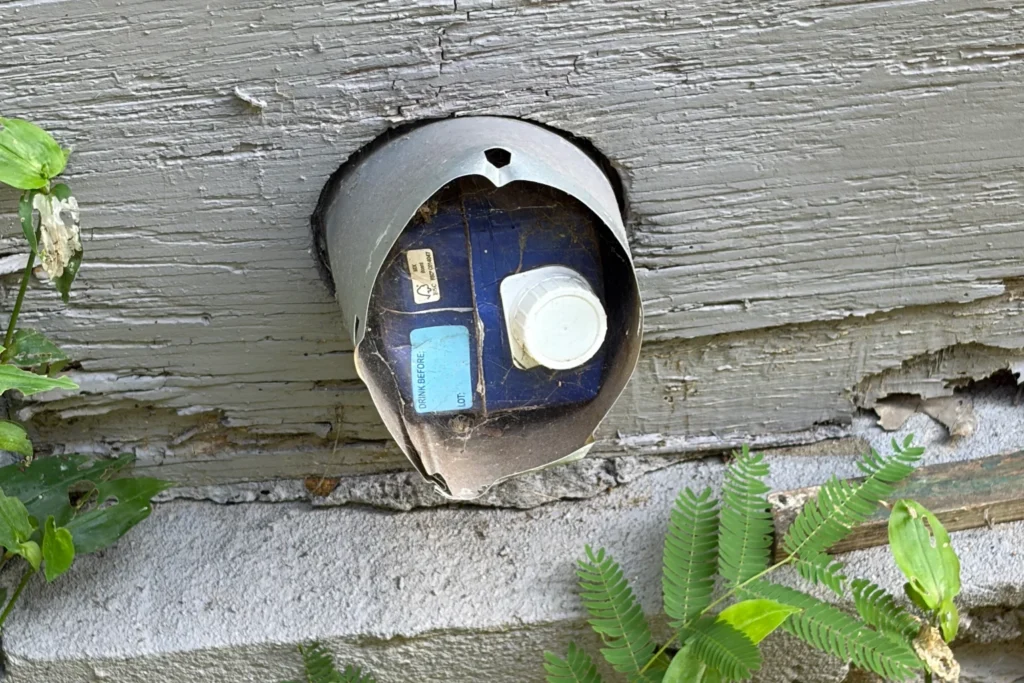
A guard on the outside vent.
Prevent.
Other vents checked too.
Birds in the dryer vent are one of the most common bird calls we get. The vent is warm, protected and open to the outside, so starlings and sparrows move right in.
Signs of birds in the dryer vent
- Chirping or scratching behind the dryer or in the wall
- Nesting material sticking out of the vent cover
- Birds flying in and out of the vent
- Clothes taking longer to dry
Why it matters
A nest blocks the airflow your dryer needs. That makes the dryer work harder and lets lint build up, which can be a fire risk.
How we handle it
- Check every vent. Dryer, bath fan and kitchen exhaust vents are all common nesting spots.
- Remove the nest as far as we can reach from the outside of the house.
- Install a cover on the outside vent that keeps birds and other animals out while letting air through.
We clean out the vent from the exterior only. We don’t clean the full dryer duct inside the house.
Eggs or babies in the nest
Many native birds are protected. If a nest has eggs or babies, we wait until they hatch and leave, then remove the nest and finish the work.
What it costs
A simple nest removal can be around $400, and the inspector can often do it on the spot. Prevention work like covers on several vents, spikes or other bird control starts around $950 and comes with our 1-year guarantee.
See birds in bathroom and kitchen exhaust vents and roof vent screens and guards.
Our wildlife team handles birds in vents across Kansas City. See other wildlife removal.
Birds in your dryer vent? Call 913-735-5451, answered 24/7, or schedule online. Most services can be scheduled same day.
Frequently Asked Questions
Have the nest removed, then put a cover on the outside vent so they can’t get back in.
It can be. It blocks airflow and lets lint build up, which can be a fire risk.
No. We clean out what we can reach from the outside of the house.
We wait until they hatch and leave, then remove the nest and install the cover.
A simple nest removal can be around $400. Prevention work starts around $950.