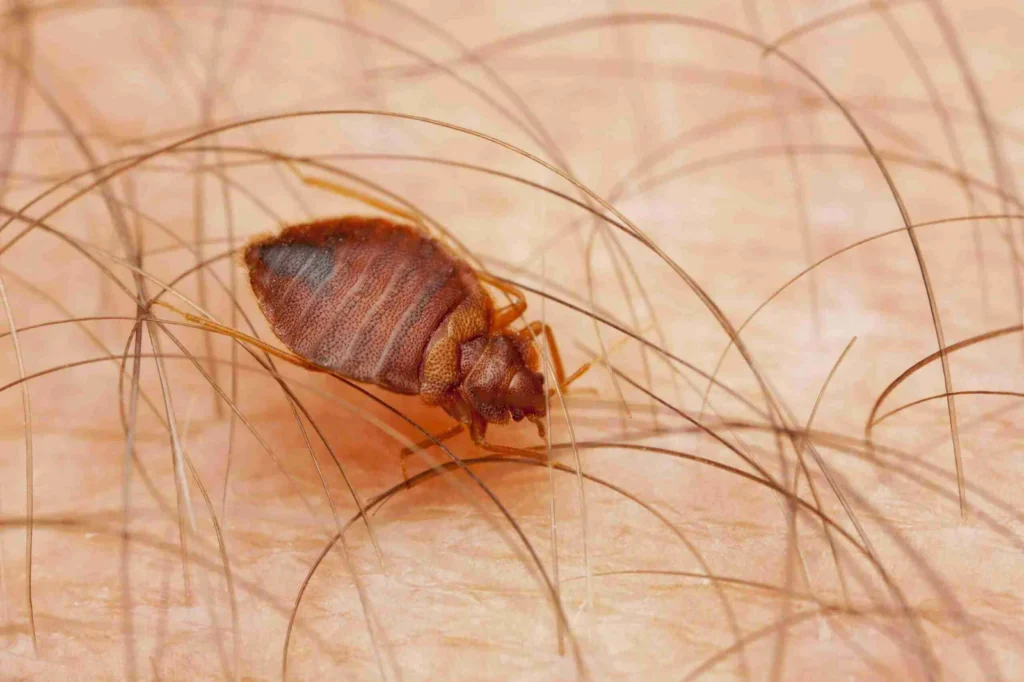
Contain it, treat it, document it
A calm, fast response that keeps one report from spreading.
Contain.
Keep items in place.
Inspect.
The area and what’s around it.
Treat.
Targeted spray treatments.
Hospital bed bug treatment starts with understanding where they come from. Bed bugs arrive at hospitals with patients, visitors and belongings, sometimes from homes with heavy infestations. That has nothing to do with how clean the hospital is. What matters is how quickly staff respond and how well the area is treated.
We do bed bug spray treatments in hospital settings around Kansas City. Here is how to respond and what treatment looks like.
Where bed bugs show up in hospitals
- Patient rooms, especially beds, recliners and visitor chairs
- Emergency department and waiting room chairs
- Patient belongings bags and clothing
- Wheelchairs and transport equipment
- Staff break rooms and locker rooms, occasionally
What staff should do when bed bugs are suspected
- Contain. Keep the patient’s belongings bagged and sealed. Don’t move furniture or items out of the room or area.
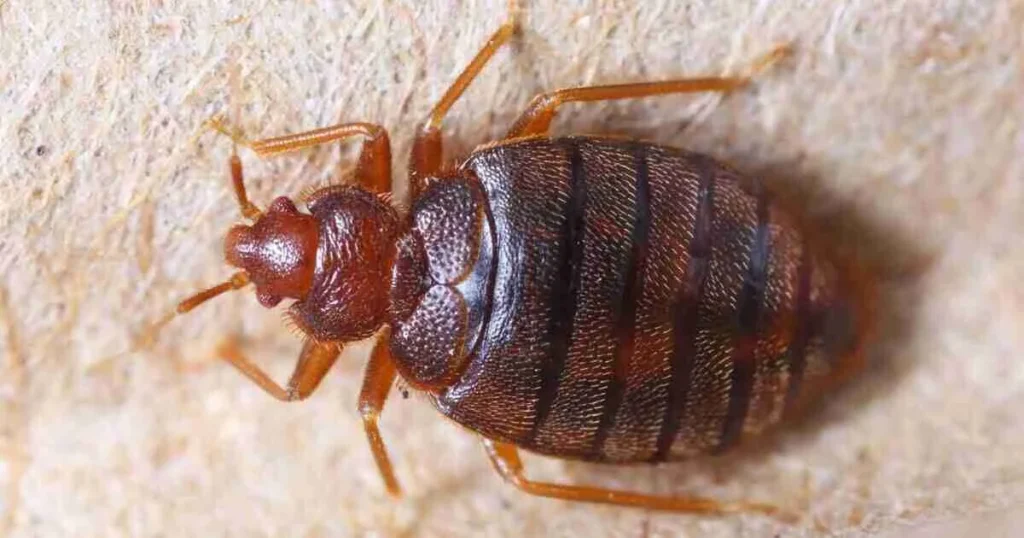
- Capture a sample if possible, on tape or in a sealed container, to confirm what it is.
- Bag linens in the room and send them directly to laundry.
- Notify environmental services or the right department according to your hospital’s protocol.
- Call us. Our calls are handled in about 1 to 5 minutes on average, and most services can be scheduled the same day.
Inspection
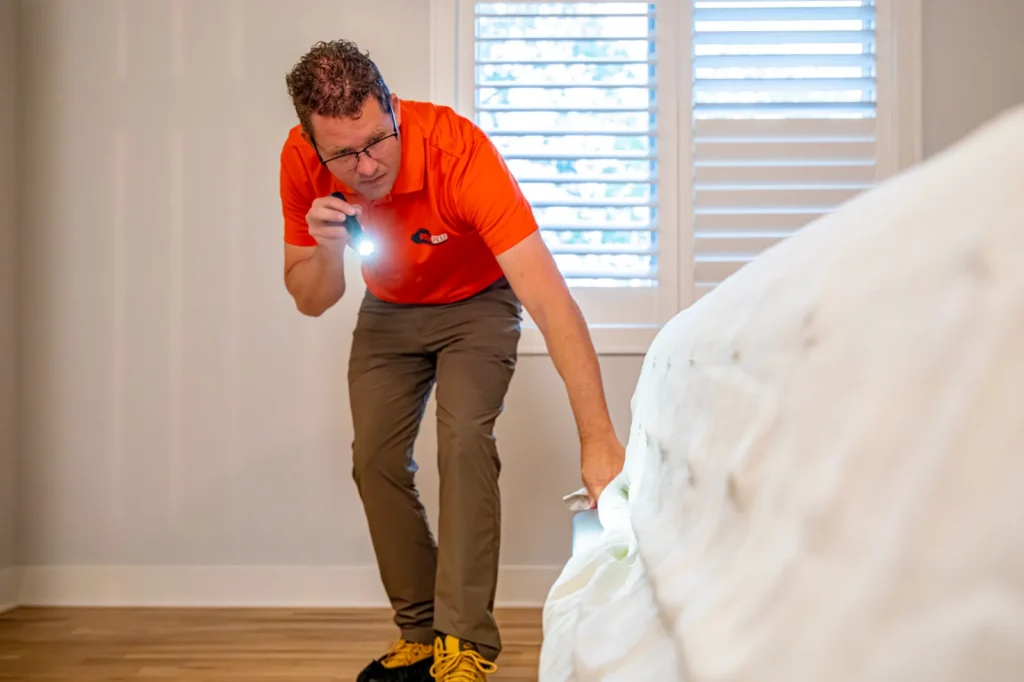
We inspect the reported area and the areas around it, including beds, chairs, recliners, nightstands, baseboards and outlets. In waiting areas, we check upholstered seating and the seams and frames where bed bugs hide. Our inspector often works with our bed bug dog. The inspection shows whether bed bugs are present and how far they’ve spread.
Spray treatments in hospital settings
In hospitals, our bed bug work is typically spray treatment. Targeted treatments go into seams, cracks, frames, baseboards and outlets where bed bugs hide. People stay out of treated areas until products dry. Spray treatments usually take more than one visit to fully clear an active infestation, often over about 30 days, so follow-up visits are part of the plan.
Spray is the typical treatment in medical settings because it’s fast and gets the area back in use quickly. When bed bugs come in on a patient, a prompt spray treatment kills them before they can become an infestation. See bed bug heat treatment for apartments and hotels.
Coordination with your team
Hospitals have infection prevention, environmental services and nursing protocols. We work with your team on timing, room availability and any products or areas that need special handling. Share your bed bug protocol during the first visit so treatment fits how your hospital operates.
Follow-up
After treatment, follow-up inspections confirm activity is gone. All of our bed bug jobs carry a 90-day warranty. If activity shows up again in a treated area, we come back.
Records
Every inspection and treatment is documented with the date, area, findings and the types of products used, and saved in your customer portal. Those records support your infection prevention documentation and answer questions from administrators or surveyors. See pest control service reports and logs.
Prevention
- Train staff on what bed bugs and their signs look like
- Use belongings bags for patients arriving from situations where bed bugs are likely
- Choose seating that’s easy to inspect, with fewer seams and less upholstery
- Inspect waiting room seating on a schedule
- Respond to every report, even if it turns out to be something else
Patient care comes first
Staff may be worried about caring for a patient with bed bugs. Standard practices like bagging belongings, changing linens and inspecting equipment after transport help keep bed bugs from moving. Bed bugs aren’t known to spread disease, but their bites and the stress they cause matter to patients and staff.
Belongings and transport equipment
Wheelchairs, stretchers and transport equipment move between rooms and floors all day. After transporting a patient with known bed bugs, inspect and wipe down the equipment before it’s used again, paying attention to seams, cushions and frames.
Emergency departments and waiting areas
Emergency departments see the most bed bug reports because of the volume of people and belongings moving through. Waiting room chairs with seams, cushions and frames give bed bugs places to hide. Regular inspection of seating, especially in high-traffic areas, catches them early.
For full healthcare programs, see pest control for healthcare facilities.
Our commercial team handles bed bugs in healthcare settings across Kansas City. See bed bug control and commercial pest control.
Bed bug report at your facility? Call 913-735-5451, answered 24/7, or schedule online. Most services can be scheduled same day.
Frequently Asked Questions
With patients, visitors and belongings. It has nothing to do with how clean the hospital is.
Contain belongings, keep items in place, capture a sample if possible, bag linens and call for an inspection.
Yes. We do bed bug spray treatments in hospital settings.
Spray treatments usually take more than one visit, often over about 30 days, to fully clear an infestation.
Yes. All of our bed bug jobs carry a 90-day warranty, including hospital treatments.
Yes. Share your protocol, and we’ll fit timing and treatment to it.