What causes a cockroach infestation in apartments? Even spotless kitchens can develop serious roach problems, and the reason is rarely what renters expect. You keep a clean kitchen. You take out the trash every few days. You’ve never left dishes in the sink overnight. Then, at 11 p.m., you flip on the stove light and catch a cockroach disappearing behind the burner grate. It’s a gut-punch moment, and the first question is always the same: why is this happening to me?
Here’s the honest answer: cockroach infestations in apartments rarely trace back to a single cause. They develop from a combination of conditions, most of which are baked into the building itself rather than the habits of any one tenant. At Rock Pest Control, apartment calls make up a significant portion of the cockroach work we handle across the Kansas City metro every season, and the pattern is consistent. Clean units get roaches. Careful tenants get roaches. The reason is usually structural, not personal.
This article breaks down all nine contributors so you can identify exactly what’s working against you, take targeted action, and know when to loop in a professional.
Why even a spotless apartment can develop a cockroach infestation
The idea that roaches only show up in dirty homes is one of the most persistent myths in pest control. Cleanliness reduces risk, but it doesn’t eliminate it, especially in multi-unit buildings where the sources of an infestation may have nothing to do with what’s happening inside your four walls. The first three causes are the ones most renters can actually control.
1. The food residue roaches find that you miss
German cockroaches, the species most common in apartment buildings, don’t need much to survive. Grease buildup behind stove knobs, crumbs lodged in cabinet hinges, and splatter on the wall behind the burners are enough to sustain a large population. The spots most renters never clean, including the refrigerator drip pan, the underside of cabinet shelves, and the toaster tray, are reliable food sources that get overlooked for months. Pet food left out overnight is another consistent contributor. A full bowl of dry kibble sitting on the kitchen floor is essentially a welcome sign for any roach moving through the building.
2. Why cardboard boxes and clutter belong outside
Cardboard serves double duty for cockroaches: it’s both shelter and food. The glue in corrugated boxes, paper grocery bags, and stored newspapers provides nutrients, while the dark, warm void inside creates ideal harborage. Cockroaches can also arrive inside packaging without any prior infestation in your unit. A delivery box that sat in a warehouse, loading dock, or truck can carry egg cases or live roaches straight to your doorstep. Breaking down boxes immediately and moving them to a recycling bin outside, rather than stacking them in a closet, removes one more reason for roaches to stay.
3. Secondhand furniture, packages, and luggage as carriers
Used appliances and thrifted furniture are among the most underappreciated causes of new infestations. A secondhand microwave or dresser bought at an estate sale can harbor egg cases tucked into seams, corners, and voids. The same applies to luggage after hotel stays and online packages shipped from facilities with existing pest pressure. Inspecting secondhand items before bringing them inside, and quarantining luggage after travel, are habits worth building, because a single introduced egg case can start a population that spreads well beyond the original item.
What causes a cockroach infestation in apartments: moisture and plumbing
Water is often a stronger draw than food. German cockroaches can survive roughly six weeks without food but only about two weeks without water. In practice, consistent moisture near a harborage zone is what allows populations to establish and grow quickly. Causes four and five come down to leaks and damp conditions.
4. The drips and leaks roaches depend on
A slow faucet drip or a weeping pipe joint under the sink provides a reliable water source that roaches visit on a regular schedule. These leaks are frequently unreported because they seem minor, but a persistent drip in a cabinet roaches can access overnight is a significant resource. Once roaches establish harborage near a water source, the population grows faster and becomes harder to dislodge with bait alone. Reporting leaks to property management in writing, and keeping a copy of that communication, matters for both pest control and tenant-landlord documentation purposes.
5. Damp zones roaches target first in any apartment
Even without a visible leak, high humidity in a poorly ventilated bathroom creates conditions roaches exploit. The area under the bathroom vanity, behind the toilet, and near the dishwasher connection are prime zones. Run your hand along the cabinet floor under the kitchen sink and check the back corners for moisture. If the wood feels soft or you see water staining, that area is likely already attractive to any roach moving through the building’s plumbing system. A quick visual check of these zones takes five minutes and tells you a lot about your unit’s risk profile.
How roaches move from a neighbor’s unit into yours
This is where apartment pest control gets genuinely frustrating. You can eliminate every food source, fix every leak, and declutter every cabinet, and still have roaches reappear because of what’s happening in the unit next door, above, or below. Causes six and seven are about building spread and the failure of incomplete treatment.
6. Plumbing chases and pipe penetrations as roach highways
Unsealed gaps where pipes pass through walls and floors create continuous travel routes between units, floors, and building sections. German cockroaches follow warmth and moisture, which makes plumbing chases their primary corridor in multi-unit buildings. Stacked kitchens and bathrooms, where the sink in unit 3B sits directly above the sink in unit 2B, create a vertical travel route that connects multiple floors through a single unsealed pipe penetration. This is why infestations often appear first near plumbing walls, even in units that have no obvious food or moisture issue of their own.
7. Shared wall voids, electrical conduits, and HVAC connections
Hollow interior walls, electrical outlet openings, and conduit runs can connect neighboring units without any visible gap on either side. A cockroach needs a space roughly the width of a credit card to squeeze through. Electrical outlets on shared walls are particularly common travel points because they’re open on both sides and run the full height of the wall. Roaches don’t announce themselves when they cross over; they simply follow temperature gradients and moisture signals until they find a new harborage.
8. Why treating only one apartment almost always fails
When a single unit is treated with insecticide or bait, the pressure causes roaches to scatter through shared infrastructure and resettle in adjacent spaces. The treated unit may appear clear for a few weeks, then the problem returns as the population reestablishes from neighboring harborage zones. Coordinated, building-wide inspection and treatment is the accepted standard for resolving cockroach infestations in multi-unit properties. A licensed exterminator treating your unit alone isn’t necessarily doing a bad job; they’re working with a scope of treatment that doesn’t match the scope of the problem.
What causes a cockroach infestation in apartments: entry points and building gaps
Beyond neighbor spread, every apartment has structural gaps that allow cockroaches to enter from common areas or the building exterior. Causes eight and nine are about poor sealing and building maintenance deficits that most renters inherit without realizing it.
8. Common entry points from building exteriors and common areas
Shared trash rooms, laundry areas, and compactor zones sustain building-wide cockroach populations on a continuous basis. These common areas rarely receive the same pest management attention as individual units, which means they function as persistent reservoirs. Roaches move from these zones into individual units through door gaps, floor drains, and any unsealed utility penetration that connects the common area to the building’s wall system. If your unit is adjacent to a trash chute or laundry room, that proximity is a direct risk factor regardless of conditions inside your apartment.
9. Baseboards, cabinet gaps, floor-wall joints, and appliance voids
Cracks along baseboards, spaces where cabinet backs meet walls, and the gap at the floor-wall joint are entry points that blend into the background during routine cleaning. Pull out the drawer under your stove and check the gap where the floor meets the back wall. Look at the space where the cabinet back panel meets the wall behind the sink. These joints are rarely sealed in older apartment construction and create direct access from wall voids to your kitchen.
Refrigerator compressor voids and stove insulation hold warmth and are almost never cleaned, making them reliable harborage for any roach that enters the unit. Sealing these gaps with caulk is one of the highest-impact DIY steps a renter can take, because it cuts off both entry and harborage in a single action.
How to spot a roach problem early before it spreads
A single roach sighting doesn’t always mean a full infestation, but dismissing it entirely is a mistake. Early confirmation lets you act before the population grows into something much harder to address.
What fresh roach activity actually looks like
Droppings that resemble black pepper or coffee grounds near cabinet hinges and baseboards are the most common early sign. Brown capsule-shaped egg cases tucked into cracks, shed skins near appliances, and dark smear marks along travel routes all indicate active presence. A musty, oily odor near the under-sink cabinet or behind the refrigerator, particularly strong in warm weather, often signals a significant harborage zone nearby. Fresh droppings have a slightly glossy appearance; older residue tends to look dusty and dull. If you’re seeing fresh droppings alongside live roaches, you’re looking at an active infestation, not a one-time sighting.
The nighttime inspection method that confirms activity fast
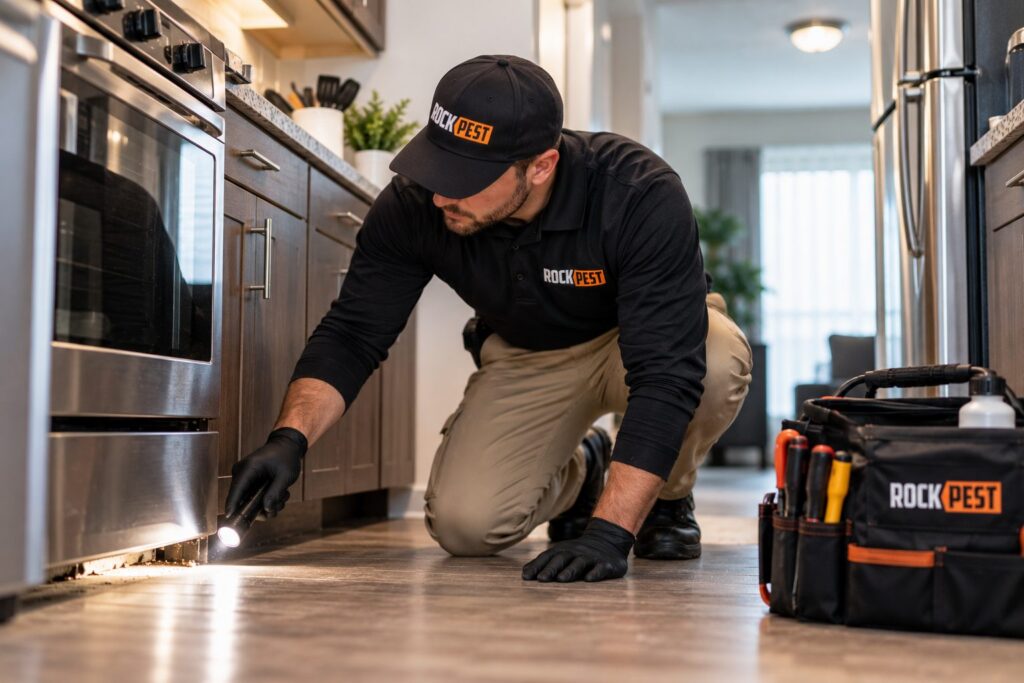
Turn off all lights for 20 to 30 minutes, then move through the kitchen and bathrooms with a flashlight, checking under sinks, behind the refrigerator, inside cabinet corners, and near toilet bases. Roaches are most active in darkness, and this method reveals activity that daytime inspection misses entirely.
Place sticky traps flush against walls, not in open floor space, in the following spots: under the sink, beside the refrigerator, and along the back of lower cabinet shelves. Check them after 48 hours and note exactly where captures are concentrated. That map tells you where to apply bait and where to focus sealing efforts.
What to do right now: sanitation, sealing, baiting, and when to call a pro
Effective apartment pest control runs on integrated pest management, combining sanitation, moisture control, targeted bait, and structural sealing rather than relying on any single approach.
The sanitation and moisture fixes that make baiting work
Move all food into sealed containers tonight. Wash dishes before bed, wipe grease from stove sides and behind knobs, and empty pet bowls. Dry the sink and counters before you turn in. Sanitation alone won’t eliminate roaches, but it removes the competing food sources that pull them away from bait. Report any leaks to property management in writing and keep a copy, so the source of the moisture gets fixed.
How to use gel bait and sealing correctly in an apartment
Apply gel bait in pea-sized dots directly inside cracks, at cabinet edges, under sinks, and near plumbing penetrations. Do not place bait in open floor areas, and do not spray any insecticide near bait. Repellent sprays contaminate bait and cause roaches to avoid it entirely. Seal pipe gaps under sinks with appropriate caulk, and install door sweeps where light shows at the bottom of exterior-facing doors. Document all roach activity with photos, dates, and locations. That documentation is your evidence if you need property management to authorize building-wide treatment.
When apartment pest prevention isn’t enough, and you need a pro
If bait, sealing, and sanitation haven’t reduced activity within two to three weeks, or if roaches are clearly coming from shared infrastructure rather than your unit itself, professional treatment is the faster and more reliable path. DIY approaches work well for isolated infestations; they consistently fall short when the source is in the walls, the plumbing chase, or a neighboring unit. For Kansas City apartment residents dealing with persistent cockroach problems, Rock Pest Control offers free estimates within 24 hours and treatment plans designed specifically for multi-unit situations. Documentation in hand, including photos, dates, and any written communication with your landlord, helps the Rock Pest Control team determine whether the issue requires coordinated building-level treatment from the start.
The bottom line on cockroach infestations in apartments
Understanding what causes a cockroach infestation in apartments comes down to recognizing that food access, moisture, structural gaps, and shared building systems rarely work in isolation; they compound each other. Renters who address all of these areas rather than just spraying and hoping are the ones who actually keep roaches out long term.
If you’ve sealed entry points, eliminated food and moisture, baited consistently, and the problem keeps returning, the source is almost certainly in shared infrastructure. That requires a coordinated professional response, not another trip to the hardware store. For Kansas City renters dealing with roaches that won’t quit, contacting a licensed exterminator is the logical next step, not a last resort. Get in touch with the Rock Pest Control team, and we’ll take a look within 24 hours.
Frequently Asked Questions
Yes. Cockroach infestations in apartments are driven primarily by building structure, shared plumbing, and neighbor spread, not just individual cleanliness. A roach moving through a shared wall or plumbing chase doesn’t know or care how often you mop.
They enter through unsealed pipe penetrations, gaps at baseboards and floor-wall joints, door sweeps with daylight showing underneath, and shared utility spaces like trash rooms and laundry areas. Every gap wider than a credit card is a potential entry point.
No single product does. Long-term control requires integrated pest management: eliminating food and moisture, sealing entry points, applying gel bait correctly, and, when the source is in shared infrastructure, coordinated professional treatment across multiple units.
Roaches move between units through shared walls, plumbing chases and electrical conduits. When only one apartment is treated, the survivors scatter into neighboring units and return a few weeks later. Coordinated treatment across the affected units is what keeps them from coming back.
Look for droppings that look like black pepper or coffee grounds near cabinet hinges and baseboards. Brown egg cases in cracks, shed skins near appliances, dark smear marks and a musty, oily odor under the sink or behind the refrigerator all point to active roaches.