What pest control do restaurants in Kansas City need? More than most operators realize, and the stakes are higher than a line item on a maintenance budget. One cockroach spotted during a Kansas City health inspection can trigger a critical violation, a mandatory re-inspection, and in serious cases, a temporary closure. Many restaurant owners put tremendous effort into food quality, staffing, and customer experience, yet pest management often gets treated as an afterthought until an inspector is standing in the kitchen writing up violations. That’s a costly mistake, and it’s avoidable.
This guide is written for restaurant owners, managers, and operators across the Kansas City metro area, from Overland Park to Independence to downtown KC. Based on what commercial pest specialists at Rock Pest Control see repeatedly across restaurant accounts in this market, the gap between a compliant operation and a shuttered one often comes down to three things: knowing your pest risks, running a documented program, and working with a provider who understands food-service compliance. This guide explains what pest control Kansas City restaurants need to stay compliant and what that program actually costs.
Kansas City’s climate creates pest pressure that changes with the seasons but never fully disappears. Cold winters push rodents indoors in search of warmth, humid summers can accelerate cockroach breeding cycles, and commercial kitchen heat tends to keep fly populations active year-round. Understanding which pests pose the highest risk helps you allocate your pest control budget where it actually matters.
The two pests most likely to trigger a health violation
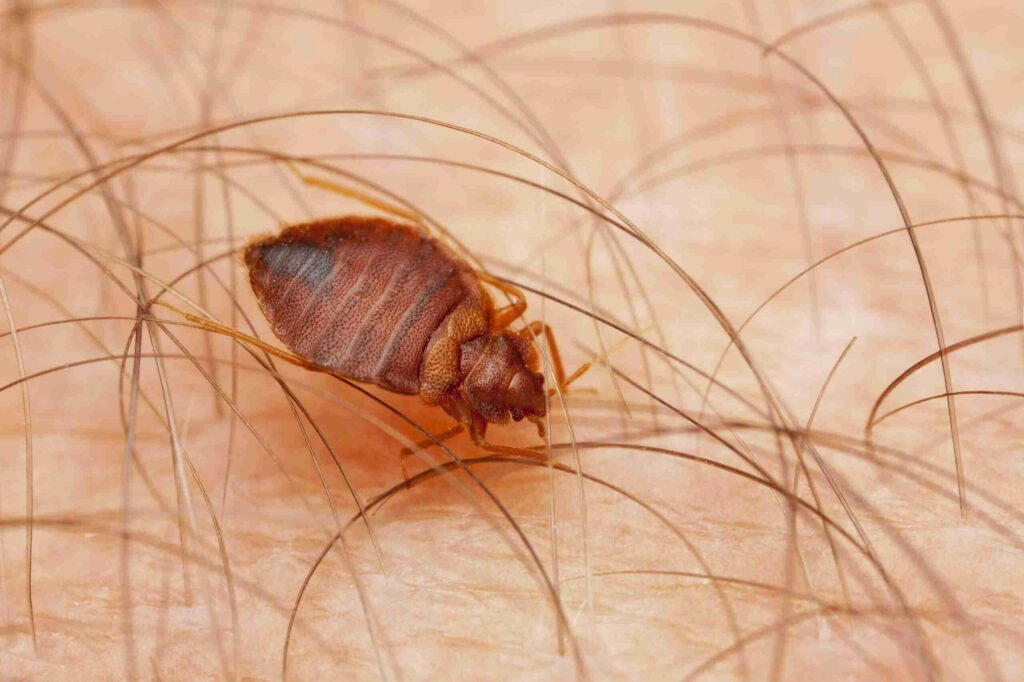
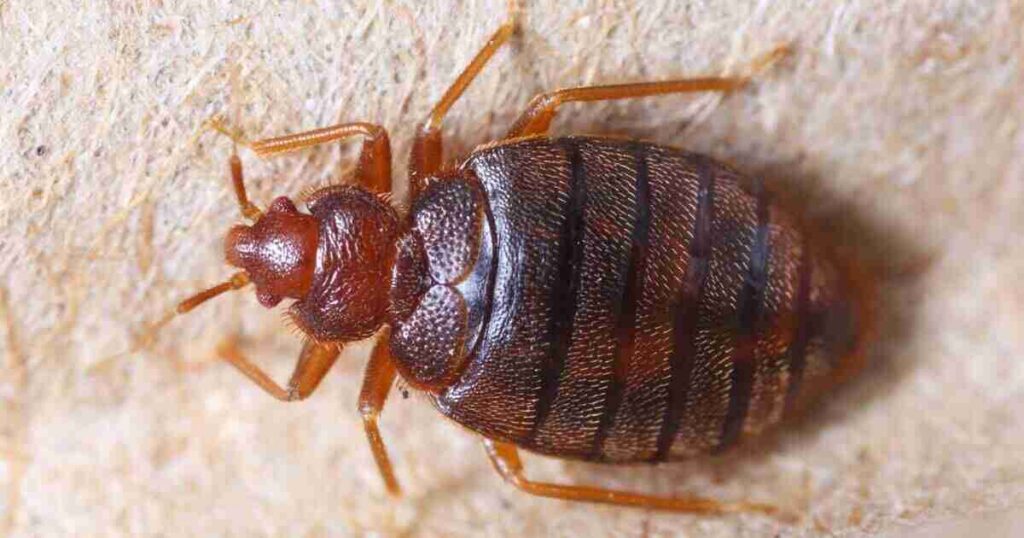
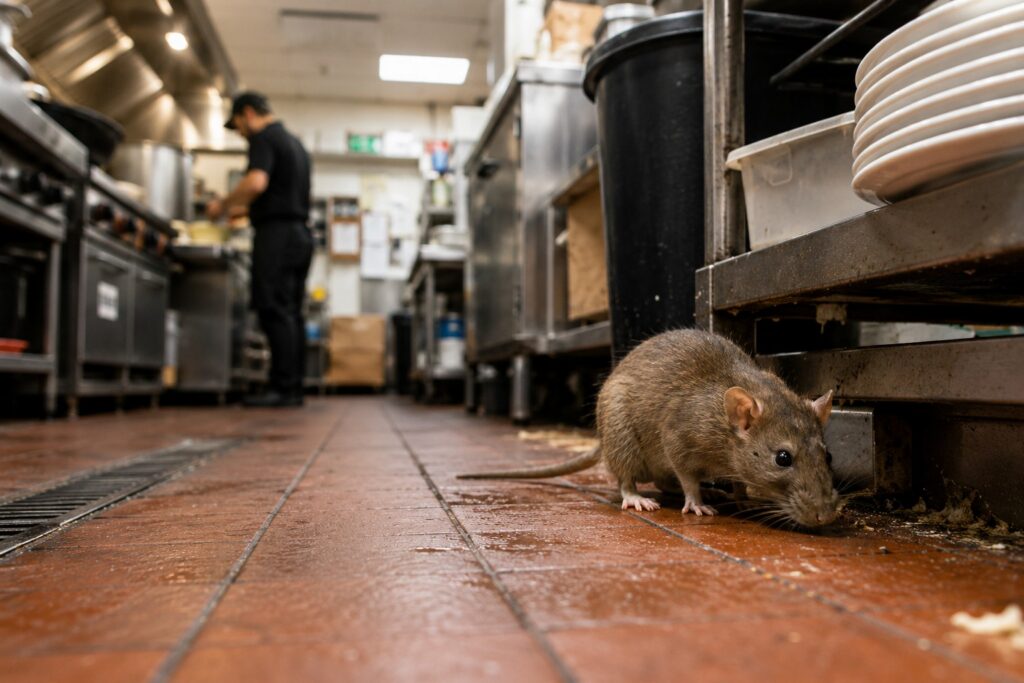
German cockroaches and rodents, specifically mice and rats, are responsible for the majority of pest-related food code violations in Kansas City restaurants. Inspectors find both pests in hard areas to clean quickly: under equipment, inside wall voids, along grease-coated floor drains, and in dry storage. Both contaminate food and surfaces with pathogens that cause foodborne illness, and both are difficult to conceal during an inspection because they leave behind droppings, gnaw marks, and grease smears that trained inspectors know exactly where to find.
Kansas City inspection records have documented live roaches found under sinks and in stock pots, mouse droppings under dishwashing equipment, and over 50 rodent droppings discovered in a single storage area. These are critical violations; the city’s food code treats them as an immediate threat to public health. A critical violation doesn’t just earn a note on a report; it can put your operating permit at risk and trigger mandatory follow-up inspections.
Flies, ants, and stored-product pests
Fruit flies, drain flies, house flies, and ants round out the most commonly reported restaurant pests in Kansas City. Drain flies breed in organic buildup in floor drains, making them a persistent problem in any kitchen that doesn’t regularly treat drains. Ants typically enter from outside, following grease trails from dumpster areas or delivery doors. Stored-product pests like grain weevils, pantry moths, and flour beetles infest dry storage and can contaminate ingredients before anyone notices.
These pests are less likely to trigger a critical violation on their own, but large populations signal sanitation failures and will earn violations regardless. An inspector who sees fruit flies swarming a floor drain isn’t going to overlook it.
What Kansas City health codes actually require
Missouri’s food code requires food establishments to maintain the premises free of insects, rodents, and other pests. That’s the operative standard: pest-free, not just “we spray occasionally.” The code also specifies that restricted-use pesticides may only be applied by a Missouri-certified applicator, by a certified applicator from a state with reciprocity, or by a person under the direct supervision of a certified applicator. Whoever treats your restaurant must carry verifiable credentials.
How Kansas City health inspectors evaluate pest compliance
When a Kansas City health inspector walks through your kitchen, they’re looking for live pests, droppings, gnaw marks, nesting material, and any condition that harbors or attracts pests. Finding active evidence pushes a violation into “critical” territory, which carries the most serious consequences. Critical pest violations are defined as those that more directly threaten food safety or could contribute to foodborne illness, and pest infestations consistently land in that category. Non-critical violations cover maintenance and upkeep issues, but the moment you have live pests near food-prep areas, you’re in critical violation territory.
A single critical violation can trigger a mandatory follow-up inspection. Multiple critical violations or a pattern of recurring pest activity can result in a closure order. The documentation you keep between inspections is often the difference between demonstrating an active, good-faith pest management program and looking like you’re scrambling to react.
A note for operators on the Kansas side
Restaurant operators in Overland Park and other Kansas-side locations fall under Kansas Department of Agriculture jurisdiction rather than the Kansas City, MO health department. Kansas food-safety rules carry the same practical requirement: food preparation areas must be protected from pests, and pest management must be documented and effective. The regulatory authority differs; the expectation doesn’t.
What pest control do restaurants in Kansas City need: a compliant IPM program
A compliant food-service pest control program isn’t a one-time treatment. It’s a recurring, documented system built around integrated pest management (IPM). Sanitation removes attractants. Exclusion closes entry points. Monitoring detects activity early. Targeted chemical treatment addresses what sanitation and exclusion alone can’t resolve. This approach reduces chemical use in your kitchen while also reducing your compliance risk.
Core treatment methods used in commercial kitchens
Kitchen rodent and roach control, along with treatments for flies and stored-product pests, relies on a specific toolkit that experienced food-service providers deploy strategically. A professional program typically includes:
- Gel baiting for cockroaches, applied in non-food-contact harborage zones like equipment bases, wall voids, and utility chases
- Tamper-resistant rodent bait stations or monitoring stations placed along walls and at entry points, both interior and exterior
- Glue boards and sticky traps for interior monitoring along pest travel routes and in storage areas
- Crack-and-crevice insecticidal treatments in wall voids and harborage areas, applied in ways consistent with EPA and Missouri label requirements
- Fly lights and UV insect traps, plus drain treatments targeting fruit fly and drain fly breeding sites
How often Kansas City restaurants need service
Monthly service is the baseline standard for most restaurant accounts in the industry. High-volume kitchens, facilities with outdoor dining, operations with a history of infestations, or those that experience heavy summer fly pressure typically require bi-weekly visits to stay ahead of the problem. The right frequency depends on your kitchen’s specific risk profile, not a one-size-fits-all schedule. A professional commercial provider will assess your layout, pest history, and seasonal factors before recommending a plan.
The goal of a well-structured IPM program is to detect problems at the monitoring stage, before they become infestations. When traps and service logs show consistent activity in a specific area, a good provider adjusts the treatment approach proactively rather than waiting for an inspector to find it first.
The documentation inspectors expect to see
Many Kansas City restaurant operators pay for professional pest control but fail to keep the paperwork that proves it. During an inspection, a service log or pest activity report on file tells an inspector that you’re running an active, ongoing program. Without that documentation, even if your kitchen is clean, you have no evidence of compliance beyond the inspector’s own observations that day.
Service logs and pest activity reports
Every professional service visit should generate a written report documenting which areas were inspected, what pest activity was found, what treatments were applied, and what sanitation recommendations were made. As a best practice, these reports should be filed and accessible on-site rather than stored only in a provider’s system or buried in an email archive. Inspectors may ask to see them, and a clear paper trail demonstrates a proactive management program rather than reactive scrambling after something goes wrong.
Proof of licensed applicator
Missouri requires restricted-use pesticides to be applied by a certified applicator. Ask your provider for a copy of their applicator license and confirm it’s current. This documentation matters if a violation is disputed or if you need to demonstrate to the health department that treatments were performed by a qualified professional. Keep it on file along with your service reports.
A practical approach recommended by industry professionals: maintain a dedicated binder or digital folder with the last 12 months of service reports, applicator license copies, and any corrective actions you’ve taken based on provider recommendations. That folder is your compliance evidence, and having it organized before inspection day removes a major source of stress.
Restaurant pest control services and costs in Kansas City
Budgeting for pest control requires knowing what the market looks like. Costs vary based on kitchen size, infestation history, service frequency, number of entry points, and whether exterior stations are included in the plan. Here are realistic ranges for the Kansas City metro:
- Small kitchens under 1,500 sq ft: roughly $100, $250 per month
- Medium kitchens: roughly $200, $400 per month
- Large or high-volume kitchens: roughly $300, $600 per month
- One-time or emergency service: roughly $150, $500 per visit, with after-hours emergency calls often running $300, $1,200
Most commercial plans fall into three categories. A monthly preventive plan is the standard for most restaurants and includes regular inspections, monitoring, and treatment. An enhanced plan adds higher-frequency visits or priority response time, suited to busy kitchens, older buildings with more entry points, or facilities recovering from a past infestation. Emergency or one-time service is available for active situations but costs significantly more per visit and doesn’t provide the ongoing documentation that a recurring plan does.
Before signing any contract, ask specific questions: Is the applicator Missouri-certified? Does the price include written service reports? What’s the response time for between-visit pest activity? Is there a contract lock-in? Does the provider carry liability insurance? A reputable commercial provider should answer all of these without hesitation and back each answer with documentation.
Choosing a commercial pest control provider in Kansas City
Not all pest control companies are equipped for food-service accounts. A residential exterminator who also takes commercial calls is not the same as a provider with genuine food-service experience. A commercial-qualified provider understands how to apply treatments without disrupting operations, schedules service during off-hours or prep gaps, and knows exactly what documentation health inspectors want to see. That difference shows up when something goes wrong between visits, and you need a fast, credible response.
Why Rock Pest Control is built for Kansas City restaurant accounts
Rock Pest Control is based in Kansas City and serves restaurant accounts across the metro, including Overland Park and Independence. Their commercial pest control programs are built around kitchen schedules; treatments happen when your kitchen can accommodate them, without disrupting service or food safety. Service visits include written documentation for inspections, and treatment plans are tailored to each kitchen’s layout, pest history, and seasonal pressure rather than defaulted to a generic template.
When pest activity appears between scheduled visits, Rock Pest Control provides responsive follow-up, which matters in a food-service environment where a few days of untreated activity can escalate into an inspection problem. Free estimates are available, so you know what you’re signing up for before committing to a plan.
Red flags to avoid in a commercial pest control vendor
Walk away from any provider who can’t produce written service reports, can’t confirm a certified applicator on file, or pushes long-term contracts without any performance guarantee. One-size-fits-all treatment plans are also a warning sign. A provider who applies the same program to a 500-square-foot sandwich shop and a 4,000-square-foot full-service kitchen hasn’t actually assessed your operation. Food-service pest management requires specific experience with that environment, and you should expect your provider to demonstrate it.
What pest control Kansas City restaurants need: the bottom line
Restaurant pest control in Kansas City is not optional, not something to address reactively, and not a category where the cheapest available option protects your business. Know your pest risks, understand what Missouri’s food code demands, and run a documented IPM program on a consistent schedule. Keep your service records organized and accessible before inspection day arrives.
The right commercial pest control provider makes compliance straightforward instead of stressful. You shouldn’t be guessing whether your program meets the standard or scrambling to produce paperwork when an inspector shows up. A well-run pest management program operates in the background, keeps your kitchen clean, and gives you documentation you can stand behind.
Kansas City restaurant operators can contact Rock Pest Control for a free assessment and a service plan built around your kitchen schedule and compliance requirements. The conversation is free. Waiting until something shows up on an inspection report is not.